
 English
 中文简体
中文简体 русский

 Read More

Product Category
NEW Category
Contact us
Contact Us
We specialise in the research, development and manufacture of electrical wires and cables.
 +86-15021943462
Large-Scale Industrial Electric Motors: Key Insights & Selection
Selecting a large-scale industrial electric motor is a decision that directly impacts energy costs, process uptime, and capital expenditure for years. The optimal choice balances the driven equipment’s exact torque-speed profile, the operating environment, and the total cost of ownership, with modern IE4 super-premium efficiency motors often paying back their price premium in under two years on continuous-duty applications. Rather than viewing the motor as a standalone component, treat it as a system that, when correctly sized and protected, delivers decades of reliable operation with minimal unscheduled downtime.
Content
- 1 The Role of Large Motors in Heavy Industry
- 2 Understanding Torque-Speed Characteristics and Load Matching
- 3 Efficiency Regulations and Energy Cost Impact
- 4 Enclosures and Cooling for Harsh Operating Conditions
- 5 Starting Methods and Grid Impact
- 6 Maintenance and Condition Monitoring Strategies
- 7 Lifecycle Costing and the Right Specification
The Role of Large Motors in Heavy Industry
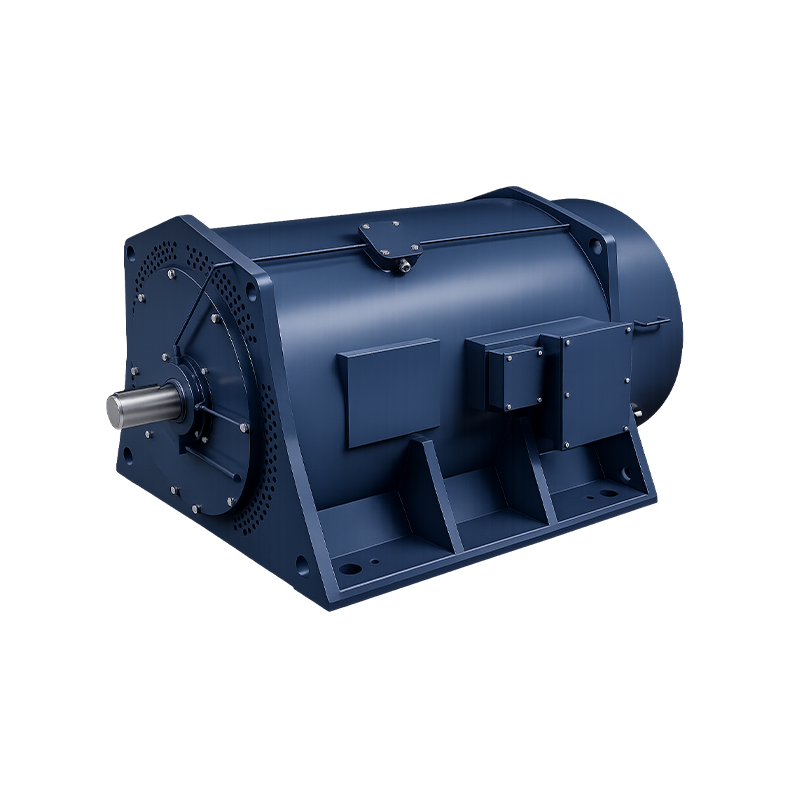
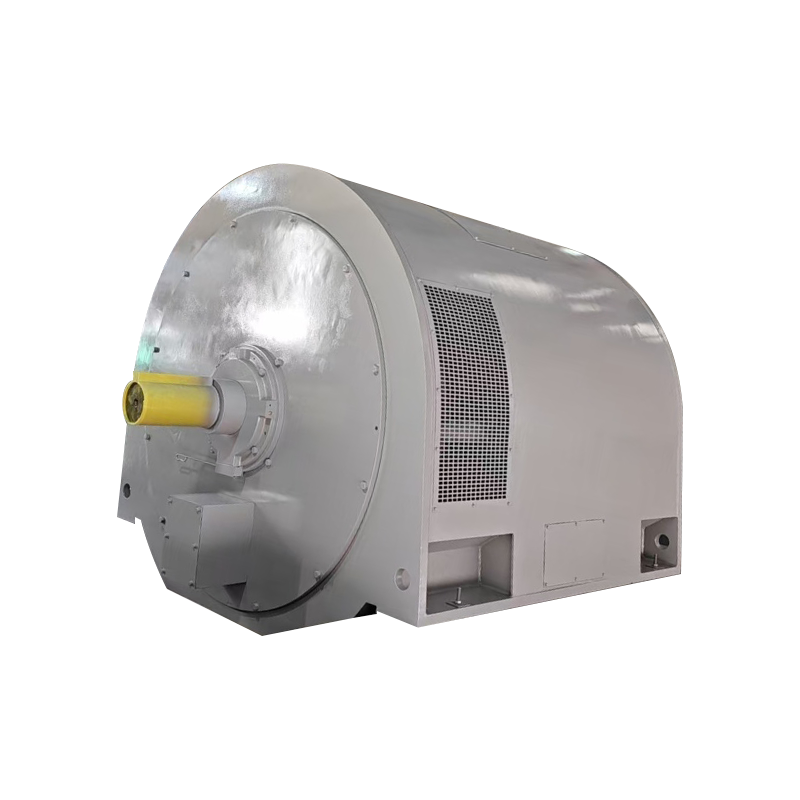
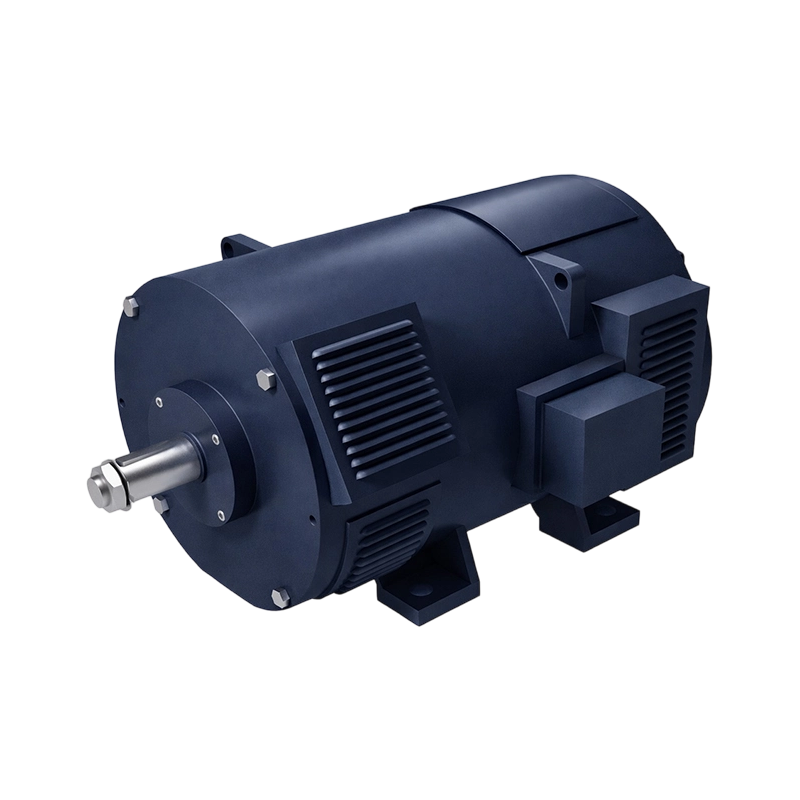
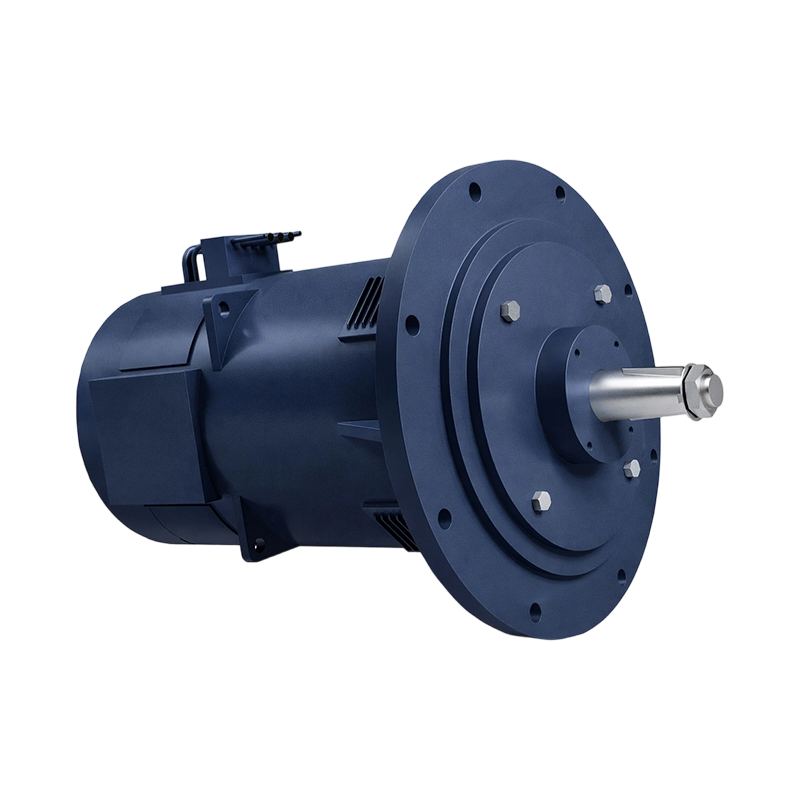
Large-scale industrial motors, typically those rated above 100 kW and extending to multiple megawatts, are the prime movers behind mining mills, centrifugal compressors, large pumps, and steel rolling stands. They convert electrical power into the immense torque required to crush ore, move thousands of cubic meters of water per hour, or drive 200-tonne haul trucks. In the cement industry alone, a single raw mill motor can consume 3 to 5 MW, accounting for most of the plant’s electrical load.
Medium-voltage motors, operating at 3.3 kV, 6.6 kV, or 11 kV, dominate this segment because they reduce current draw and allow for thinner, more manageable cabling while minimizing transmission losses. These machines are designed for continuous operation, often running 8,000 hours per year, making their efficiency critical to operational expenditure even before considering carbon compliance.
Understanding Torque-Speed Characteristics and Load Matching
No two industrial processes demand the same mechanical output. Mismatching a motor’s torque capability to the load profile leads to overheating, nuisance tripping, or wasteful oversizing. The key starting point is the driven machine’s speed-torque curve.
| Application | Starting Torque Required | Typical Motor Type Selected |
|---|---|---|
| Centrifugal Pump | 10–40% | Squirrel cage induction, NEMA B |
| Ball Mill | 150–180% | Wound rotor or synchronous |
| Reciprocating Compressor | 50% with high pulsating | High slip induction, with flywheel |
| Conveyor (loaded start) | 140–170% | Dual cage or fluid coupling assisted |
Synchronous motors, often specified above 5 MW, offer the additional benefit of power factor correction, which can eliminate the need for separate capacitor banks. They are frequently found in large compressor drives and grinding mills where locked-rotor torque must exceed 150% of full load. Induction motors, by contrast, provide simpler construction and are dominant in pump and fan applications up to about 10 MW.
Efficiency Regulations and Energy Cost Impact
Global minimum energy performance standards now mandate efficiency levels that directly shape motor purchasing. The IEC 60034-30-1 standard defines classes from IE1 (Standard) to IE4 (Super Premium), with IE5 under development for variable-speed applications. The economic argument is immediate: for a 1 MW motor running 8,000 hours annually, upgrading from IE3 to IE4 — a typical efficiency gain of 1.2 to 1.5 percentage points — saves roughly 120,000 kWh per year. At an industrial rate of $0.10/kWh, that translates to a $12,000 annual saving, often covering the motor’s price premium within 12 to 18 months.
Beyond the immediate energy bill, efficiency ties into reduced cooling requirements. Lower losses mean less heat dissipated into the winding and the surrounding environment, extending insulation life. The widely quoted rule of thumb states that for every 10°C reduction in winding temperature, insulation life doubles. This makes high-efficiency motors not just a green choice but a reliability investment, particularly in hot process areas such as steel mills or glass plants.
Enclosures and Cooling for Harsh Operating Conditions
Protecting Against Dust, Moisture, and Gas
Large motors deployed in cement plants, wastewater treatment, or offshore platforms must withstand contamination without compromising cooling. Totally Enclosed Fan Cooled motors, using an external shaft-mounted fan to blow air over ribbed housing, work well up to about 1 MW but become less effective in larger sizes where heat dissipation demands overwhelming surface area. For motors above 2 MW, Totally Enclosed Water-to-Air Cooled designs circulate internal air through a water-cooled heat exchanger, enabling IP56 protection even in clogged atmospheres.
Hazardous Area Certifications
In petrochemical and mining environments, large-scale motors must earn certification under ATEX, IECEx, or North American Class I/II standards. Pressurized Ex p enclosures maintain a positive internal pressure to prevent flammable gas ingress, while flameproof Ex d enclosures contain any internal explosion. The cost of hazardous-area compliance can add 30% to 50% to the base motor price, but it is a non-negotiable safety requirement. A single unrated motor installed in a Zone 1 area exposes the facility to a catastrophic ignition risk that far outweighs the hardware expense.
Starting Methods and Grid Impact
Direct-on-line starting of a multi-megawatt induction motor draws 5 to 8 times full-load current, causing voltage dips that can disrupt process instrumentation and nearby loads. For motors above 200 kW, utilities and plant engineers increasingly specify reduced-voltage starters or variable frequency drives. Among the common options:
- Autotransformer starter: limits inrush to 2.5 to 3.5 times FLC with selectable taps.
- Soft starter using thyristors: provides smooth voltage ramp, eliminates mechanical shock on couplings.
- Variable frequency drive: offers full speed control and can limit starting current to just 110–120% of motor rated current, making it ideal for high-inertia loads like ball mills.
When a VFD is already required for process control — as in induced draft fans or extruders — the starting method becomes a non-issue, and the drive also provides inherent motor protection and energy optimization at partial loads.
Maintenance and Condition Monitoring Strategies
Unplanned failure of a large mill motor can halt a production line costing $50,000 per hour or more. Moving from reactive to predictive maintenance transforms motor ownership. Condition monitoring on critical motors now integrates:
- Continuous vibration analysis using triaxial sensors to detect bearing degradation, misalignment, or rotor bar faults months before failure.
- Partial discharge monitoring for medium-voltage stator windings operating above 4 kV, capturing insulation deterioration at its earliest stage.
- On-line motor current signature analysis that identifies broken rotor bars or eccentricity through the frequency spectrum of phase currents.
- Lubrication management using ultrasonic tools to regrease bearings only when needed, avoiding overgreasing which is the leading cause of bearing overheating.
A well-implemented monitoring program extends mean time between failures from a typical 6–8 years to well beyond 15 years on large squirrel cage machines, deferring expensive rewinds or replacements.
Lifecycle Costing and the Right Specification
The purchase price of a large industrial motor represents only 2–3% of its total lifecycle cost. Energy consumption, depending on electricity price volatility, can account for over 95% of the total expenditure. This single fact reshapes the specification process away from a lowest-bid mentality toward a total cost of ownership approach.
When drafting a motor specification for large-scale applications, include a minimum efficiency requirement at both 100% and 75% load, insulation class H for thermal margin even when operating at class F rise, and shaft grounding provisions if a VFD is planned to prevent bearing currents from causing fluting damage. Requesting a complete thermal model and a guaranteed starting performance curve from the manufacturer ensures that the motor will perform as calculated, not just in theory but on the actual driven equipment.
Large-scale industrial motors, when viewed through the lens of application engineering, efficiency compliance, and proactive maintenance, shift from being a simple commodity to a strategic asset. The right motor specified with precision and monitored continuously will deliver uninterrupted service in the harshest conditions while minimizing the plant’s carbon footprint and electrical invoice.
PREV:Severe Duty Motors: Heavy Duty Electric Motor Selection & Uses
NEXT:Why General Purpose Synchronous Motors Are Essential for Continuous Industrial Operations?
NEXT:Why General Purpose Synchronous Motors Are Essential for Continuous Industrial Operations?
Interested in cooperation or have questions?
Let'S Work Together Welcome Aboard!
-

-
 +86-15021943462
 -
 Room 2326, 23rd Floor 2000 Zhongshan North Road Putuo District Shanghai, China
Join Our Mailing List
Product Categories
Quick Links
Quick Links
