

 English
 中文简体
中文简体 русский

 +86-15021943462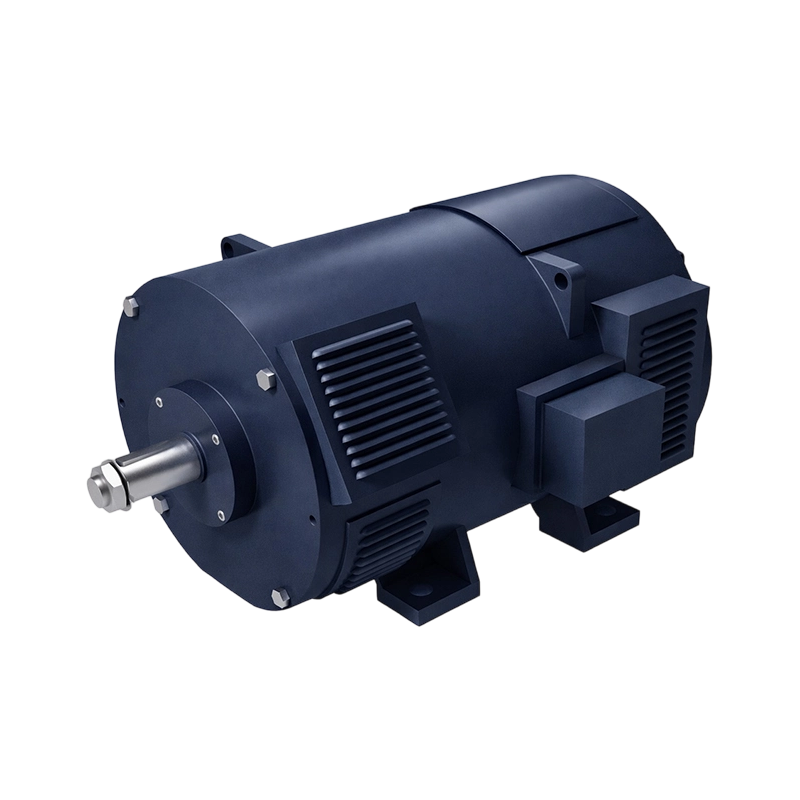
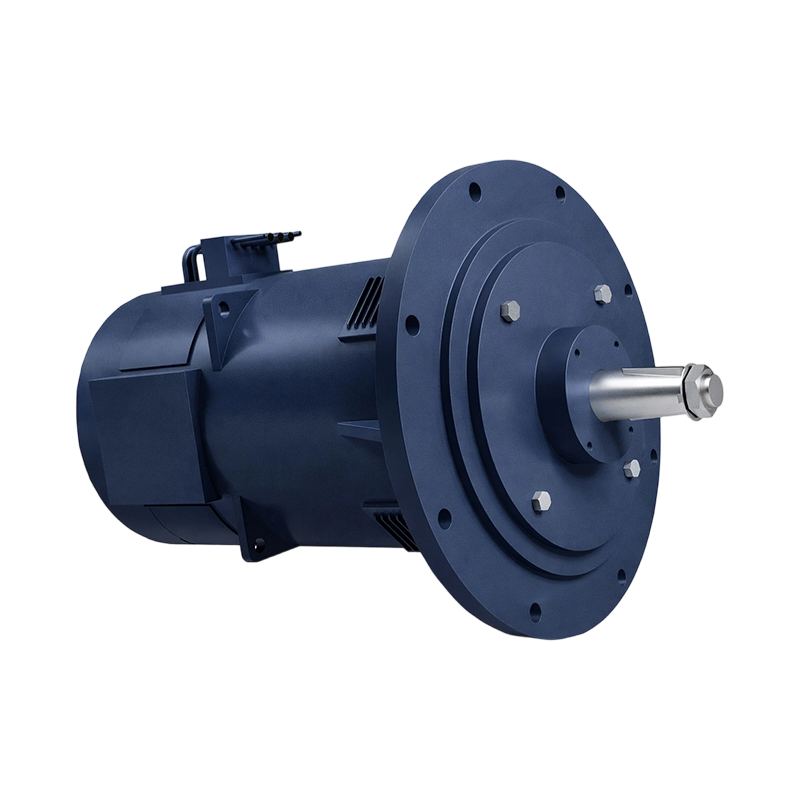
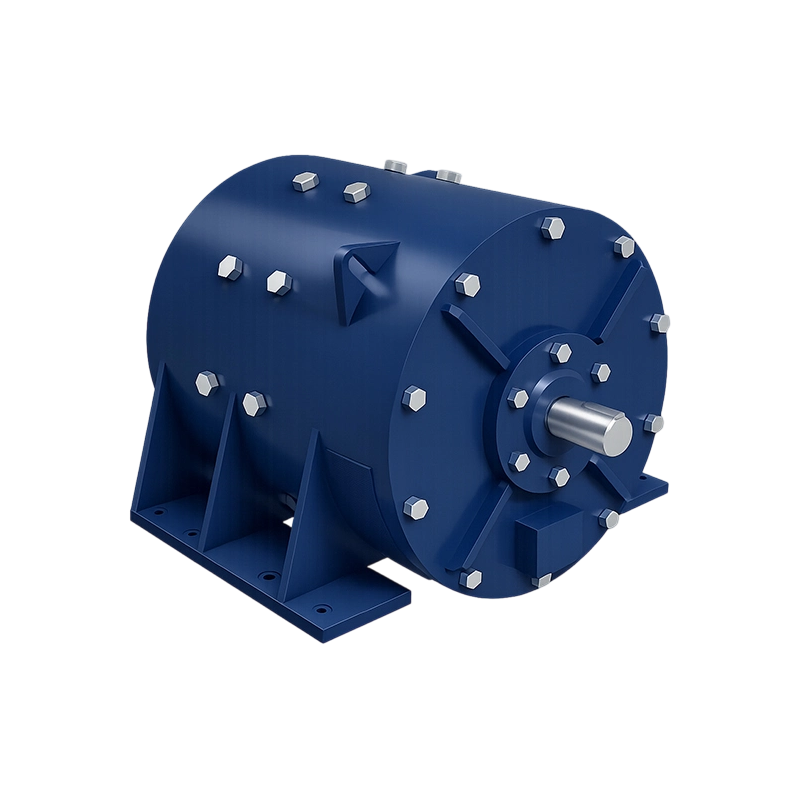

Why Do Electric DC Motors Remain Irreplaceable in Modern Heavy Industry?
Against the backdrop of continuous evolution in motor technology, AC inverter systems and brushless motors have become almost mainstream. However, if we shift our perspective from standardized equipment catalogs to real-world industrial environments, we find that Electric DC Motors haven't disappeared; they've simply moved from widespread application to more engineering-oriented areas.
They remain frequently used in the energy, mining, metallurgy, and heavy machinery industries, and remain an indispensable option in some critical equipment.
Industrial demands for motors go beyond efficiency
In many engineering systems, the standard for evaluating a motor isn't simply energy efficiency or structural advancement, but rather its ability to output stable power under complex operating conditions.
A core characteristic of DC motors is their ability to output high torque even at low or near-zero speeds. This characteristic is particularly important in mine hoists, rolling mill equipment, and large lifting systems, as the startup process in these scenarios often involves high-load impacts rather than smooth acceleration.
Engineering interpretation of output behavior
From an engineering perspective, this output method is more direct and easier for control systems to understand and utilize.
Why Do Some Heavy Industrial Scenarios Still Rely on DC Motors?
Observing the operating logic of equipment in mines, metallurgy, or ports reveals a common thread: large and unpredictable load variations.
For example, mine hoists must overcome the instantaneous impact of wire rope tension and ore weight with each start-up. Metallurgical rolling mills experience drastic load changes the instant metal bites in. Port cranes require frequent switching between lifting and braking.
In these conditions, the system requires deterministic torque response rather than the fine-tuning of complex control algorithms.
The output characteristics of DC motors make them valuable in these environments.
The essence of technology selection is adaptability to operating conditions, not competition based on superior technology
The development of motor technology is not a simple substitution relationship, but rather a differentiation of different technologies under different operating conditions.
In scenarios with light loads, continuous operation, and stable environments, AC variable frequency systems have significant advantages. However, in environments with impact loads, high-frequency start-stop, and high torque demands, DC motors still demonstrate stability.
Therefore, in practical engineering, the choice of DC motors depends more on load characteristics than on technological trends.
Icem Electric's Position in DC Motor Engineering Applications
Icem Electric Co., Ltd. has long focused on motor and mechatronics solutions, serving energy, mining, metallurgy, and heavy industrial systems. As a Chinese manufacturer of Electric DC Motors and a factory producing DC propulsion motors, our clients include equipment manufacturers, engineering companies, and industrial end-users.
Through long-term project practice, we have found that motor problems often do not originate in the product itself, but rather in the discrepancy between the selected model and actual operating conditions. Many devices use standardized selection methods during the design phase, but face unexpected load variations during actual operation.
Therefore, we emphasize operating condition-based motor matching. By analyzing load curves, starting frequencies, and environmental conditions, we ensure that the motor aligns with the system's operating logic, rather than simply providing standard models.
Simultaneously, relying on a stable supply chain and rigorous quality control processes, we can guarantee consistency in project delivery cycles and operational reliability, which is particularly critical for engineering projects.
The Role of DC Motors is Changing
From an industry trend perspective, the application scope of Electric DC Motors is indeed shrinking, but this shrinkage does not equate to disappearance; rather, it represents a concentration in more specialized and engineering-oriented fields.
It has gradually evolved from general-purpose equipment into part of specific operating condition solutions, and remains relevant in systems with extremely high requirements for torque control, shock response, and operational stability.
In other words, it is no longer the default option, but it remains one of the key options.
FAQ
Q1: Have DC motors been completely replaced by AC motors?
No. AC motors dominate in general industrial applications, but DC motors are still widely used in heavy-load and shock conditions.
Q2: What are the most prominent characteristics of DC motors?
Their core characteristics are low-speed, high-torque output capability and good speed regulation response performance, making them suitable for systems with large load variations.
Q3: Are DC motors more difficult to maintain?
Compared to brushless systems, traditional DC motors do require brush maintenance, but in heavy industrial applications, this maintenance is usually periodic and predictable.
Q4: What are Icem Electric's main advantages?
The main advantages lie in its ability to select operating condition drives, customized solutions, and stable supply chain support, making motors more closely aligned with actual engineering needs.


