
 English
 中文简体
中文简体 русский

 Read More

Product Category
NEW Category
Contact us
Contact Us
We specialise in the research, development and manufacture of electrical wires and cables.
 +86-15021943462
DC Motor Selection Guide: Torque, Speed, Voltage & Applications
Content
DC Motor Selection Guide: Where to Start
Choosing the right DC motor comes down to four numbers: required torque, required speed, available supply voltage, and duty cycle. Every other decision — brushed vs brushless, motor size, gearbox ratio — follows from getting these four right first. Starting from a motor's headline power rating instead of the actual load requirement is the most common reason motors run hot, stall under load, or wear out early.
A practical selection sequence works through the mechanical load first, then translates that into electrical requirements: define the load torque and speed at the output shaft, factor in any gearbox reduction, calculate the electrical power and current draw that torque demands, and only then check that against the available supply voltage and thermal limits of candidate motors.
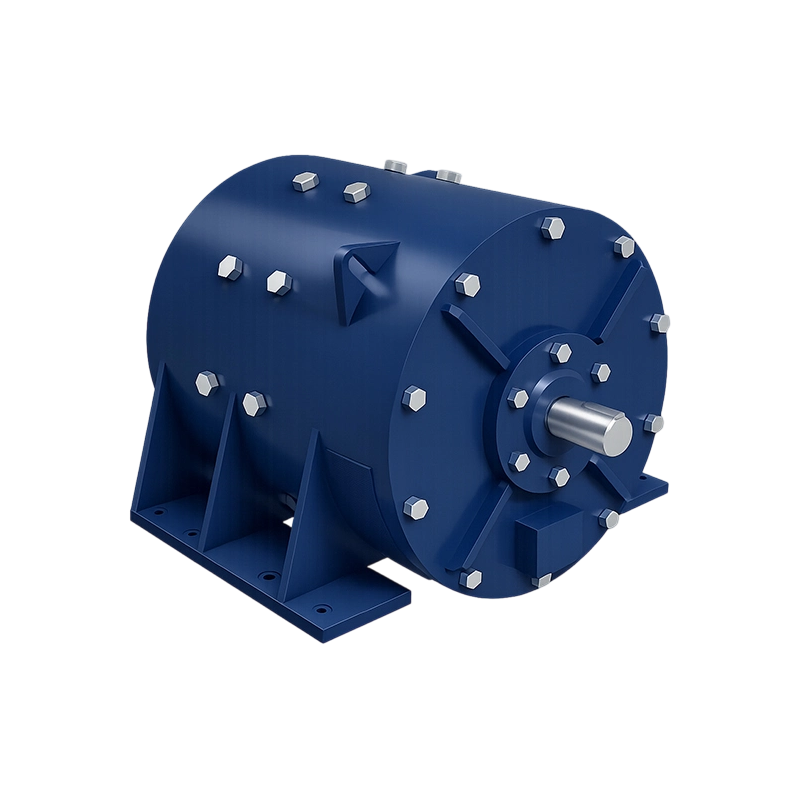
Calculating Torque and Speed Requirements
Torque requirements start with the mechanical load: for a rotating load, torque (in Nm) equals force applied at a radius multiplied by that radius; for linear motion through a lead screw or belt, torque is derived from the required force divided by the mechanical advantage of the drive system. Add a safety margin of roughly 20-50% above the calculated steady-state torque to cover starting inertia, friction losses, and load variation.
Speed requirements are typically set by the application cycle time or process rate, expressed in RPM at the output shaft. If a gearbox sits between the motor and the load, the motor's own shaft speed must be the output speed multiplied by the gear ratio, and the motor's torque requirement drops proportionally (before efficiency losses, which typically reduce usable torque by 5-15% depending on gearbox type).
| Variable | How to Calculate | Notes |
|---|---|---|
| Load torque | Force x radius (rotational) or force ÷ mechanical advantage (linear) | Add 20-50% safety margin |
| Motor speed | Output speed x gear ratio | Check against motor's rated max RPM |
| Power | Torque (Nm) x speed (rad/s) | Compare against motor's continuous power rating, not peak |
Choosing the Right Supply Voltage
Voltage selection is driven by the system's power source and the current the drive electronics can handle, not by motor speed alone. For a given power output, higher voltage means lower current draw, which allows thinner wiring, smaller connectors, and lower resistive losses — an important factor in long cable runs or high-power industrial drives.
- Battery-powered and portable equipment: typically constrained to 12V, 24V, or 48V DC bus voltages
- Industrial automation lines: often run on 24V or 48V control voltage, or higher-voltage DC buses for large servo and brushless systems
- Avoid selecting a motor rated well above the available supply voltage — running it under-voltage reduces available torque and can cause erratic speed control
DC Motors in Industrial and Automation Applications
Industrial and automation equipment favor DC motors — particularly brushless designs — where precise, repeatable motion control matters more than raw power output. Conveyor systems, packaging lines, CNC axis drives, and material handling equipment commonly use brushless DC or servo-type DC motors paired with encoders for closed-loop position and speed feedback.
- Conveyor and roller drives: brushed or brushless DC motors matched to load torque and belt speed requirements
- Pick-and-place and CNC axes: brushless DC or DC servo motors for accurate, repeatable positioning
- Pumps and fans in process equipment: PMDC or BLDC motors selected for continuous-duty efficiency
- Automated guided vehicles (AGVs) and mobile robots: compact BLDC motors chosen for high torque density and battery efficiency
High Torque Applications and Compact Motors for Robotics
High-torque DC motor applications — cranes, winches, electric actuators, and heavy-duty starter motors — typically call for series-wound or high-pole-count brushless designs capable of delivering large torque at low RPM, often paired with a gearbox to further multiply torque at the output shaft. These applications prioritize starting torque and thermal capacity over top speed.
Robotics applications sit at the other end of the spectrum: compact, high-torque-density brushless DC motors with integrated encoders are the standard choice for joint actuators and mobile platforms, where every gram of weight and every millimeter of housing diameter affects overall system performance. Coreless and frameless BLDC designs are increasingly used in robotic joints specifically because they reduce cogging torque and improve control smoothness at low speeds.
DC Motor vs AC Motor
The fundamental difference is control simplicity versus raw scalability: DC motors offer straightforward speed and torque control through voltage and current adjustment, while AC motors excel at high-power, continuous-duty operation with lower maintenance. AC induction motors dominate large fixed-speed industrial drives — pumps, compressors, large fans — where their ruggedness and lack of brushes or magnets translate into a longer service life at high power levels.
| Factor | DC Motor | AC Motor |
|---|---|---|
| Speed control | Simple, via voltage/PWM | Requires a variable frequency drive (VFD) |
| Starting torque | High, especially series-wound | Moderate, depends on motor design |
| Best suited for | Portable, battery-powered, precision-control applications | Large fixed-speed or VFD-driven industrial equipment |
| Maintenance | Brush wear in brushed types; minimal in brushless | Generally low, no brushes |
PREV: Synchronous Motors Explained: Working Principle, Types & Uses
NEXT:DC Motors Explained: Working Principle, Types & Brushed vs Brushless
NEXT:DC Motors Explained: Working Principle, Types & Brushed vs Brushless
Interested in cooperation or have questions?
Let'S Work Together Welcome Aboard!
-

-
 +86-15021943462
 -
 Room 2326, 23rd Floor 2000 Zhongshan North Road Putuo District Shanghai, China
Join Our Mailing List
Product Categories
Quick Links
Quick Links
