
 English
 中文简体
中文简体 русский

 Read More

Product Category
NEW Category
Contact us
Contact Us
We specialise in the research, development and manufacture of electrical wires and cables.
 +86-15021943462
Explosion-Proof Electric Motors: Ex Ratings, Hazardous Location Selection & Standards
Content
What Makes an Electric Motor Explosion-Proof
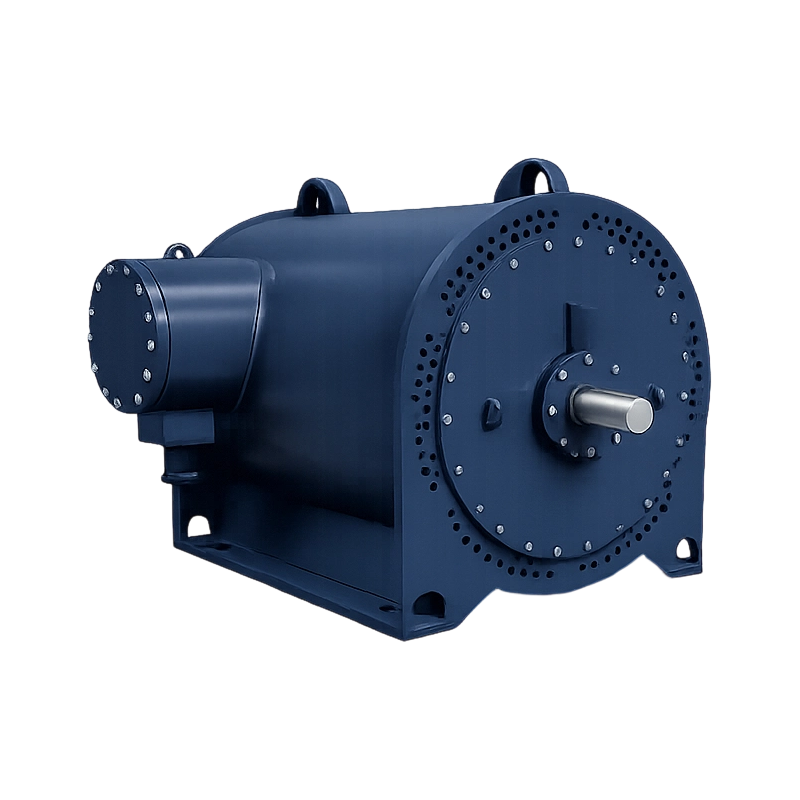
An explosion-proof electric motor is not designed to contain an internal explosion — it is engineered to prevent the motor from igniting flammable gases, vapors, or dust present in the surrounding atmosphere. The enclosure is built to withstand internal ignition events and to cool any escaping gases below their ignition temperature before they reach the external environment.
The core construction features that distinguish explosion-proof motors include:
- Flame-path joints — precisely machined gap tolerances (typically 0.1–0.4 mm) between mating surfaces that allow pressure relief while quenching any flame front
- Reinforced enclosures — heavy-duty cast iron or aluminum housings rated to withstand internal pressure spikes without deformation
- Sealed conduit entries — threaded conduit hubs with minimum 5-thread engagement to prevent external atmosphere ingress
- Temperature-rated insulation — winding insulation systems designed to prevent surface temperatures from reaching the auto-ignition point of the target gas group
These design requirements are governed by international standards including IEC 60079-0 (general requirements) and IEC 60079-1 (flameproof enclosures), as well as NEMA MG-1 and UL 674 in North American markets. Compliance with these standards is verified through third-party testing by bodies such as ATEX notified bodies in Europe or FM/UL in the United States.
Ex-Rated Safety Motors: Understanding the Protection Concepts
The IECEx and ATEX certification frameworks use a structured coding system to describe protection concepts. A motor marked Ex db IIC T4 Gb, for example, carries a specific meaning at each segment of that designation. Understanding this notation is essential when specifying or procuring Ex-rated safety motors for a hazardous location.
Common Ex Protection Concepts for Motors
| Protection Concept | Ex Code | Principle | Typical Application |
|---|---|---|---|
| Flameproof | db | Enclosure withstands internal explosion; quenches escaping gases | Oil & gas, chemical plants |
| Increased Safety | eb | Enhanced measures to prevent arcs, sparks, or excess temperatures | Zone 1/Zone 2 gas atmospheres |
| Dust Ignition-Proof | tb | Enclosure prevents dust ingress; limits surface temperature | Grain handling, flour mills, pharmaceutical |
| Pressurized | px / py | Positive pressure purge keeps hazardous atmosphere out of enclosure | Large motors in Zone 1 |
Gas group classification (IIA, IIB, IIC) indicates the severity of the explosive atmosphere the motor can safely operate in. IIC covers the most hazardous gases such as hydrogen and acetylene, while IIA covers propane and similar industrial gases. A motor certified for IIC is also suitable for IIA and IIB environments, but not vice versa.
Temperature class (T1 through T6) defines the maximum allowable surface temperature of the motor under worst-case operating conditions. T6 motors limit surface temperature to 85 °C, making them suitable for environments containing carbon disulfide (auto-ignition point: 95 °C). Most general industrial Ex motors are rated T3 (200 °C) or T4 (135 °C).
Hazardous Location Classification: Zones vs. Divisions
Selecting the correct hazardous location motor begins with correctly classifying the installation area. Two classification systems are in parallel global use, and specifying engineers must match the motor's certification to the site's classification method.
IEC Zone System (Europe, Asia, International)
The Zone system divides hazardous locations by the likelihood of an explosive atmosphere being present:
- Zone 0 — explosive gas atmosphere is present continuously or for long periods (e.g., inside a fuel tank)
- Zone 1 — likely to occur periodically during normal operation (e.g., pump rooms in petrochemical plants)
- Zone 2 — not likely under normal operation but possible under abnormal conditions
- Zone 20 / 21 / 22 — equivalent zones for combustible dust atmospheres
NEC Division System (North America)
The Division system, defined by NEC Article 500 and NFPA 70, uses two divisions per class:
- Division 1 — hazardous concentrations exist under normal conditions (broadly equivalent to Zone 0 + Zone 1 combined)
- Division 2 — hazardous concentrations exist only in abnormal conditions (broadly equivalent to Zone 2)
Motors certified under ATEX/IECEx are not automatically accepted for NEC Division-classified sites without additional FM or UL certification, and vice versa. Cross-certification is available from most major motor manufacturers for motors intended for international projects, but must be explicitly confirmed on the nameplate and certification documentation.
Key Industries and Typical Applications
Explosion-proof and Ex-rated motors are deployed wherever process fluids, gases, or dust create a persistent ignition risk. The following sectors account for the largest share of global demand:
Oil, Gas, and Petrochemical
This remains the dominant end market. Pump drives, compressor motors, fan motors for forced-draft coolers, and conveyor drives in refineries and offshore platforms all require Ex db or Ex eb certification. Flameproof (Ex db) IIC T4 is the most commonly specified rating in this sector. Salt spray resistance, tropical-grade insulation systems, and F-class or H-class thermal ratings are typically required alongside the explosion protection designation.
Chemical and Pharmaceutical Manufacturing
Solvent-handling processes, reactor agitators, and HVAC systems in clean rooms where flammable solvents are used require Zone 1 or Zone 2-rated motors. Many pharmaceutical facilities also require FDA-compliant materials and smooth, washdown-friendly external surfaces alongside Ex certification — a combination addressed by stainless steel Ex motors or epoxy-coated cast iron variants.
Grain, Food Processing, and Biomass
Combustible dust (Zone 21 / Zone 22) rather than flammable gas is the primary hazard in grain elevators, flour mills, biomass pellet plants, and sugar refineries. Dust ignition-proof motors (Ex tb IIIC) are required, with maximum surface temperature ratings matched to the lowest auto-ignition temperature of the dust present. Grain dust (430 °C layer ignition temperature) permits higher T-class ratings than, for example, aluminum dust (T6 required).
Wastewater Treatment and Biogas Plants
Methane accumulation in enclosed wet wells, digester chambers, and biogas storage areas creates Zone 1 conditions. Pump motors, mixer drives, and blower motors at these installations are typically specified as Ex db or Ex eb IIB T4, reflecting the moderate hazard level of methane (Group IIB) rather than the maximum IIC rating.
Specification and Procurement Considerations
Procuring the wrong explosion-proof motor — whether over-specified or under-certified — has significant cost and safety implications. The following parameters must be confirmed before placing an order:
- Area classification report — confirm Zone/Division, gas group, and temperature class from the facility's formal hazardous area classification document, not from informal site knowledge
- Certification body and market — ATEX for EU, IECEx for international mutual recognition, FM/UL for US and Canada; verify the exact certification code on the motor nameplate matches the site classification
- Ambient temperature range — most Ex motors are rated for –20 °C to +40 °C standard ambient; applications outside this range require low-temperature or high-ambient variants with separate certification confirmation
- Duty cycle and service factor — overloaded Ex motors generate excess heat that can breach the rated temperature class; ensure the motor's continuous duty rating (S1) is adequate without relying on service factor in hazardous locations
- Drive compatibility — motors fed by variable frequency drives (VFDs) in hazardous locations require motors with reinforced winding insulation (spike-resistant insulation to IEC 60034-17) and may require additional Ex-certified shaft seals; not all standard Ex motors are VFD-rated
- IP rating vs. Ex rating — IP55 or IP65 is standard on most Ex motors but should be verified independently; an Ex certification does not automatically imply a specific ingress protection level
Maintenance documentation is equally critical. Ex motors must be repaired only by facilities holding an appropriate Ex repair certification (e.g., IECEx Service Facility Certificate), using OEM-approved components. Unauthorized repairs — even seemingly minor ones such as replacing a terminal box gasket with a non-approved material — can void the Ex certification and create legal liability in the event of an incident.
PREV:AC Motor Guide: Types, Efficiency, Torque & Troubleshooting Tips
NEXT:Severe Duty Motors: Cast Iron, 1.25 SF & IP66 Protection Guide
NEXT:Severe Duty Motors: Cast Iron, 1.25 SF & IP66 Protection Guide
Interested in cooperation or have questions?
Let'S Work Together Welcome Aboard!
-

-
 +86-15021943462
 -
 Room 2326, 23rd Floor 2000 Zhongshan North Road Putuo District Shanghai, China
Join Our Mailing List
Product Categories
Quick Links
Quick Links
