
 English
 中文简体
中文简体 русский

 Read More

Product Category
NEW Category
Contact us
Contact Us
We specialise in the research, development and manufacture of electrical wires and cables.
 +86-15021943462
Severe Duty Motors: Cast Iron, 1.25 SF & IP66 Protection Guide
For chemical plants, wastewater treatment facilities, and food processing washdown areas, a true severe duty motor is defined by a cast iron frame with IP66 ingress protection, Class F insulation with a Class B temperature rise of 80 degrees C at a 1.25 service factor, and stainless steel hardware throughout. This combination survives high-pressure washdowns at 1,500 psi, resists corrosion from airborne acids, and delivers a bearing life exceeding 25,000 hours under continuous operation in ambient temperatures up to 40 degrees C.
Content
- 1 What Separates Severe Duty Motors from Standard Industrial Motors
- 2 Ingress Protection Ratings and Environmental Sealing
- 3 Insulation Systems and Thermal Endurance
- 4 Service Factor and Continuous Overload Capability
- 5 Bearing Protection and Lubrication Systems
- 6 Corrosion-Resistant Finishes and Paint Systems
- 7 Testing and Certification Standards for Severe Duty Motors
What Separates Severe Duty Motors from Standard Industrial Motors
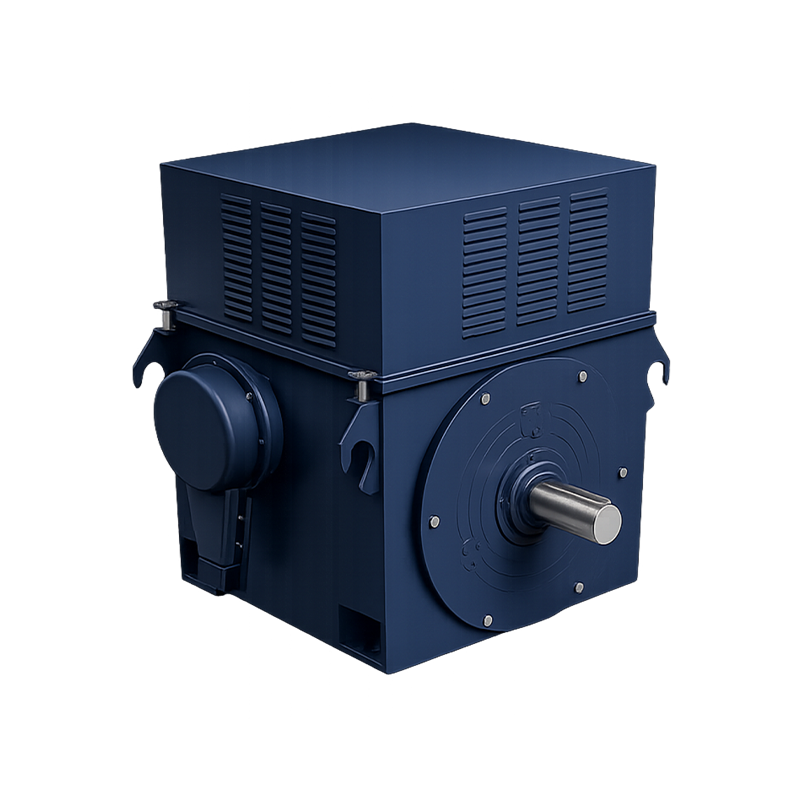
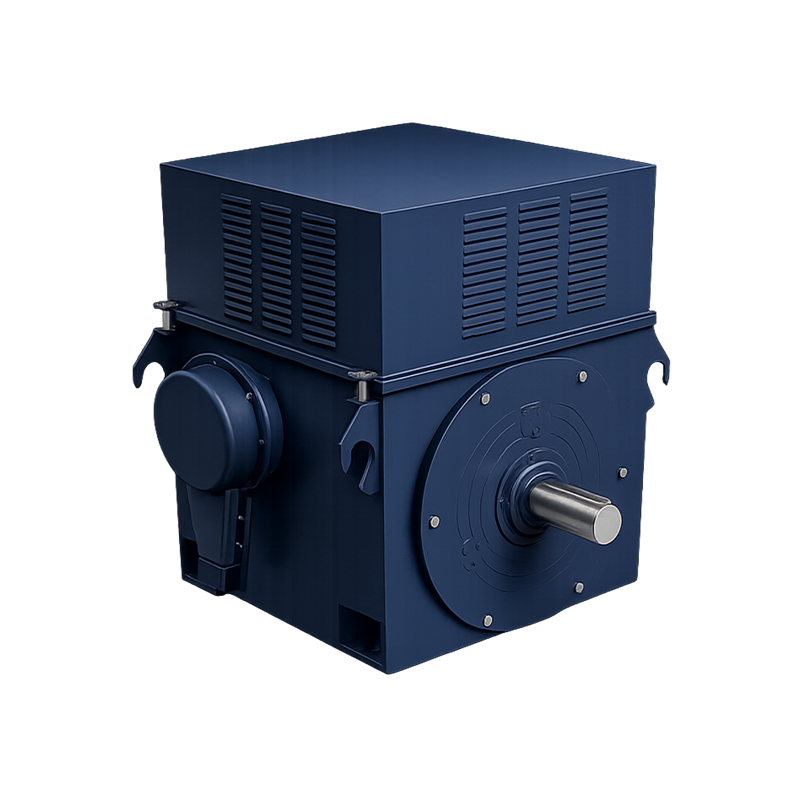
A severe duty motor is not simply a standard motor with a coat of epoxy paint. It is a complete redesign of the motor's protection systems, starting with the frame material. Standard industrial motors use cast aluminum or rolled steel frames that are adequate for clean, dry environments. A severe duty motor uses cast iron for the frame, end brackets, and conduit box because cast iron provides superior corrosion resistance, dampens vibration more effectively, and withstands the mechanical stress of frequent thermal cycling without cracking.
The conduit box on a severe duty motor is another distinguishing feature. It is gasketed and sealed with a neoprene O-ring that maintains an IP66 seal even when the motor is subjected to a high-pressure water jet from any direction. The box is oversized to provide ample room for making connections and is typically rotatable in 90-degree increments for ease of installation in tight spaces. All hardware, including bolts, washers, and nameplate rivets, is stainless steel to prevent rust staining on the exterior.
Ingress Protection Ratings and Environmental Sealing
The IP rating on a severe duty motor describes its ability to exclude solid objects and water. The table below maps the most common IP ratings found on motors in harsh environments to the level of protection they actually provide against real-world contaminants.
| IP Rating | Solids Protection | Water Protection | Suitable Environment |
|---|---|---|---|
| IP55 | Dust protected | 6.3 mm jet from any direction | General outdoor, mill duty |
| IP65 | Totally dust tight | 6.3 mm jet, lower pressure | Cement plants, grain handling |
| IP66 | Totally dust tight | 12.5 mm powerful jet at 100 kPa | Chemical washdown, food processing |
| IP67 | Totally dust tight | Immersion up to 1 meter for 30 minutes | Temporary submersion, pumping stations |
For most severe duty motor applications, IP66 is the minimum acceptable rating. It guarantees that the motor is completely dust-tight and can withstand a powerful jet of water from a 12.5 mm nozzle delivering 100 liters per minute at 100 kPa. This is the standard for daily washdown in food and beverage plants where caustic cleaning solutions are sprayed directly at equipment.
Insulation Systems and Thermal Endurance
The winding insulation in a severe duty motor must survive both high ambient temperatures and the internal heat generated by the motor itself. The standard specification calls for Class F insulation, which is rated for a maximum total temperature of 155 degrees C. However, the motor is operated with a Class B temperature rise, meaning the winding temperature does not exceed 80 degrees C above a 40 degrees C ambient, for a total of 120 degrees C. This 35 degrees C margin between the actual operating temperature and the insulation rating dramatically extends the life of the insulation.
When a severe duty motor is used with a variable frequency drive, the insulation system faces additional stress from voltage spikes and rapid switching. For these applications, the motor must be specified with inverter-duty insulation that resists partial discharge and corona damage. Inverter-duty magnet wire has a specially formulated coating with a higher dielectric strength than standard magnet wire, and the stator is processed with a vacuum pressure impregnation of epoxy varnish that fills all voids and creates a homogeneous insulation wall.
Service Factor and Continuous Overload Capability
The service factor of a severe duty motor is the multiplier that indicates how much above the nameplate horsepower the motor can deliver continuously without exceeding the insulation temperature limit. A 1.25 service factor on a 10 horsepower motor means it can deliver 12.5 horsepower continuously at rated voltage and frequency. This built-in reserve is critical for applications where the load can fluctuate, such as a conveyor that occasionally encounters a heavier product load or a pump that handles varying fluid viscosities.
Operating a severe duty motor into its service factor does reduce the theoretical insulation life by a small amount, but the Class F insulation with Class B rise provides the headroom to do this safely. A motor running at a 1.25 service factor continuously at 40 degrees C ambient will still achieve over 100,000 hours of insulation life, compared to over 200,000 hours at 1.0 service factor. For intermittent overloads lasting less than an hour, the impact on motor life is negligible.
Bearing Protection and Lubrication Systems
Bearing failure is the leading cause of unscheduled downtime in severe duty motors, and the harsh environment attacks bearings from multiple directions. Contaminants enter, grease degrades, and moisture condenses inside the bearing housing. Effective bearing protection on a severe duty motor includes several integrated features.
- Non-contact labyrinth seals on both the drive and non-drive ends create a tortuous path that prevents water spray and dust from reaching the bearing. They have no wearing parts and maintain their sealing effectiveness for the life of the motor.
- Regreaseable bearings with a spring-loaded relief port allow fresh grease to be pumped in while old, oxidized grease is expelled. The relief port opens automatically at a set pressure of approximately 5 psi, preventing overgreasing that can overheat the bearing.
- A shaft slinger on the drive end throws off any liquid that runs along the shaft before it can reach the seal, providing a first line of defense against water ingress.
- Brass bearing housings resist corrosion and provide better heat transfer than cast iron, helping to keep the bearing temperature below 100 degrees C during continuous operation.
A severe duty motor with these bearing protection features, relubricated every 2,000 operating hours with a high-quality polyurea grease, will routinely achieve an L10 bearing life of over 30,000 hours in a clean environment and over 25,000 hours in a plant with moderate airborne contamination.
Corrosion-Resistant Finishes and Paint Systems
The exterior of a severe duty motor must resist the specific chemicals present in the installation environment. Standard paint on an industrial motor will peel within months when exposed to the chlorine atmosphere of a water treatment plant. The standard paint system for severe duty applications is a two-part epoxy primer with a polyurethane topcoat, applied at a total dry film thickness of 125 to 175 micrometers. This system passes a 500-hour salt spray test per ASTM B117 with no blistering and less than 3 mm of creep from the scribe line.
For extreme environments, a severe duty motor can be specified with a stainless steel nameplate, stainless steel breather drains, and a zinc-plated or stainless steel shaft extension. Motors installed in coastal or offshore environments should have an epoxy paint system supplemented with a zinc-rich primer that provides galvanic protection to the cast iron substrate if the paint film is scratched.
Testing and Certification Standards for Severe Duty Motors
A genuine severe duty motor is certified to specific industry standards that verify its capabilities beyond the manufacturer's claims. The most important certifications to look for include IEEE 841 for petroleum and chemical industry motors, NEMA Premium for verified efficiency levels, and UL 674 for motors used in hazardous locations. An IEEE 841 motor has passed a stringent 72-hour salt spray test, a vibration test at multiple load points, and a bearing temperature test at full load in a 40 degrees C ambient. The certification is not a marketing designation; it requires third-party validation.
For food processing applications, a severe duty motor may also carry BISSC or NSF certification, indicating that the motor exterior surfaces are designed to be easily cleaned and do not harbor bacterial growth. These motors have smooth, rounded contours, no exposed threads, and a white epoxy finish that shows any contamination immediately.
PREV:Explosion-Proof Electric Motors: Ex Ratings, Hazardous Location Selection & Standards
NEXT:AC Motor vs DC Motor: Key Differences, How They Work & How to Choose
NEXT:AC Motor vs DC Motor: Key Differences, How They Work & How to Choose
Interested in cooperation or have questions?
Let'S Work Together Welcome Aboard!
-

-
 +86-15021943462
 -
 Room 2326, 23rd Floor 2000 Zhongshan North Road Putuo District Shanghai, China
Join Our Mailing List
Product Categories
Quick Links
Quick Links
