
 English
 中文简体
中文简体 русский

 Read More

Product Category
NEW Category
Contact us
Contact Us
We specialise in the research, development and manufacture of electrical wires and cables.
 +86-15021943462
What Is an AC Motor, How It Works & How to Troubleshoot Electric Motors
Content
What Is an AC Motor?
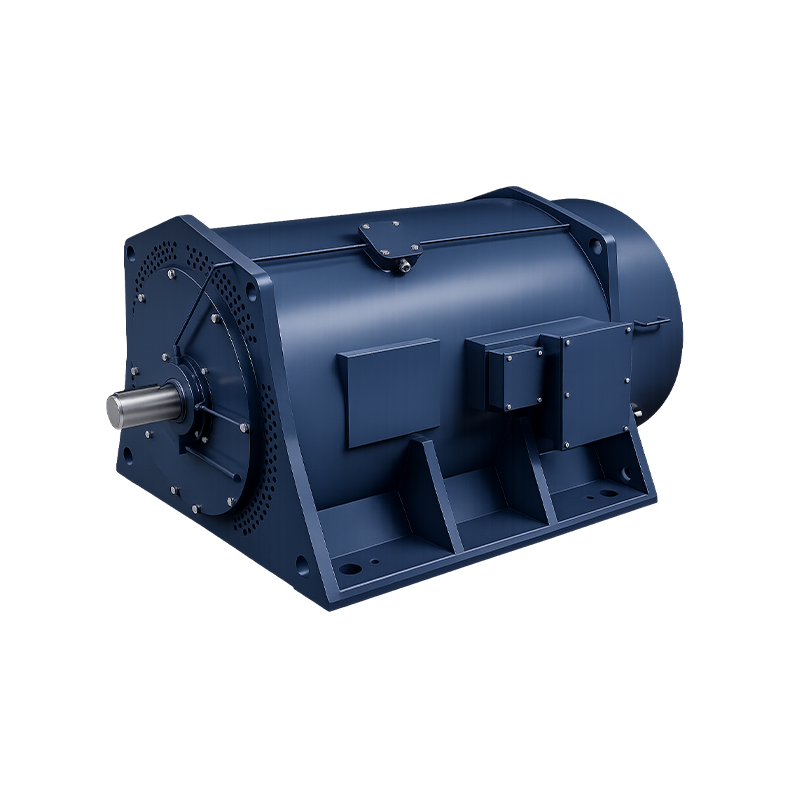
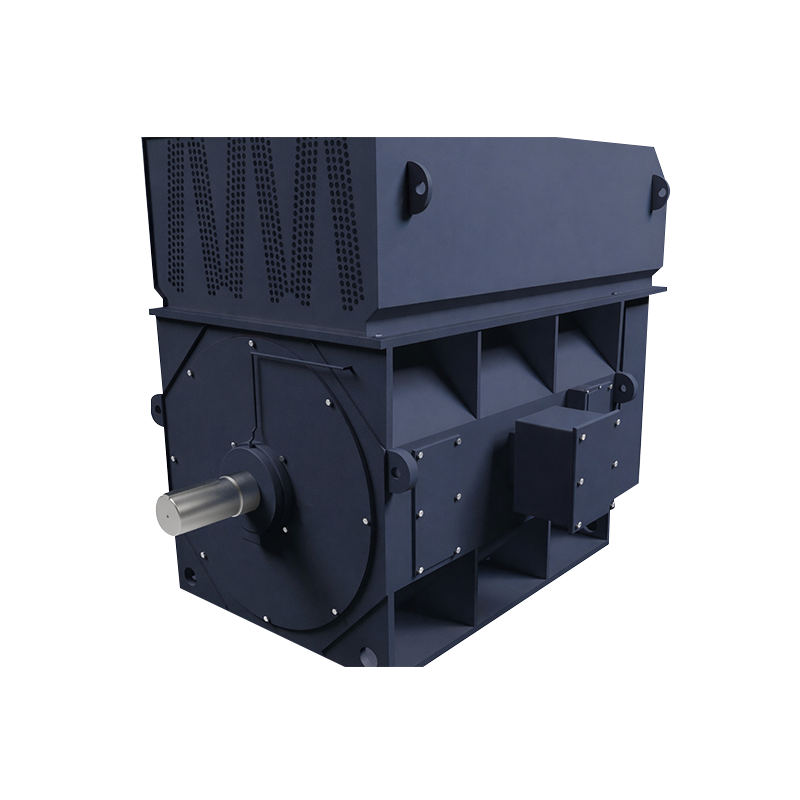
An AC motor is an electric motor that converts alternating current (AC) electrical energy into mechanical rotational energy. Unlike DC motors, which require a direct current source and typically involve brushes and commutators to manage current direction, AC motors operate directly from the sinusoidal voltage supplied by the power grid — making them the dominant motor type in industrial, commercial, and residential applications worldwide.
The global installed base of AC motors accounts for approximately 45–50% of total electricity consumption in industrialized countries, according to the International Energy Agency. They power everything from centrifugal pumps, compressors, and conveyor systems in heavy industry to HVAC fans, washing machines, and power tools in everyday life.
AC motors divide into two principal families based on rotor construction and operating principle:
- Induction motors (asynchronous motors) — the rotor is not electrically connected to the power supply; current is induced in the rotor by the rotating magnetic field of the stator. The most widely deployed motor type globally.
- Synchronous motors — the rotor rotates at exactly the same speed as the stator's rotating magnetic field; requires an external excitation source (permanent magnets, DC field winding, or reluctance geometry) to maintain synchronism.
Within these two families, further sub-types include squirrel cage induction motors, wound-rotor induction motors, permanent magnet synchronous motors (PMSM), synchronous reluctance motors (SynRM), and single-phase induction motors — each suited to a specific range of power ratings, speed requirements, and duty cycles.
How the AC Motor Works: The Operating Principle
The operation of an AC motor is founded on Faraday's law of electromagnetic induction and the Lorentz force law. Understanding these principles in sequence explains how electrical energy becomes shaft torque.
Step 1 — Creating the Rotating Magnetic Field
When three-phase AC current flows through the stator windings — which are physically displaced from each other by 120° around the stator bore — each winding generates a magnetic field that varies sinusoidally at supply frequency (50 or 60 Hz). The vector sum of these three time-displaced, space-displaced magnetic fields produces a rotating magnetic field (RMF) that revolves around the stator bore at synchronous speed, calculated as:
Ns = (120 × f) / P
Where Ns is synchronous speed in RPM, f is supply frequency in Hz, and P is the number of stator poles. A 4-pole motor on a 50 Hz supply runs at 1,500 RPM synchronous speed; on a 60 Hz supply, the same motor has a synchronous speed of 1,800 RPM.
Step 2 — Inducing Rotor Current (Induction Motor)
In an induction motor, the rotating magnetic field sweeps past the stationary rotor conductors, inducing an electromotive force (EMF) in them by transformer action. Since the rotor conductors form closed circuits (either the cast aluminum bars of a squirrel cage rotor or the wound coils of a wound-rotor motor), the induced EMF drives a current through the rotor. This rotor current generates its own magnetic field, which interacts with the stator RMF to produce a torque that accelerates the rotor in the direction of field rotation.
Step 3 — Slip and Steady-State Operation
As the rotor accelerates, the relative speed between the rotor conductors and the rotating stator field — called slip — decreases. If the rotor were to reach synchronous speed, there would be no relative motion, no induced EMF, no rotor current, and therefore no torque. The rotor therefore always runs at slightly below synchronous speed under load. Full-load slip in standard induction motors is typically 2–8%, meaning a 4-pole, 50 Hz motor with 1,500 RPM synchronous speed typically runs at 1,380–1,470 RPM under rated load.
Slip increases with load: as mechanical load on the shaft increases, the rotor slows relative to the RMF, inducing higher rotor current and higher torque to match the load demand — up to the motor's breakdown torque limit. This self-regulating behavior makes the induction motor inherently load-responsive without external control in fixed-speed applications.
Synchronous Motor Operation
In a synchronous motor, the rotor carries permanent magnets or a DC-excited field winding that produces its own magnetic field. This rotor field locks onto the rotating stator field and follows it at exactly synchronous speed — there is no slip. Synchronous motors therefore deliver precisely constant speed regardless of load variations, making them the preferred choice for precision drives, high-efficiency variable-speed applications using VFDs, and power factor correction in industrial plants.
| Feature | Induction Motor | Synchronous Motor (PMSM) |
|---|---|---|
| Rotor speed | Below synchronous (slip) | Exactly synchronous |
| Rotor excitation | Induced (no external source) | Permanent magnets or DC field |
| Self-starting | Yes (DOL or star-delta) | Requires VFD or starting aid |
| Efficiency (IE class) | IE3–IE4 | IE4–IE5 |
| Speed control | VFD or pole changing | VFD (precise) |
| Cost | Lower | Higher (rare earth magnets) |
| Maintenance | Very low (no brushes) | Low (brushless PMSM) |
AC Motor Efficiency Classes and Energy Standards
AC motor efficiency is internationally classified under the IEC 60034-30-1 standard, which defines four efficiency levels — IE1 through IE4 — with IE5 ("Ultra-Premium") introduced as a guideline class for emerging high-efficiency designs. Each higher IE class reduces electrical losses by approximately 20% relative to the class below it.
- IE1 (Standard) — no longer permitted for new installations in the EU, UK, or many other jurisdictions under Ecodesign Regulation 2019/1781
- IE2 (High Efficiency) — minimum requirement for motors 0.75–1,000 kW in many markets when used without a VFD; still widely installed globally
- IE3 (Premium Efficiency) — mandatory minimum in EU from July 2021 for motors 0.75–1,000 kW; standard specification in North American industrial procurement
- IE4 (Super Premium) — typically achieved by synchronous reluctance or PMSM designs; increasingly specified for high-duty-cycle pump, fan, and compressor drives
The efficiency difference between IE2 and IE3 may appear modest on a nameplate percentage basis — often 1–3 percentage points — but translates into substantial energy cost savings over a motor's 15–20 year service life. For a 75 kW motor running 6,000 hours per year, a 2% efficiency improvement saves approximately 9,000 kWh annually, with a simple payback on the efficiency premium typically under 2 years at industrial electricity rates.
How to Troubleshoot an Electric Motor: A Systematic Diagnostic Approach
Effective electric motor troubleshooting follows a structured diagnostic sequence that moves from the simplest, lowest-cost checks toward more complex electrical and mechanical testing. The majority of motor failures fall into one of four root cause categories: electrical supply problems, insulation degradation, bearing failure, and mechanical overloading. Identifying the category correctly before any disassembly saves significant time and avoids misdiagnosis.
Step 1 — Check the Power Supply First
Before suspecting the motor itself, verify the supply. Measure line-to-line voltage at the motor terminals (not at the panel) under load. Voltage unbalance exceeding 1% causes disproportionate current unbalance of 6–10%, which generates excessive heat in stator windings and accelerates insulation aging. Verify that all three phases are present, that fuses are intact, and that contactors are closing fully. A missing phase (single-phasing) is the most common cause of a motor that hums but fails to start or that trips immediately on restart.
Step 2 — Measure Running Current Against Nameplate FLA
Clamp-meter measurements on all three phases should show balanced currents within 5% of each other and within the motor's full-load ampere (FLA) nameplate rating. Overcurrent indicates mechanical overloading, a locked-rotor condition, or a developing winding fault. Undercurrent with abnormal vibration or noise may indicate a broken rotor bar in a squirrel cage motor — a fault that is often overlooked because the motor continues to run with reduced torque output. Rotor bar failures are confirmed by motor current signature analysis (MCSA) or rotor bar test using a clamp meter during controlled acceleration.
Step 3 — Insulation Resistance (Megger) Test
De-energize and lock out the motor, then measure insulation resistance (IR) between each winding phase and ground using a megohmmeter (Megger) at the appropriate test voltage — typically 500 V DC for motors rated below 1,000 V. Per IEEE 43-2013, a minimum IR value of 1 MΩ per kV of rated voltage plus 1 MΩ is the absolute minimum for a motor in service; healthy motors typically read 100 MΩ or higher. Values below 1 MΩ indicate significant moisture ingress or insulation breakdown — the motor should not be re-energized until the cause is identified and resolved.
For a more diagnostic picture, perform a polarization index (PI) test: divide the 10-minute IR reading by the 1-minute IR reading. A PI above 2.0 indicates good insulation; below 1.0 suggests contamination or severe degradation. The PI test is particularly useful for distinguishing between wet insulation (which dries and improves over time) and chemically degraded insulation (which does not recover).
Step 4 — Winding Resistance Balance Test
Using a low-resistance ohmmeter or micro-ohmmeter, measure DC resistance between each phase pair (T1-T2, T2-T3, T1-T3 for a three-phase motor). Readings should be balanced within 2% of each other. A significantly lower resistance in one phase pair indicates a shorted turn or shorted coil group. A significantly higher resistance or open circuit indicates a broken winding lead, a burned coil, or a loose connection at the terminal block.
Step 5 — Bearing and Mechanical Inspection
Bearing failures account for approximately 40–50% of all induction motor failures in industrial service, according to IEEE and EPRI studies. Diagnosis begins with vibration analysis: a bearing defect frequency signature (inner race, outer race, ball spin, or cage frequency) visible in a vibration spectrum confirms bearing damage before catastrophic failure. In the absence of spectrum analysis tools, a contact accelerometer or screwdriver-to-ear stethoscope technique can detect abnormal bearing noise — grinding, squealing, or intermittent roughness — that warrants bearing replacement.
Also check for shaft runout and misalignment: overall vibration amplitude at 1× running frequency (1X) indicates unbalance; strong 2× vibration indicates misalignment. Both conditions dramatically accelerate bearing wear and should be corrected with precision laser alignment and dynamic balancing before returning the motor to service.
Step 6 — Thermal Inspection
Infrared thermography of the motor frame, terminal box, and connected cabling during normal operation reveals hot spots caused by unbalanced phases, overloaded windings, high-resistance connections, or blocked cooling paths. Motor frame temperature should not exceed the rated ambient temperature plus the motor's insulation class temperature rise. Common insulation classes and their maximum winding temperatures are: Class B — 130°C, Class F — 155°C, Class H — 180°C. Sustained operation above these limits halves insulation life for every 10°C of excess temperature, per Arrhenius aging models used in IEC 60085.
Common AC Motor Faults, Symptoms, and Likely Causes
The following fault-symptom-cause matrix covers the most frequently encountered AC motor problems in field service environments:
- Motor fails to start, no humming — likely cause: open circuit in supply, blown fuse or tripped breaker, open contactor, or broken stator winding. Check supply voltage at terminals first.
- Motor hums but does not rotate — likely cause: single-phasing (one supply phase missing), locked rotor due to seized bearing or mechanical jam, or excessive starting load. Measure all three phase voltages immediately.
- Motor starts but trips on overload repeatedly — likely cause: overload relay set too low, mechanical overloading from driven equipment, worn bearings increasing friction torque, or supply voltage too low reducing available torque.
- Motor runs hot above normal operating temperature — likely cause: overloading, voltage unbalance, blocked ventilation, incorrect duty cycle, or deteriorating insulation increasing dielectric losses.
- Excessive vibration — likely cause: rotor unbalance (check after any repair or rotor cleaning), misalignment with driven machine, loose mounting bolts, bearing damage, or resonance between motor and baseplate at running frequency.
- Abnormal noise (grinding, squealing) — likely cause: bearing failure (confirm with vibration analysis or stethoscope), loose rotor end ring, foreign material in air gap, or fan blade contact with shroud.
- Low megohm reading (<1 MΩ) — likely cause: moisture ingress (dry out in oven at 90–110°C and retest), contamination by oil or coolant, or thermally degraded insulation requiring rewinding.
PREV:AC Electric Motors: Parts, Types, Wiring & How They Work
NEXT:AC Motor Guide: Types, Efficiency, Torque & Troubleshooting Tips
NEXT:AC Motor Guide: Types, Efficiency, Torque & Troubleshooting Tips
Interested in cooperation or have questions?
Let'S Work Together Welcome Aboard!
-

-
 +86-15021943462
 -
 Room 2326, 23rd Floor 2000 Zhongshan North Road Putuo District Shanghai, China
Join Our Mailing List
Product Categories
Quick Links
Quick Links
