
 English
 中文简体
 русский


 Read More

Product Category
NEW Category
Contact us
Contact Us
We specialise in the research, development and manufacture of electrical wires and cables.
 +86-15021943462
Related News
- Why General Purpose Synchronous Motors Are Essential for Continuous Industrial Operations?
- Why Explosion-Proof Motors Matter for Chemical and Mining Applications
- Why GOST-Standard Motors Are Essential for Industrial Projects in Russia and Central Asia
- Why DC Motors Remain Critical for Crane and Metallurgical Equipment Applications
Why High-Voltage Synchronous Motors Are the Backbone of Grinding and Crushing Operations
A 6.5 MW ball mill drive tells you more about motor selection than any catalogue comparison. When that mill drops to 55 percent of rated load during a soft-ore campaign, a wound-rotor induction motor's power factor can slide to roughly 0.72, while a high-voltage synchronous motor holds 0.90 or better across the same band. On a grinding line consuming several thousand megawatt-hours a month, that difference lands on the electricity bill and in the rated output of the capacitor bank installed beside the drive. It is the main reason synchronous motors for grinding and crushing equipment became the default drive on semi-autogenous mills, ball mills, and the heavy primary crushers feeding them.
0.90+ Leading power factor held from 50 to 100 percent load
6-12 MW Typical drive range for large SAG and ball mill lines
96-98% Full-load efficiency on large high-voltage synchronous frames
Content
- 1 What a High-Voltage Synchronous Motor Does That an Induction Motor Cannot
- 2 Synchronous or Wound-Rotor Induction: Which Drive Belongs on Your Mill?
- 3 Load-Torque Reality: What Crushers and Mills Demand at Start-Up
- 4 Cooling, Enclosure and Dust: Selecting for the Plant You Actually Have
- 5 The Data Sheet to Complete Before You Ask for a Quote
- 6 Sourcing High-Voltage Synchronous Motors for Russian, Central Asian and Eastern European Projects
- 7 Frequently Asked Questions
- 7.1 Why do ball mills use high-voltage synchronous motors instead of induction motors?
- 7.2 Can a high-voltage synchronous motor start direct-on-line?
- 7.3 What is the difference between SDN/SDNZ and SDM/SDMZ synchronous motors?
- 7.4 How much lead time should a project plan for a 6 to 12 MW grinding motor?
What a High-Voltage Synchronous Motor Does That an Induction Motor Cannot
A high-voltage synchronous motor is an AC machine rated from 3 kV to 11 kV that rotates at exactly synchronous speed, locked to the supply frequency by its rotating field, and whose DC excitation lets it deliver reactive power to the plant network instead of absorbing it. On a comminution line that single property changes three things at once: the electricity tariff, the size of the compensation equipment, and how much shock loading the drive train has to absorb.
Four behaviours separate the synchronous machine from an induction motor of the same frame size on a grinding duty.
- Speed is fixed. A 200 rpm mill motor stays at 200 rpm from no load to full load, so throughput, liner wear, and gearbox duty stay predictable.
- Excitation controls the power factor. The machine can run at 0.90 leading and offset part of the inductive demand created by transformers, conveyors, and smaller induction motors.
- Part-load efficiency holds up. The rotor field comes from DC excitation rather than slip, so losses do not climb when the mill runs below rated load.
- The rotor is mechanically stiffer. A larger air gap and a solid pole structure tolerate the torque reversals a primary crusher pushes back through the gearbox.
In a comminution circuit the motor is not only a torque source. It is also the reactive power device that keeps plant power factor above the utility threshold, and that is often the difference between paying a penalty tariff and avoiding one.
Synchronous or Wound-Rotor Induction: Which Drive Belongs on Your Mill?
For mills above roughly 4 MW running more than 6,000 hours a year, a high-voltage synchronous motor normally wins on total cost of ownership. Below 2 MW, or where a drive must cover very wide speed ranges without a variable frequency drive, a wound-rotor induction machine can still be the practical choice.
Synchronous wins when
- Annual running hours pass 6,000 and energy cost dominates the purchase price
- The plant power factor target sits above 0.90 without oversized capacitor banks
- Constant speed protects the shell, girth gear, and liner profile
- The drive exceeds 4 MW, where rotor losses in an induction machine turn expensive
Induction still fits when
- The duty is intermittent, such as a standby crusher running two shifts a week
- Speed turndown is handled mechanically and load rarely exceeds 70 percent
- Local maintenance teams already hold spares and experience for wound-rotor machines
- The project standard names a squirrel-cage machine for the frame size available
Power factor across the load range: 6 MW synchronous versus wound-rotor induction mill drive
Indicative values for a 6 MW, 10 kV mill drive. Actual figures depend on excitation setting, machine design, and network conditions.
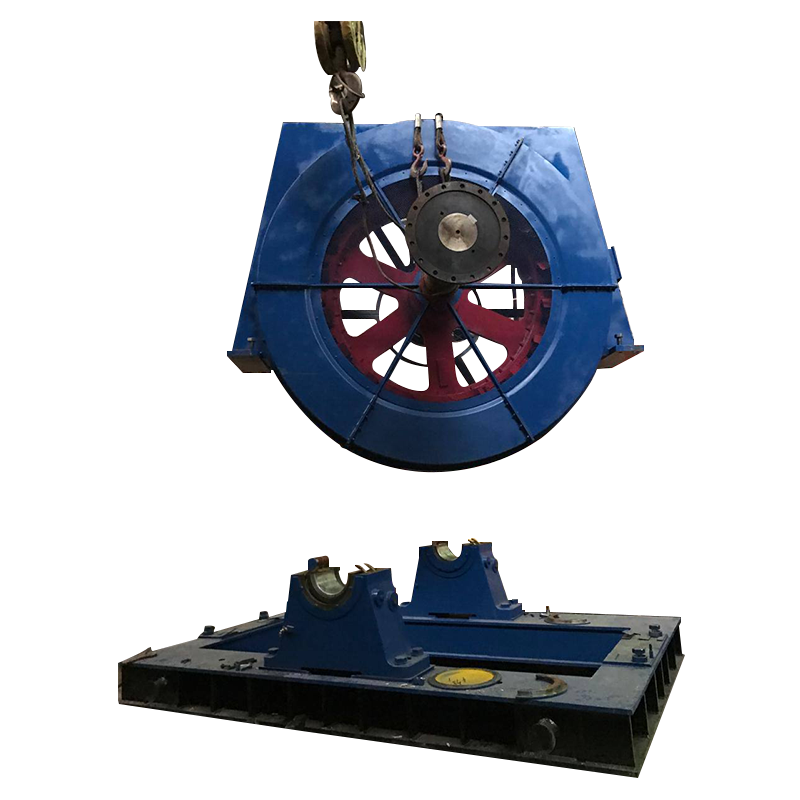 SDM/SDMZ Series Heavy-duty High-Voltage Synchronous Motors for Ball MillsThe SDM and SDMZ series high-voltage synchronous motors are purpose-engineered for ball mill applications in mining, cement, and heavy industrial sectors. Designed to ...View Product →
Load-Torque Reality: What Crushers and Mills Demand at Start-Up
Comminution equipment is among the harshest starting duties in a plant. A loaded ball mill can require 60 to 80 percent of full-load torque simply to break away, and a jaw crusher that starts with material in the chamber can demand more than 200 percent. Motor selection follows the torque curve, not the nameplate kilowatts.
| Equipment | Breakaway torque | Drive normally specified | Selection note |
| Ball mill, 6-12 MW | 60-80% of full-load torque | High-voltage synchronous | Constant speed protects girth gear and liners |
| SAG mill, 8-16 MW | 70-100% | Synchronous with variable frequency drive | Speed trimmed to ore hardness |
| Jaw crusher | Up to 200-250% | Synchronous or heavy-duty squirrel cage | Jam recovery needs high breakaway torque |
| Cone crusher | 150-200% | Synchronous or squirrel cage | High reduction ratios load the chamber at start |
| High-pressure grinding rolls | 80-120% | Synchronous with variable frequency drive | Two rolls must accelerate together |
The heavier the rotating mass and the more material sitting in the chamber at start, the stronger the case for a synchronous machine with controlled excitation. Breakaway torque, pull-in torque, and flywheel inertia together decide whether direct-on-line starting is acceptable or a variable frequency drive is mandatory.
Cooling, Enclosure and Dust: Selecting for the Plant You Actually Have
Enclosure and cooling codes decide whether a motor lasts fifteen years in a concentrator or fails in three. IP23 with IC01 open-circuit ventilation suits a clean, filtered electrical room, while IP54 with IC511 or IC616 air-to-air cooling is the realistic minimum for a dusty crushing floor.
- IP23 with IC01 ventilation delivers the lowest cost and the best heat rejection, but it requires ducted clean air and a machine room that is actually kept clean.
- IP54 with IC511 air-to-air cooling closes the internal air circuit and is the standard answer for dusty floors, outdoor mounting, and washdown areas.
- IC611 and IC616 heat exchangers handle high ambient temperatures, restricted rooms, and corrosive or abrasive dust where a simple air path clogs.
- GOST frames with IP54 and IC511 cooling match projects that specify Russian documentation, drawings, and test certificates alongside the hardware.
Where a project standardises on a squirrel-cage machine instead of a synchronous drive, the duty is not lost: a GOST IP54 IC511 high-voltage squirrel cage motor covers the same dusty, continuous operating profile and keeps the spare parts list simple for local maintenance crews.
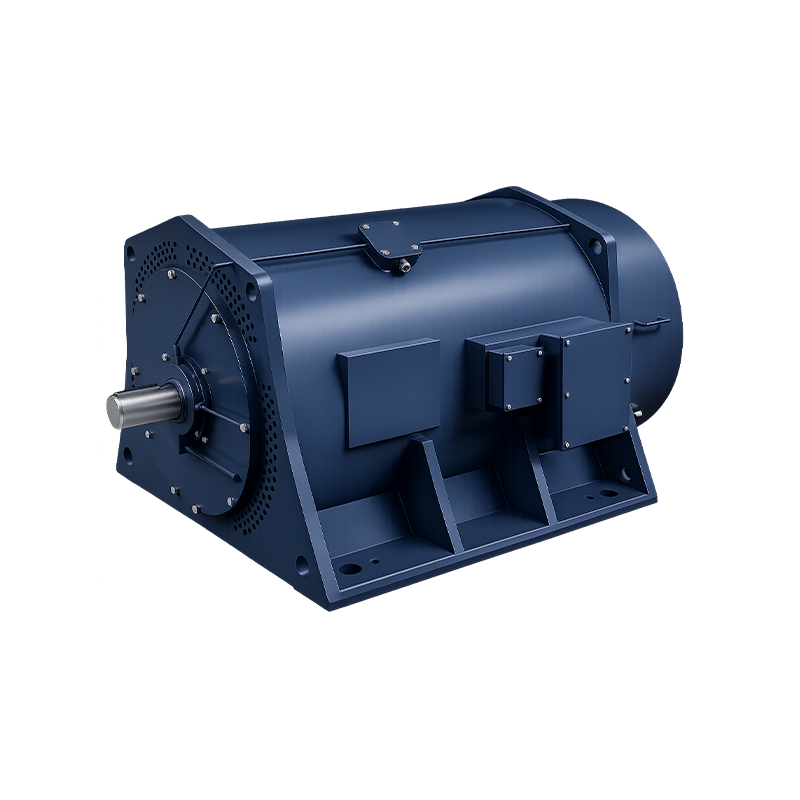 GOST Standard IP54 IC511 High Voltage Squirrel Cage Electric MotorQ: Do you provide motor selection and technical consulting services? We provide professional motor selection and technical consulting based on operating conditions, ap...View Product →
The Data Sheet to Complete Before You Ask for a Quote
Most selection errors trace back to a missing input, not a wrong calculation. Completing six items before requesting a quotation removes almost all of the back-and-forth and protects the delivery schedule.
Rated power, speed and duty cycle
State continuous mill duty or intermittent crusher duty, together with annual running hours. Running hours decide whether efficiency differences justify a higher purchase price.
Load torque curve and inertia
Ask for breakaway torque, pull-in torque, and the flywheel effect of the mill or crusher. These numbers set the starting method and confirm the frame size.
Supply conditions and standard
Confirm 6 kV or 10 kV, 50 Hz, available fault level, and whether the project follows GOST or IEC frames and documentation.
Starting method and excitation
Direct-on-line, reduced voltage, pony motor, or variable frequency drive. Each option changes starting current, protection settings, and excitation timing.
Enclosure, cooling and environment
List dust load, ambient temperature, altitude, indoor or outdoor mounting, and any hazardous area classification that applies to the room.
Documentation and spares
Specify factory test reports, winding data, bearing drawings, and a spare parts list covering at least one full maintenance cycle.
Sourcing High-Voltage Synchronous Motors for Russian, Central Asian and Eastern European Projects
Grinding projects across Russia, Kazakhstan, Uzbekistan, and neighbouring markets usually specify GOST frames, documentation, and testing, which is why the same mill can appear under two different motor lists depending on whether the end user follows GOST or IEC.
ICEM Electric, the export brand of Shanghai Menti Electromechanical Trading Co., Ltd., supplies AC, DC, synchronous, and explosion-proof motors to industrial customers in these markets and works with manufacturer partners on selection, quality control, logistics coordination, and after-sales support. The company's stated plan to add in-house production and testing capacity targets shorter lead times and tighter quality control on exactly this class of heavy drive.
For any grinding or crushing drive above 4 MW, agree the frame standard, the excitation scheme, and the spare parts package before the purchase order is signed. Changing any of the three later resets the delivery schedule.
Teams writing the technical specification can also review a broader guide to large-scale industrial electric motor selection, which covers frame sizing, thermal margin, and the maintenance access that decides whether a motor can be serviced inside the mill building.
The pattern across comminution circuits is consistent. Where the rotating mass is large, the starting torque is punishing, and the plant runs most of the year, a high-voltage synchronous motor pays for its higher purchase price through reactive power support and flatter efficiency. Where duty is light or intermittent, an induction machine remains the sensible spend. The engineering decision sits in the load data, the tariff, and the maintenance capability available on site.
Frequently Asked Questions
Why do ball mills use high-voltage synchronous motors instead of induction motors?
Because mill drives run thousands of hours a year at part load, and a synchronous machine holds both power factor and efficiency across that range. An induction motor on the same shaft absorbs reactive power and loses efficiency as load falls, which raises energy cost and forces larger compensation equipment.
Can a high-voltage synchronous motor start direct-on-line?
Yes, when the rotor carries a proper damper winding and excitation is applied at the correct speed. Typical direct-on-line starting current sits at four to six times rated current for a few seconds. On very large SAG mills or weak networks, a variable frequency drive or a pony motor start is specified instead to limit the voltage dip.
What is the difference between SDN/SDNZ and SDM/SDMZ synchronous motors?
SDN and SDNZ series units are general-purpose high-voltage synchronous motors used across continuous industrial drives. SDM and SDMZ series machines are heavy-duty designs built for ball mill service, with larger frames and higher torsional capability for the load reversals of a tumbling mill.
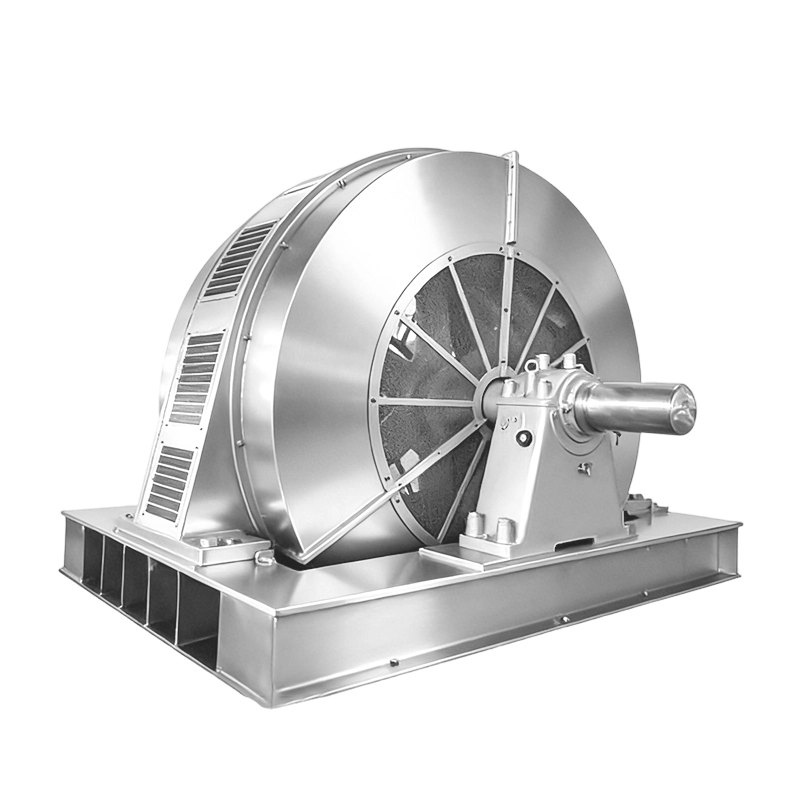
 SDN/SDNZ Series General-purpose High-Voltage Synchronous MotorsProduct Overview: The SDN/SDNZ series high-voltage synchronous motors are heavy-duty drive solutions engineered for demanding industrial applications. Designed for con...View Product →
How much lead time should a project plan for a 6 to 12 MW grinding motor?
Frame size, winding design, excitation system, and cooling circuit all influence delivery, and factory testing adds to the schedule. Most delays come from late specification changes rather than manufacturing. Freeze the frame standard, starting method, and documentation package early, and keep at least one critical spare in the project budget.
PREV:Why Explosion-Proof Motors Matter for Chemical and Mining Applications
NEXT:Why GOST-Standard Motors Are Essential for Industrial Projects in Russia and Central Asia
NEXT:Why GOST-Standard Motors Are Essential for Industrial Projects in Russia and Central Asia
Interested in cooperation or have questions?
Let'S Work Together Welcome Aboard!
-

-
 +86-15021943462
-
 Room 2326, 23rd Floor 2000 Zhongshan North Road Putuo District Shanghai, China
Join Our Mailing List
Product Categories
Quick Links
Quick Links
