
 English
 中文简体
 русский


 Read More

Product Category
NEW Category
Contact us
Contact Us
We specialise in the research, development and manufacture of electrical wires and cables.
 +86-15021943462
Related News
- Why DC Motors Remain Critical for Crane and Metallurgical Equipment Applications
- Explosion-Proof Electric Motors: Ex Ratings, Hazardous Location Selection & Standards
- Why GOST-Standard Motors Are Essential for Industrial Projects in Russia and Central Asia
- Standard vs Explosion-Proof Motors: Technical Requirements to Verify for Hazardous Areas
Why Explosion-Proof Motors Matter for Chemical and Mining Applications
A 400 kW motor that ignites a methane pocket does not fail the way a bearing seizure does. It kills people. That is why explosion-proof motors are specified around three variables that never appear on an efficiency curve: the hazardous zone, the gas or dust group, and the temperature class the enclosure must never exceed. In chemical plants and underground mines, those three variables decide whether a motor is accepted at the gate, rejected on arrival, or installed in the wrong area entirely.
Content
- 1 What Explosion-Proof Construction Actually Does Inside a Hazardous Zone
- 2 Zone Misclassification Is the Costliest Error in Explosion-Proof Motor Procurement
- 3 How Zone, Gas Group, and Temperature Class Narrow the Choice
- 4 GOST or IEC: Matching Explosion-Proof Motors to the Certificate Your Site Accepts
- 5 Where Explosion-Proof Motors Earn Their Price in Mining
- 6 The Motors Outside the Hazardous Zone Still Decide Plant Uptime
- 7 Specifications to Lock Down Before You Send an RFQ
- 8 Explosion-Proof Motor FAQs
What Explosion-Proof Construction Actually Does Inside a Hazardous Zone
An explosion-proof motor is not a motor that cannot explode. It is a motor built so that an internal explosion stays inside the enclosure, cools before it escapes, and never lifts the outer surface above the ignition temperature of the surrounding atmosphere.
A flameproof enclosure, marked Ex d, works on two mechanisms at the same time. The housing is strong enough to hold a deflagration without rupturing, and IEC 60079-1 requires it to survive 1.5 times the reference pressure for at least 10 seconds. The gaps around the cover, shaft, and cable entries are then machined to controlled widths and lengths. Those flamepaths act as a heat exchanger, so burning gas travelling through a long, narrow channel loses enough energy to arrive outside as harmless combustion products. Surface temperature is the second half of the problem: every flameproof motor carries a temperature class from T1 to T6, capping external surface temperature at 450 C down to 85 C.
The three features that carry the certificate
- Flameproof joints with controlled gap width and path length, machined to tolerance instead of simply sealed.
- A pressure-tested cast iron or cast aluminium housing, with no plastic parts anywhere inside the flameproof boundary.
- A separately certified terminal box and cable entry, because that is where most field installations quietly lose compliance.
- Ingress and cooling matched to the site: IP54 or IP55 where dust and washdown coexist, with IC511, IC516, or IC611 cooling arranged so the fan never pulls explosive gas through the frame.
Flameproof motor: an electric motor whose enclosure contains an internal explosion, discharges escaping gas through machined flamepaths cool enough to be harmless, and keeps its external surface below the ignition temperature of the classified gas or dust around it.
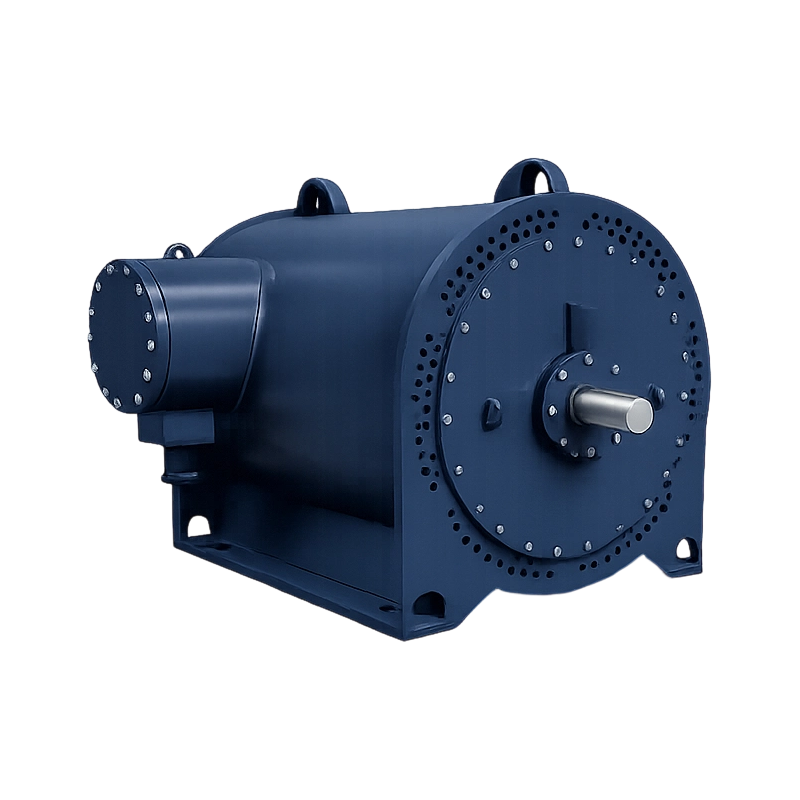
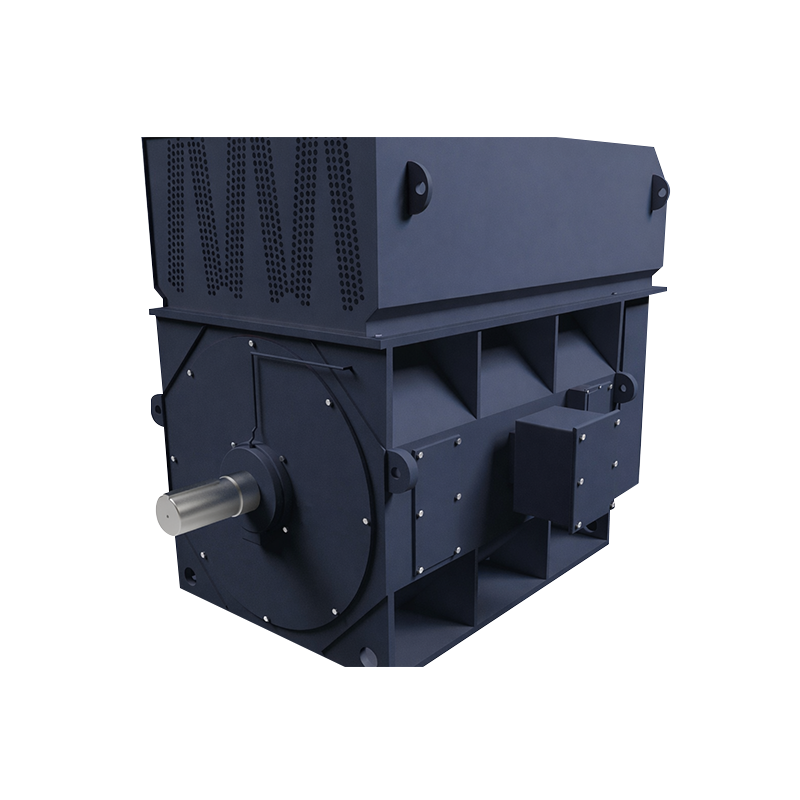
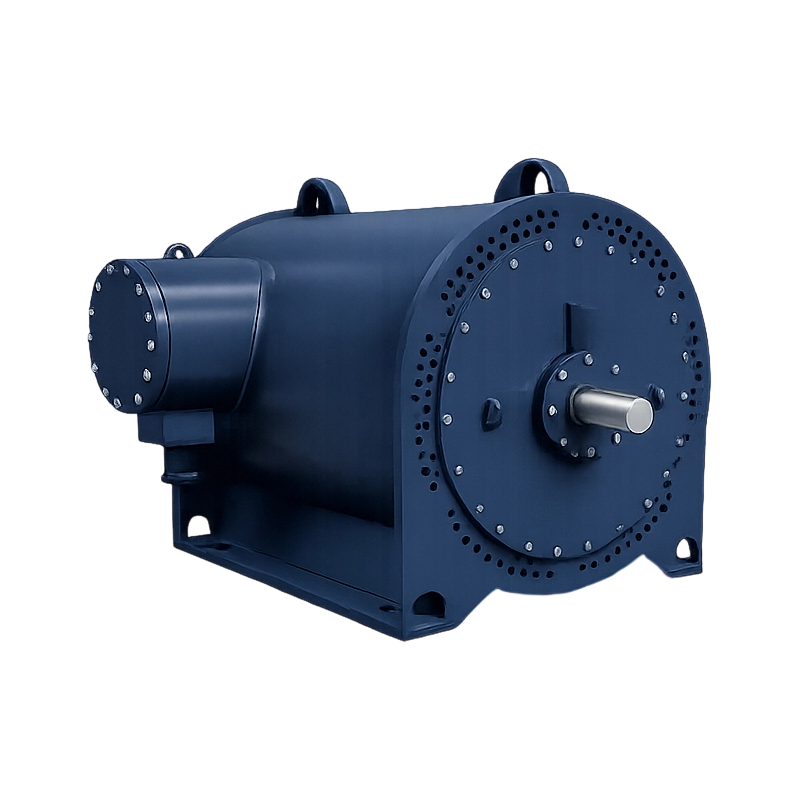 Explosion-Proof Electric Motors ManufacturersGOST Standard IP54 IC511/IC516 Squirrel-Cage High-Voltage Explosion-Proof Asynchronous MotorView Product →
Zone Misclassification Is the Costliest Error in Explosion-Proof Motor Procurement
Sending an uncertified motor into a Zone 1 area costs five to ten times more to correct than buying the certified unit in the first place, because the correction means a shutdown, a certified replacement, and a formal incident review.
Certification is attached to the assembly and to its paperwork, not to a single component. A terminal box taken from a standard motor, a bearing replaced by a workshop without Ex approval, or a cable gland with no certificate voids the marking on the nameplate. Operators usually discover the problem during a safety audit, which is the worst possible moment.
The failures themselves rarely start in the explosion protection. They start in the mechanics.
Where flameproof motor failures actually begin
Indicative distribution based on published maintenance surveys of flameproof installations. Use it to prioritise condition monitoring, not to write a specification.
Every 15 C rise in bearing temperature roughly halves grease life, and a bearing that seizes turns the rotor into an ignition source rather than a mechanical inconvenience.
How Zone, Gas Group, and Temperature Class Narrow the Choice
Three data points do most of the filtering before any technical discussion begins: where the motor sits, what is in the air around it, and how hot its surface may become.
| Zone | Atmosphere present | Minimum motor requirement |
| 0 | Continuously or for long periods | No rotating equipment; remote drive or purge arrangement |
| 1 | Likely during normal operation | Ex d or Ex de, gas group and temperature class matched |
| 2 | Unlikely and short-lived | Ex d or Ex e with reduced enclosure requirements |
| 21 | Combustible dust cloud likely | Ex tb, IP6X minimum, dust layer temperature assessed |
| 22 | Dust cloud unlikely and short-lived | Ex tb with layer thickness documented |
Gas groups filter the list further. Group IIA covers propane and most hydrocarbon vapours, IIB covers ethylene, and IIC covers hydrogen and acetylene. A IIB motor cannot be dropped into an IIC application, and the nameplate marking has to match or exceed the site requirement.
Temperature class follows the gas, not the buyer's preference. The class limit must stay below the auto-ignition temperature of the actual process gas, and plants handling hydrogen at 560 C auto-ignition often specify T4 regardless, so that one frame type can serve several areas of the same site.
GOST or IEC: Matching Explosion-Proof Motors to the Certificate Your Site Accepts
A motor certified only to IEC 60079 will not be signed off in Russia, Kazakhstan, or Uzbekistan, where sites operate under TR CU 012/2011 and expect EAC Ex marking built on the GOST 31610 series.
IEC and ATEX route
- Design standard: IEC 60079-0 and IEC 60079-1
- Placement rule: ATEX 2014/34/EU for the European Union
- Typical marking: Ex db IIC T4 Gb
- Accepted across the EU, Turkey, and most export markets
GOST and EAC route
- Design standard: GOST 31610.0 and GOST 31610.1, harmonised with IEC
- Placement rule: TR CU 012/2011 for the customs union
- Typical marking: 1Ex d IIC T4 Gb on the nameplate
- Required for Rostechnadzor-supervised sites in Russia and Central Asia
The procurement consequence is simple. Dual-certified motors cost more and take longer to build, but one spare keeps several plants running. Single-certified units are faster to buy and lock you into one market. ICEM Electric, the export arm of Shanghai Menti Electromechanical Trade Co., Ltd., supplies both routes, including high-voltage flameproof frames rated IP54 with IC511 or IC516 cooling.
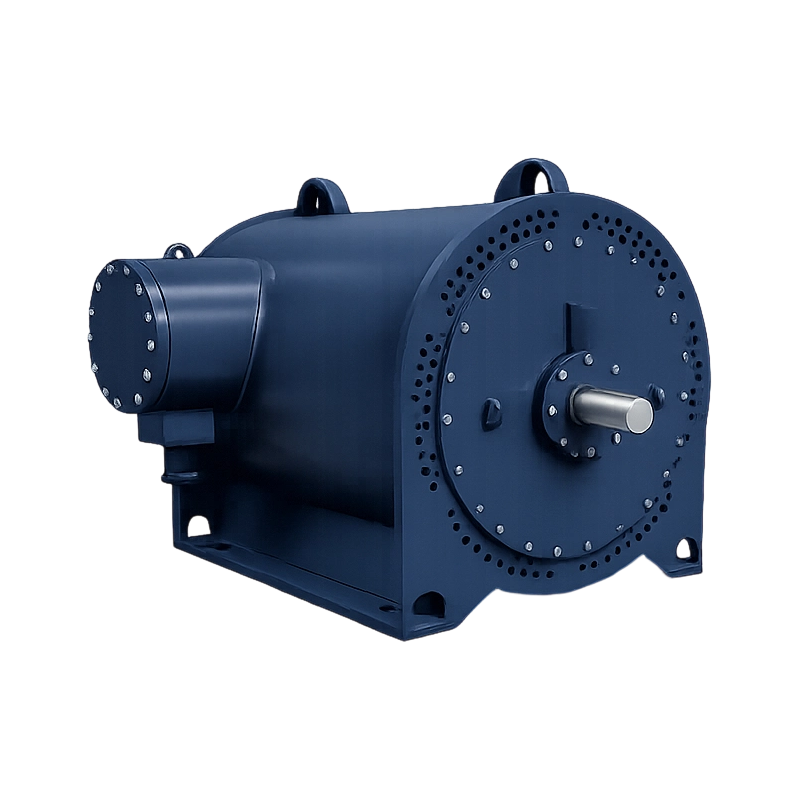 GOST Standard IP54 IC511/IC516 Squirrel-Cage High-Voltage Explosion-Proof Asynchronous MotThe GOST standard IP54 IC511/IC516 squirrel-cage high-voltage explosion-proof asynchronous motor is designed for safe and reliable operation in hazardous environments ...View Product →
Where Explosion-Proof Motors Earn Their Price in Mining
Underground mines are classified as Group I, and that is not a subset of the surface rules: methane ignites at about 537 C, coal dust layers can smoulder below 200 C, and the drives are expected to run continuously for years.
537 C
Methane auto-ignition
Group I
Mining equipment marking
S1
Continuous duty typical
IP55
Ingress protection floor
Group I motors drive belt conveyors, crushers, dewatering pumps, and main ventilation fans. Because those are continuous-duty loads, the specification usually adds high starting torque for loaded conveyors, Class F or H insulation, and a defined temperature rise margin so the frame never approaches its temperature class in normal service.
Open-pit operations sit outside the classified area and are selected on different criteria. Haulage and excavator drives are chosen for shock loading and duty cycle instead of Ex marking, a logic covered in this comparison of mining excavator motor requirements.
The Motors Outside the Hazardous Zone Still Decide Plant Uptime
Fewer than one motor in five in a typical chemical plant or mining concentrator sits inside a classified area, yet the drives outside it cause most of the unplanned downtime.
Grinding and crushing circuits are the clearest example. Ball mill drives are heavy synchronous machines, often rated 6 kV or 10 kV, selected for high starting torque and a stable power factor under fluctuating load. They are not flameproof, but they carry the same consequence when they stop.
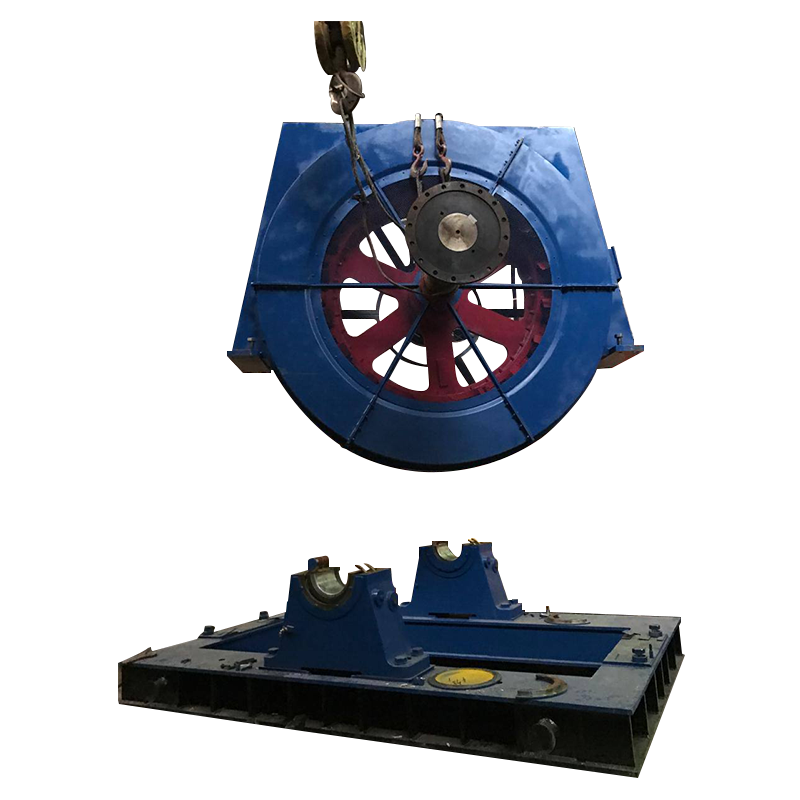 SDM/SDMZ Series Heavy-duty High-Voltage Synchronous Motors for Ball MillsThe SDM and SDMZ series high-voltage synchronous motors are purpose-engineered for ball mill applications in mining, cement, and heavy industrial sectors. Designed to ...View Product →
Specifications to Lock Down Before You Send an RFQ
Seven data points belong in every explosion-proof motor inquiry. Anything left open becomes a change order later.
- Hazardous zone, plus dust group where a dust atmosphere exists.
- Gas group and temperature class, checked against the auto-ignition temperature of the real process gas.
- Rated power, voltage, frequency, and duty rating.
- Cooling method (IC511, IC516, IC611, or IC01) and required ingress protection.
- Starting torque, starting current limits, and load inertia.
- Certification route: EAC Ex under TR CU 012/2011, ATEX, IECEx, or a combination.
- Documentation set: certificate, nameplate data, routine test reports, and a spare parts list with certified alternatives.
Two of those are routinely underestimated. Starting current limits decide whether the motor can start a loaded conveyor without tripping protection, and the spare parts list decides whether the next bearing replacement preserves the certification or quietly destroys it.
A flameproof motor is only as safe as the certificate, the cable entry, and the spare parts that arrive with it.
Explosion-Proof Motor FAQs
Is an explosion-proof motor the same as an ATEX motor?
No. Explosion-proof describes how the motor is built, while ATEX and EAC Ex describe which jurisdiction has approved it. A flameproof motor designed to IEC 60079 can be ATEX certified for Europe, EAC Ex certified for the customs union, or both. Europe requires ATEX 2014/34/EU marking, and Russia, Kazakhstan, and Belarus require TR CU 012/2011.
Can a Zone 2 motor be installed in a Zone 1 area?
No. Zone 1 demands equipment suitable for an atmosphere likely to occur in normal operation, which in practice means a full Ex d or Ex de construction. Zone 2 equipment is approved on the basis that a release is unlikely and short-lived. Using it in Zone 1 voids both the certification and the insurance position.
What temperature class is required for hydrogen service?
Hydrogen auto-ignites at roughly 560 C, so T1 with a 450 C surface limit is technically sufficient. Most plants still specify T4 and Group IIC construction, because a single T1 frame cannot be reused in other areas of the same plant and becomes an orphan spare.
How long does it take to source a GOST-certified explosion-proof motor?
Plan on six to sixteen weeks depending on rating and certification route. High-voltage frames above 6 kV built to GOST standards are usually made to order, and certificates and test documentation add time on top of manufacturing. Confirming zone, gas group, and temperature class before the order is placed is what keeps that schedule from slipping.
PREV:Why Choosing the Right Motor Supplier Reduces Project Downtime on Heavy Lines
NEXT:Why High-Voltage Synchronous Motors Are the Backbone of Grinding and Crushing Operations
NEXT:Why High-Voltage Synchronous Motors Are the Backbone of Grinding and Crushing Operations
Interested in cooperation or have questions?
Let'S Work Together Welcome Aboard!
-

-
 +86-15021943462
-
 Room 2326, 23rd Floor 2000 Zhongshan North Road Putuo District Shanghai, China
Join Our Mailing List
Product Categories
Quick Links
Quick Links
