
 English
 中文简体
中文简体 русский

 Read More

Product Category
NEW Category
Contact us
Contact Us
We specialise in the research, development and manufacture of electrical wires and cables.
 +86-15021943462
Related News
- Explosion-Proof Electric Motors: Ex Ratings, Hazardous Location Selection & Standards
- GOST vs IEC Standard Motors: Key Design, Testing, and Certification Differences
- What Makes Standard Mining Excavator Motors Essential for Heavy Mining Operations?
- Why General Purpose Synchronous Motors Are Essential for Continuous Industrial Operations?
Standard vs Explosion-Proof Motors: Technical Requirements to Verify for Hazardous Areas
At a Russian petrochemical facility, a 315 kW high-voltage motor passed the load test but was rejected during commissioning because its Ex marking did not match the certificate attached to the shipping documents. The replacement and project delay cost more than 30 percent of the initial motor price. When you compare standard and explosion-proof motors for hazardous environments, the real specification work starts with verifying technical requirements that have nothing to do with kilowatts or rated speed.
Content
What Defines a Hazardous Area?
A hazardous area is any location where flammable gas, vapor, mist, or combustible dust can create an explosive atmosphere, and it is classified by zone, not by motor power rating.
The classification framework comes from IEC 60079 and GOST R IEC 60079, which follow the same zone logic in most industrial projects across Russia and the EAC market. Gas and vapor zones are divided into Zone 0, Zone 1, and Zone 2. Dust zones are divided into Zone 20, Zone 21, and Zone 22. The zone determines the minimum equipment protection level, which in turn sets the enclosure type the motor must carry.
An explosion-proof motor is not a motor that cannot explode. It is a motor whose enclosure is designed and certified to contain an internal explosion or to prevent a spark from reaching the surrounding atmosphere, so that the motor can be used safely in a specific classified zone.
In practice, a plant engineer does not ask whether a motor is explosion-proof. They ask which zone it is certified for, which gas or dust is present, and which temperature class the certificate confirms. These questions shape the technical specification on the purchase order.
- Classified zones are defined by the customer's process engineer, not by the motor supplier.
- The motor Ex marking must match the zone classification identified in the project documentation.
- IEC and GOST standards share the same zone logic, but the certificate format differs.
Explosion-Proof Motor Technical Requirements to Verify
Four technical requirements decide whether a high-voltage motor is eligible for a hazardous environment: enclosure protection type, temperature class, certificate consistency, and cooling configuration.
T6 / 85°Cmaximum surface temperature
IP54minimum enclosure protection
Ex dflameproof enclosure marking
First, verify the enclosure protection type. An Ex d flameproof motor contains an internal explosion without allowing flame to propagate outside. An Ex e increased-safety motor prevents arcs, sparks, or hot surfaces from forming during operation. Ex d enclosures are heavy, typically with machined flamepaths, while Ex e enclosures rely on increased insulation margins and tighter motor tolerances.
Certificate consistency
Second, verify the Ex certificate. The nameplate marking must match the certificate number exactly. For motors supplied to Russia or the EAC market, the certificate follows TR CU 012/2011 and refers to the motor series, not to one individual unit. A certificate for a similar housing but a different cooling system is not acceptable.
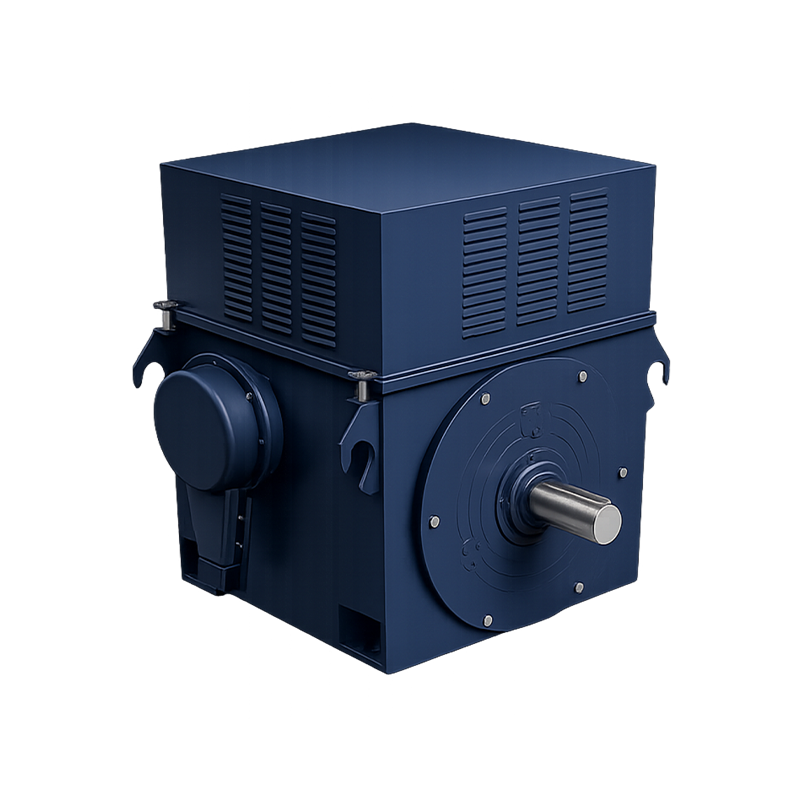
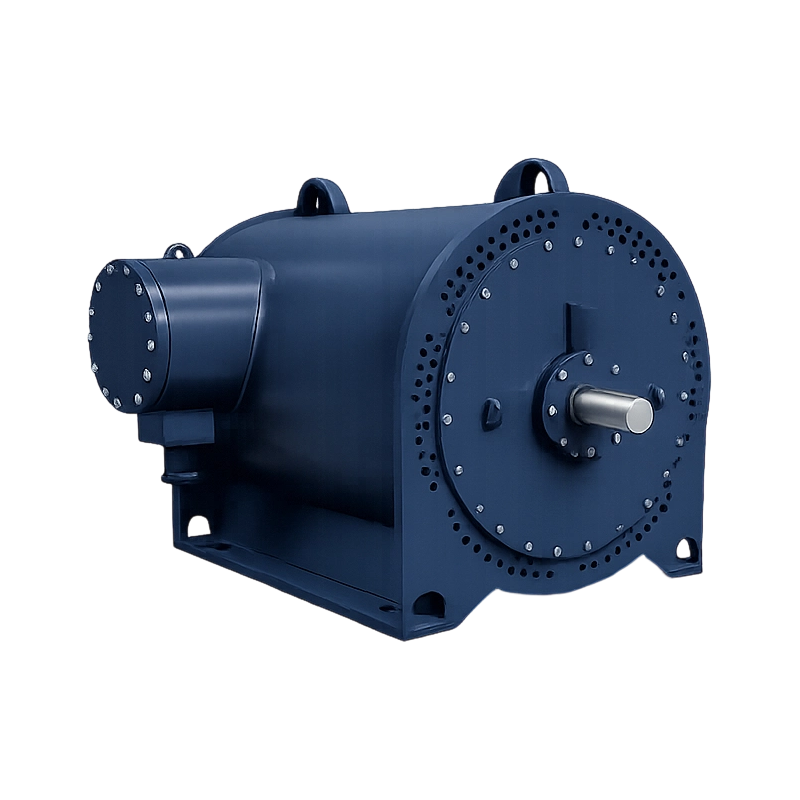 GOST High-Voltage Explosion-Proof Asynchronous Motor with IP54 and IC511/IC516 CoolingThis motor meets GOST standards for hazardous areas, with IP54 protection and dual cooling systems. Its certificate verification is critical, as shown in the surrounding discussion on Ex certificates and temperature classes for safe selection.View Product →
Temperature class
Third, verify the temperature class. T1 allows a maximum surface temperature of 450°C, and T6 cuts off at 85°C. The assigned class must be lower than the ignition temperature of the substance in the environment. A T3 motor rated for 200°C might be acceptable for a gas that ignites above 200°C, but it is not acceptable for one that ignites at 150°C.
Cooling and IP rating
Fourth, verify the cooling configuration. Explosion-proof motors for Zone 1 and Zone 2 typically use IC511 or IC516 cooling, where the cooling medium is separated from the internal motor circuit. IP54 is the minimum protection grade for dusty and damp hazardous areas. IC01 or IC06 open-circuit cooling, common on standard motors, can bring external air and contaminants into the enclosure and is not permitted for Ex d motors.
Standard vs Explosion-Proof Motors: Side-by-Side
Standard motors and explosion-proof motors differ in enclosure construction, cooling architecture, and the amount of documentary evidence a buyer has to audit.
On a standard high-voltage squirrel-cage motor, the enclosure is designed to protect against dust, moisture, and mechanical impact. On an explosion-proof motor, the enclosure is also a safety barrier. The wall thickness is greater, the fasteners are stronger, the cable entry glands are sealed, and the rotor has tighter mechanical tolerances.
| Verification item | Standard motor | Explosion-proof motor |
| Enclosure type | IP23 or IP54 open or closed frame | Ex d flameproof or Ex e, heavy wall |
| Cooling configuration | IC01, IC06, IC511, IC616 | IC511, IC516 with circuit separation |
| Temperature class | Not classified | T1 to T4 standard, up to T6 on request |
| Certification readiness | ISO quality system only | Ex certificate per GOST IEC / TR CU / ATEX |
| Overload protection | Optional PTC thermistors | PTC thermistors mandatory plus anti-condensation heaters |
| Cost multiplier | 1.0 baseline | 1.4 to 1.8x |
Procurement Verification Checklist
A structured verification procedure takes about two hours and can prevent a failed audit that costs months. Use the following six-step checklist before signing the purchase order.
- Confirm the zone classification with the site safety engineer. Get an official zone drawing, not a verbal description.
- Match the temperature class to the substance ignition temperature. Record the gas or dust ignition temperature from the safety data sheet.
- Request the Ex certificate and compare it with the nameplate marking. The certificate number, Ex marking, and motor series must all match.
- Verify the cooling system separates external air from the internal enclosure. IC511 and IC516 are commonly accepted for Ex d motors; IC01 is not.
- Confirm the certification body and certificate expiry date. A certificate that has lapsed is not valid for commissioning.
- Check the repair and spare parts plan with the manufacturer. Spare parts must carry the same Ex rating.
For large-scale industrial motors, the same verification logic applies, and the documentation volume grows with frame size, as explained in our large-scale industrial motor selection guide.
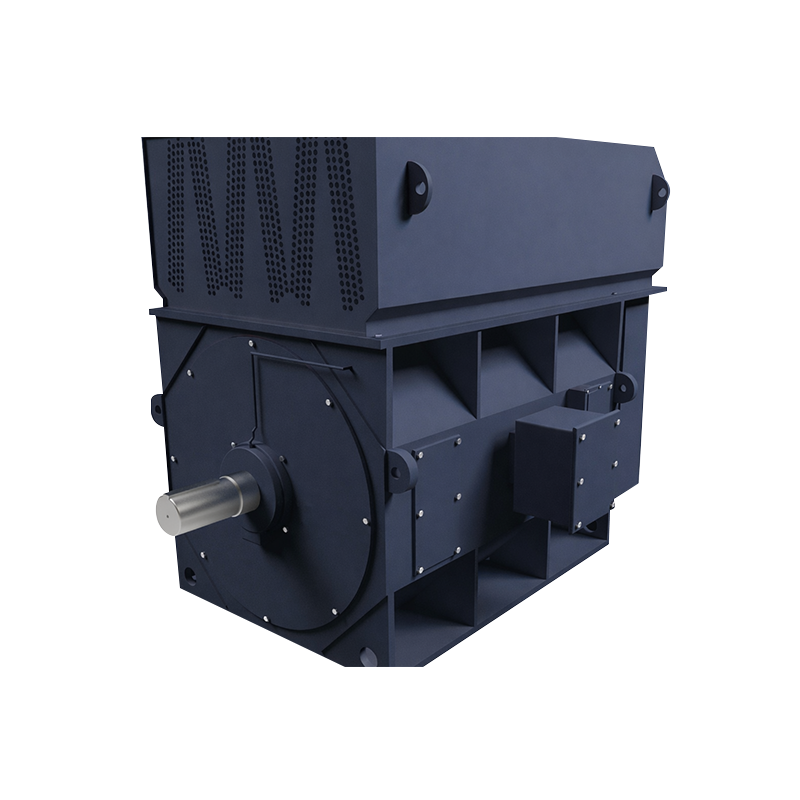
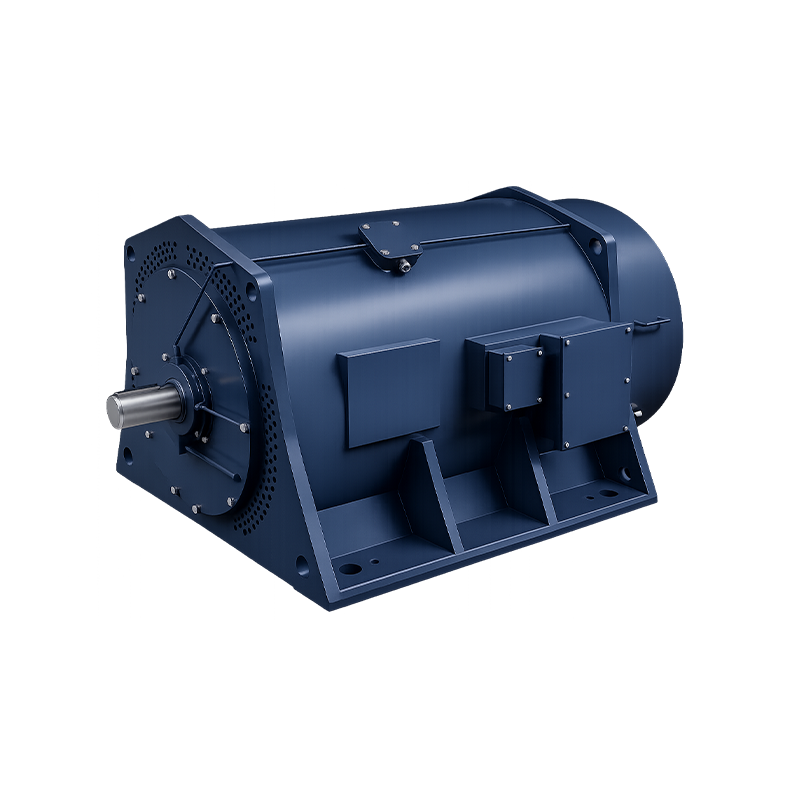 GOST High-Voltage Squirrel-Cage Motor with IP54 and IC511 CoolingFor large-scale industrial motors, this unit follows the same verification logic. It offers a robust IP54 design and IC511 cooling, suitable for non-hazardous zones when zone boundaries are confirmed by a safety engineer.View Product →
When a Standard Motor Is the Better Choice
If the process area is outside the classified zones, a standard high-voltage motor is the safer economic choice, but only after the zone boundaries are confirmed by an authorized safety engineer.
Standard motor suitability
A standard motor is cost-effective for base loads, offers a wider range of off-the-shelf cooling configurations, and has simpler logistics and maintenance. It is the right choice for pump rooms, compressor houses, and general process areas where no explosive atmosphere exists.
Explosion-proof motor suitability
An explosion-proof motor is required for Zone 1 and Zone 2 gas areas and for dust zones where combustible dust layers may form. The higher price reflects the enclosure, certification, and documentation burden, and it also reduces site insurance and audit risk.
Even outside classified zones, motors face dust, vibration, and temperature swings. For those conditions, the severe-duty motor selection guide provides a practical decision framework.
The difference between a standard motor and an explosion-proof motor is not a marketing slogan. It is a measurable gap in enclosure mass, internal cooling separation, temperature limits, and certificate traceability. Buying from a supplier that can produce the right Ex certificate with the right series and cooling system is the fastest way to avoid a failed commissioning audit.
Frequently Asked Questions About Hazardous-Area Motor Selection
Can a standard motor be converted into an explosion-proof motor?
No. The enclosure, cable entry points, and cooling configuration must be certified at the point of manufacture. A retrofit conversion cannot be certified as Ex d or Ex e under GOST R IEC 60079 or ATEX.
What certification is required for explosion-proof motors used in Russia?
For the EAC market, the motor must carry a TR CU 012/2011 certificate, often referenced as an EAC Ex certificate. The certificate must list the motor series, enclosure type, temperature class, and cooling configuration.
What is the difference between Ex d and Ex e motor enclosures?
Ex d uses a flameproof enclosure designed to contain an internal explosion, while Ex e uses an increased-safety design that prevents arcs, sparks, or hot surfaces from occurring. Ex d is more common for high-voltage motors in Zone 1.
How often should an explosion-proof motor certificate be revalidated?
In most EAC and ATEX frameworks, the certificate is valid for five years or until the design changes. For continuous operation in a hazardous area, schedule revalidation before the certificate expires.
PREV:No previous article
NEXT:IC01 vs IC06 vs IC511 vs IC611: How Cooling Methods Impact Motor Life and Duty
NEXT:IC01 vs IC06 vs IC511 vs IC611: How Cooling Methods Impact Motor Life and Duty
Interested in cooperation or have questions?
Let'S Work Together Welcome Aboard!
-

-
 +86-15021943462
 -
 Room 2326, 23rd Floor 2000 Zhongshan North Road Putuo District Shanghai, China
Join Our Mailing List
Product Categories
Quick Links
Quick Links
