
 English
 中文简体
 русский


 Read More

Product Category
NEW Category
Contact us
Contact Us
We specialise in the research, development and manufacture of electrical wires and cables.
 +86-15021943462
Related News
- Why General Purpose Synchronous Motors Are Essential for Continuous Industrial Operations?
- Why DC Motors Remain Critical for Crane and Metallurgical Equipment Applications
- What Makes Standard Mining Excavator Motors Essential for Heavy Mining Operations?
- Why Explosion-Proof Motors Matter for Chemical and Mining Applications
Why GOST-Standard Motors Are Essential for Industrial Projects in Russia and Central Asia
A 1,250 kW ball mill drive ordered to IEC dimensions can pass every factory test and still be unusable on site: the shaft height sits outside the pedestal opening, the flange bolt circle does not line up, and a 6.6 kV winding does not match the plant's 6 kV switchgear. On industrial projects across Russia and Central Asia, that mismatch is one of the most reliable ways to lose a commissioning window, and it is the reason GOST-standard motors remain the default specification in the region.
GOST-standard motors are rotating machines designed, rated and documented to the Russian and Eurasian standards that plants in the region still name in their technical specifications. They arrive with Eurasian Economic Union conformity documents rather than a European declaration alone, and their dimension tables, voltage classes and climatic ratings match what already exists inside the plant.
For project engineers, EPC contractors and procurement teams, the useful question is not whether these machines are necessary. It is which parameters must be locked before the purchase order goes out, and which ones are quietly allowed to drift until the equipment reaches site.
Three voltage classes cover most CIS industrial specifications: 380 V low voltage, and 6 kV or 10 kV for high-voltage drives. Every deviation from that set becomes a project-specific exception that has to be engineered, tested and documented.
Content
- 1 What Makes a Motor GOST Standard
- 2 Where GOST and IEC Specifications Diverge
- 3 Frame, Mounting and Cooling on GOST-Standard Motors
- 4 Climate, Duty and Hazardous Areas in CIS Plants
- 5 Which GOST Motor Types Set the Critical Path
- 6 A Sourcing Sequence for GOST-Standard Motors
- 7 GOST-Standard Motors: Frequently Asked Questions
What Makes a Motor GOST Standard
A motor is GOST standard when its rating, mounting dimensions, insulation, cooling method, protection class and documentation package are all declared against Russian standards named in the buyer's specification, not against a supplier's general catalogue.
The distinction is administrative as much as technical. Under EAEU rules, machinery placed on the customs territory needs conformity documentation under TR CU 010/2011 for machinery safety and TR CU 020/2011 for electromagnetic compatibility, and explosion-protected equipment needs TR CU 012/2011. The standards that appear most often in regional specifications are:
- GOST 183-74 and GOST 31606-2012, which set general technical requirements for rotating electrical machines.
- GOST R 52776-2007, which is harmonised with IEC 60034-1 for ratings and performance.
- GOST 15150-69, which defines climatic designations and placement categories.
- GOST 14254, which defines ingress protection classes.
Definition: a GOST-standard motor is a rotating electrical machine whose ratings, frame dimensions, climatic category, cooling method and protection class are declared against Russian standards, with Eurasian Economic Union conformity documents issued for the customs territory.
50 HzStandard grid frequency across Russia, Kazakhstan and Central Asia
6 / 10 kVDominant high-voltage classes in plant specifications
IP54Baseline protection for dusty concentrator and mill duty
Where GOST and IEC Specifications Diverge
Three parameters cause most of the rework on projects in the region: voltage class, mounting dimensions and climatic category. Almost everything else can be engineered around before the order is placed.
| Parameter | Typical GOST practice | Typical IEC practice | Impact of mixing them |
| Voltage class | 380/660 V low voltage; 3, 6 and 10 kV high voltage | 400/690 V low voltage; 3.3, 6.6 and 11 kV high voltage | Wrong winding for the busbar, derated starting torque, relays re-set |
| Mounting dimensions | GOST frame series with their own shaft height and flange tables | IEC 60072 shaft heights and flange dimensions | Motor will not bolt to the existing pedestal or coupling |
| Climatic category | GOST 15150-69 designations such as U1, HL1 and T1 | Ambient temperature and altitude declared per IEC 60034-1 | Insulation, grease and heater sizing that fail in the first cold season |
| Cooling code | IC511 and IC516 closed circuits common on high-voltage machines | IC411 and IC416 totally enclosed machines common | Wrong ducts and filters, blocked cooling paths, hot windings |
| Documentation | Russian drawings, test reports and EAEU conformity documents | CE or UKCA declaration with English documentation | Customs hold, or rejection during the plant acceptance audit |
IEC track
- 250 kW, 4-pole, IEC frame
- 400 V or 6.6 kV winding
- IEC 60072 shaft height and flange
- CE declaration, English test report
GOST track
- 250 kW, 4-pole, GOST frame
- 380 V or 6 kV winding
- GOST shaft height and flange tables
- EAEU conformity documents, Russian test report
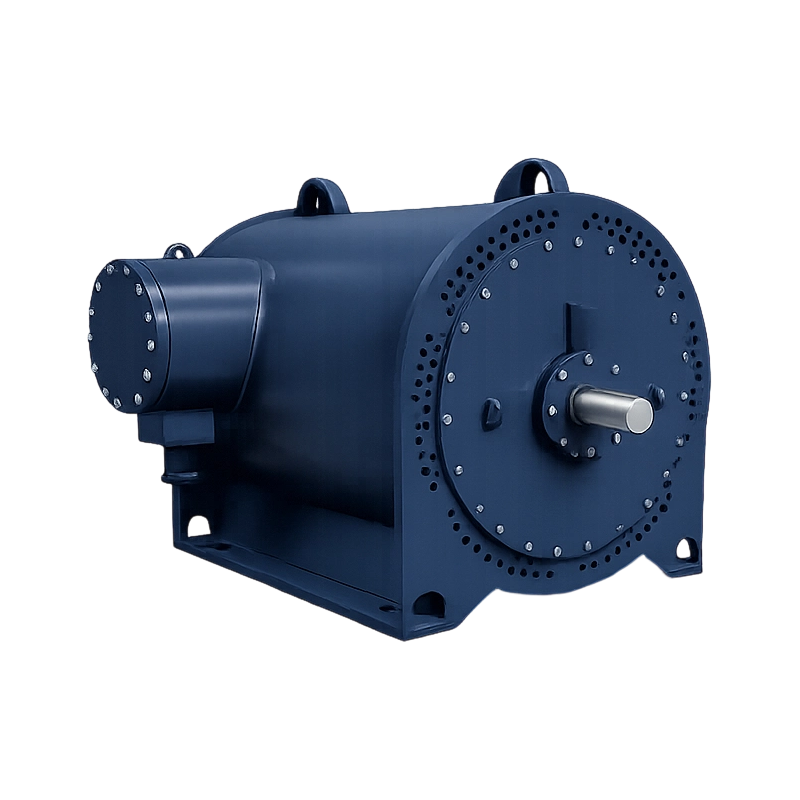
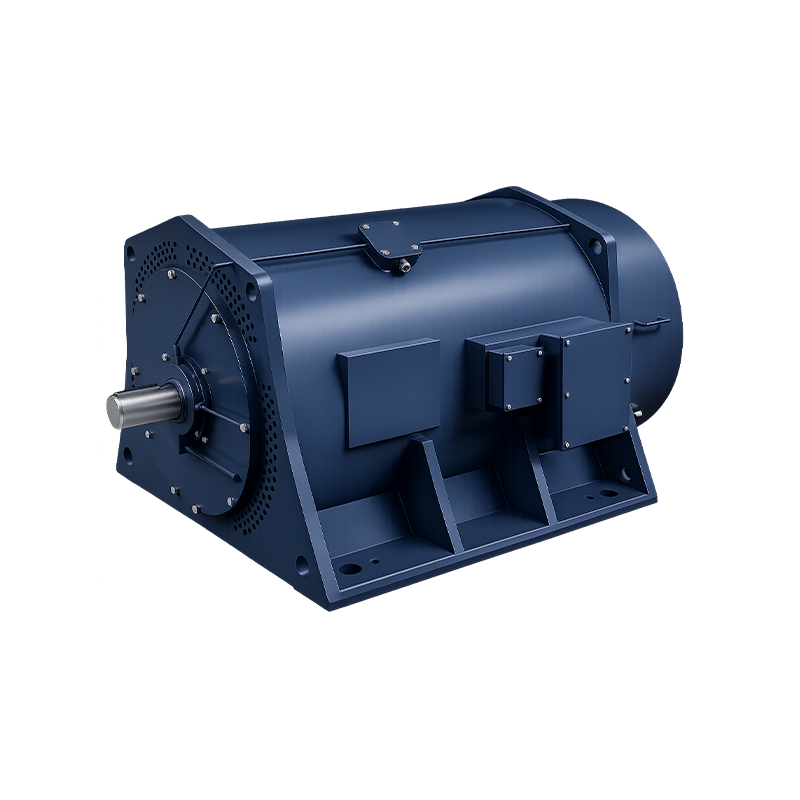 GOST Standard IP54 IC511 High Voltage Squirrel Cage Electric MotorQ: Do you provide motor selection and technical consulting services? We provide professional motor selection and technical consulting based on operating conditions, ap...View Product →
Frame, Mounting and Cooling on GOST-Standard Motors
Equal kilowatts never mean equal footprint. The foundation drawing is the one document nobody can change two weeks before the crane arrives, so mounting data has to be verified before the motor is built.
Shaft height and flange bolt circle
GOST frame series such as AIR, 4A and 2A use their own dimension tables for shaft height, flange outside diameter and bolt circle. A frame number that looks familiar in one system does not transfer to the other. Measure the pedestal, the coupling centre height and the existing bolt pattern, then compare those figures against the supplier's dimension drawing rather than a catalogue summary.
Cooling and protection codes
The cooling code decides how long a high-voltage machine survives in a concentrator or a mill building, where airborne dust and radiant heat never stop.
- IP23 with IC01: open, drip-proof machines for clean, ventilated indoor machine rooms.
- IP54 with IC511: closed machines with a machine-mounted heat exchanger, the workhorse for dusty high-voltage duty.
- IP54 with IC611 or IC616: air-to-air heat exchanger designs for heavy dust, high ambient temperature and continuous operation.
- IP54 with IC516: closed circuit with a different secondary coolant arrangement for wide ambient swings.
Rule of thumb: if there is visible dust on the handrails, specify a closed machine. The price gap between IP23 and IP54 is small next to one unplanned winding replacement.
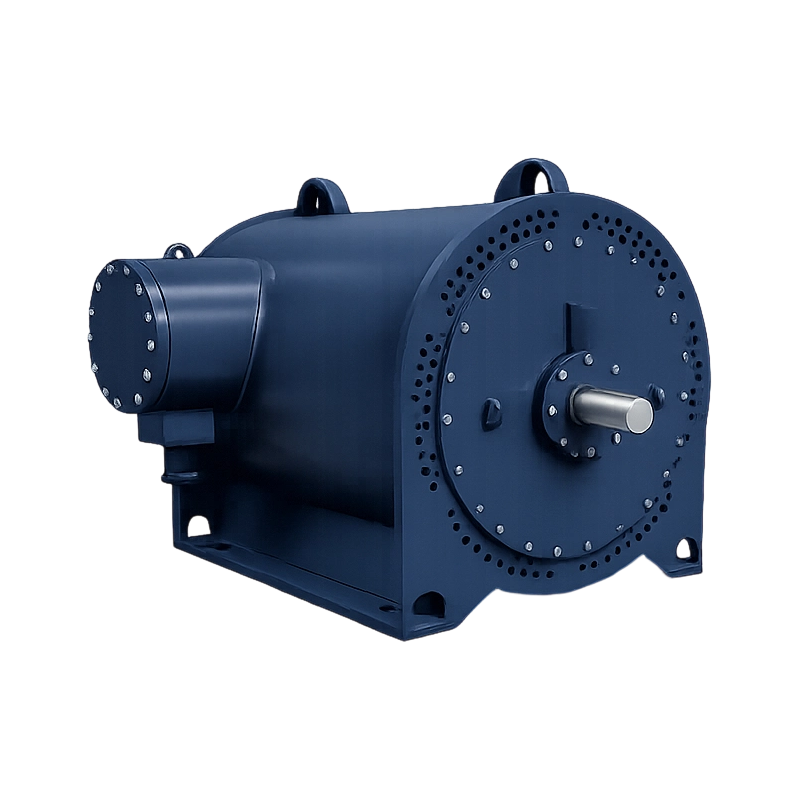 GOST Standard IP54 IC511/IC516 Squirrel-Cage High-Voltage Explosion-Proof Asynchronous MotThe GOST standard IP54 IC511/IC516 squirrel-cage high-voltage explosion-proof asynchronous motor is designed for safe and reliable operation in hazardous environments ...View Product →
Climate, Duty and Hazardous Areas in CIS Plants
Climatic category and explosion protection decide whether a compliant machine may legally be installed, not only whether it will run.
GOST 15150-69 classifies motors by climatic designations such as U1, HL1 and T1 and by placement category, from indoor machine rooms to open installations. A machine rated for a temperate indoor room is not the same product as one rated for minus 40 in an open crushing building, even when the nameplate power matches. Low temperature changes bearing grease, space heater sizing, insulation margins and starting behaviour at full load.
Two machines can carry identical power, voltage and speed ratings and still be different products: one is specified for a heated machine hall, the other for an unheated building in a continental winter.
Hazardous areas add a second layer. For explosion-protected equipment placed on the Eurasian market, TR CU 012/2011 applies and the certificate must match the equipment actually shipped. A European ATEX motor on its own does not satisfy that requirement, which is why high-voltage explosion-protected machines are ordered with fixed protection and cooling combinations such as IP54 with IC511 or IC516.
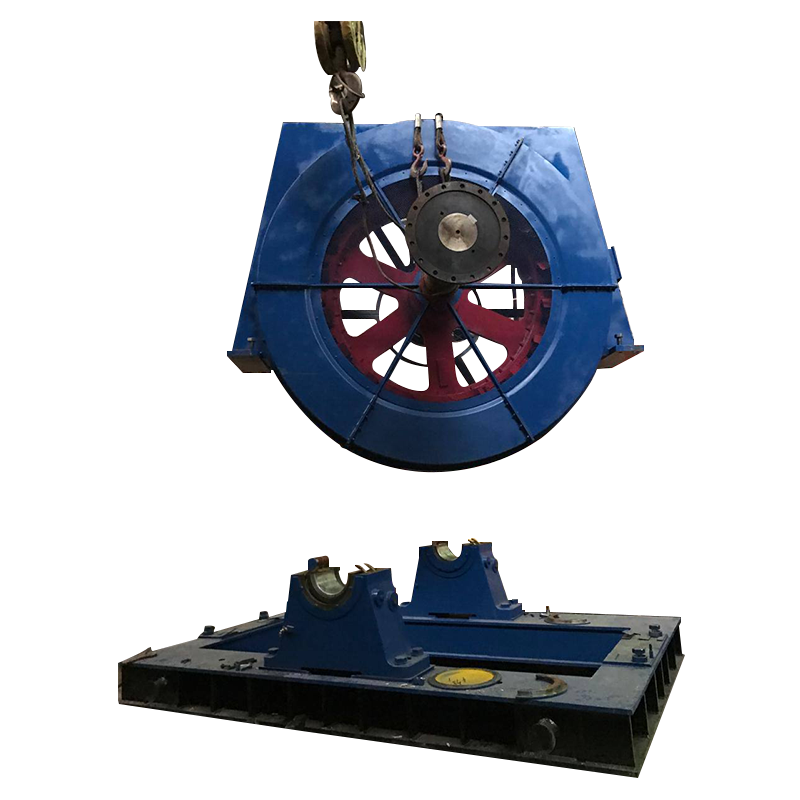 SDM/SDMZ Series Heavy-duty High-Voltage Synchronous Motors for Ball MillsThe SDM and SDMZ series high-voltage synchronous motors are purpose-engineered for ball mill applications in mining, cement, and heavy industrial sectors. Designed to ...View Product →
Which GOST Motor Types Set the Critical Path
Low-volume high-voltage machines set the critical path on almost every project in the region: mill synchronous motors, excavator motors and generators, and crane and metallurgical DC machines.
These are not catalogue items. A grinding mill synchronous motor is engineered around the mill starting torque, the ring gear interface and the plant bus voltage, and the mechanical interface is often unique to one installation. Excavator machines built to GOST follow the same logic: a small installed base, custom mechanical interfaces, and a spare parts list that has to be agreed at the same time as the motor itself. For a structured walk-through of rating, duty and starting conditions, the site's selection guidance for large-scale industrial electric motors covers the same parameters in more detail.
Indicative planning lead times, GOST-standard motors, weeks
Order the spare rotor, bearings and brush gear together with the machine. A second production cycle for one custom shaft costs far more than the parts themselves, and it always lands in the middle of commissioning.
A Sourcing Sequence for GOST-Standard Motors
The documentation package is part of the product. It has to be scoped before production starts, not after the motor is finished and painted.
Confirm the standard reference. Check whether the buyer's specification names GOST, IEC or both, and which revision of each standard applies to the machine.
Lock voltage, frequency and climatic category against the site, the switchgear and the winter temperature rather than the datasheet of a similar project.
Verify mounting dimensions against the foundation and coupling drawings, including shaft height, shaft end and flange bolt circle.
Agree the conformity route before production: TR CU 010/2011 and TR CU 020/2011 for general machinery, plus TR CU 012/2011 where explosive atmospheres apply.
Book freight, customs and spares in the same planning cycle, and confirm who holds the original test reports on the Russian side.
Suppliers that work only in this region tend to build their catalogue around these constraints. ICEM Electric, the export brand of Shanghai Menti Electromechanical Trading Co., Ltd., organises its product lines around GOST frames alongside IEC variants, and covers selection, quality control, freight coordination and after-sales support for buyers in Russia, Central Asia and Eastern Europe. That combination matters more than a low unit price when a 6 kV machine is waiting at a border crossing.
GOST-Standard Motors: Frequently Asked Questions
Are GOST-standard motors the same as IEC motors?
No. Both cover three-phase induction and synchronous machines and share the same electrical physics, and GOST R 52776-2007 is harmonised with IEC 60034-1. The practical differences sit in dimension tables, voltage classes, climatic categories and the conformity route. A machine can be electrically excellent and still be non-compliant for a Russian or Kazakh project.
Can an IEC motor be installed in Russia or Central Asia?
Sometimes, most often for low-voltage standard-frame machines in indoor duty where the plant specification already permits IEC. For high-voltage, cold-climate, dusty or hazardous applications the specification normally names GOST or an equivalent, and the EAEU conformity documents must match the equipment on site. Confirm this with the buyer's technical authority before ordering.
What documents should ship with a GOST-standard motor?
Nameplate data with standard references, outline and dimension drawings, winding data, routine test reports covering no-load current, insulation resistance and vibration, and the EAEU conformity documents under TR CU 010/2011 and TR CU 020/2011, with TR CU 012/2011 added for explosion-protected machines.
How long should a GOST-standard motor be planned for?
Low-voltage standard frames usually move within a normal delivery cycle, while high-voltage and special machines run on multi-week production plus freight and customs clearance. The ranges in the chart above are indicative planning figures, not commitments. Lock the technical data sheet first, because a late change to voltage, cooling or mounting resets the production slot.
The bottom line: GOST-standard motors are essential in Russia and Central Asia because the specification, the foundation, the switchgear, the climate and the conformity documents all belong to one system. A motor that ignores any single one of them turns into a project delay instead of an installed asset.
PREV:Why High-Voltage Synchronous Motors Are the Backbone of Grinding and Crushing Operations
NEXT:Standard vs Explosion-Proof Motors: Technical Requirements to Verify for Hazardous Areas
NEXT:Standard vs Explosion-Proof Motors: Technical Requirements to Verify for Hazardous Areas
Interested in cooperation or have questions?
Let'S Work Together Welcome Aboard!
-

-
 +86-15021943462
-
 Room 2326, 23rd Floor 2000 Zhongshan North Road Putuo District Shanghai, China
Join Our Mailing List
Product Categories
Quick Links
Quick Links
