
 English
 中文简体
 русский


 Read More

Product Category
NEW Category
Contact us
Contact Us
We specialise in the research, development and manufacture of electrical wires and cables.
 +86-15021943462
Related News
- Why Explosion-Proof Motors Matter for Chemical and Mining Applications
- Why GOST-Standard Motors Are Essential for Industrial Projects in Russia and Central Asia
- Why General Purpose Synchronous Motors Are Essential for Continuous Industrial Operations?
- Why High-Voltage Synchronous Motors Are the Backbone of Grinding and Crushing Operations
Why DC Motors Remain Critical for Crane and Metallurgical Equipment Applications
Replace the hoist motor on a 250-tonne ladle crane with a standard AC induction machine and a variable frequency drive, and the plant usually keeps running. Ask the maintenance planner why the spare-parts warehouse still holds DC armatures, brush gear and commutator stone for six cranes commissioned between 1988 and 2004, and the answer stops being about technology fashion. DC motors for crane and metallurgical equipment stay in the specification because their torque behaviour, overload reserve and mechanical envelope match the duty cycle the crane was designed around.
That is not nostalgia. A separately excited DC machine produces full torque at zero speed from a simple armature-voltage loop, its frame is built to absorb short-time overloads of 200 to 250 percent of rated torque, and a like-for-like replacement bolts onto the existing foundation, coupling and gearbox without re-engineering the drive train.
Content
- 1 Why DC Motors Remain Critical for Crane and Metallurgical Equipment
- 2 Duty Cycle, Not Nameplate Power, Decides the Rating
- 3 Where DC Drives Still Hold the Mill Floor
- 4 Specifying DC Motors for Crane and Metallurgical Equipment
- 5 GOST or IEC: The Same Duty Cycle on Different Foundations
- 6 Retrofit or Repair: The Numbers Behind the Decision
- 7 FAQ: Crane and Metallurgical DC Motor Questions
Why DC Motors Remain Critical for Crane and Metallurgical Equipment
DC motors remain critical because metallurgical duty cycles need full torque at standstill, high short-time overload, and speed regulation that does not depend on an encoder or a fast-switching converter.
Four properties explain almost every specification that still names a DC machine:
- Torque at zero speed. A hoist must hold a suspended ladle without creeping. Armature voltage control delivers smooth torque from standstill upward, and the shunt field holds the load steady while the mechanical brake is released.
- Overload reserve. Breaking out a stuck ingot mould, reversing a blooming stand or accelerating a skip hoist demands torque spikes of roughly two to two and a half times rated value for a few seconds. DC mill motors are wound and ventilated for exactly that shape of load.
- Regenerative lowering. On the way down the machine works as a generator and returns energy through the armature circuit, so descent speed is controlled electrically instead of by wearing out brake linings.
- Mechanical fit. Shaft height, flange pattern and footprint of a new DC machine can be matched to a 1990s installation, which keeps a motor change inside a normal shutdown window.
Definition
A crane and metallurgical DC motor is a separately excited or shunt-wound machine rated to a heavy duty class, typically S3 with a 40 to 60 percent cyclic duration factor, built with short-time overload capability in the region of 200 to 250 percent of rated torque and cooled for a hot, dusty plant environment.
Duty Cycle, Not Nameplate Power, Decides the Rating
The cyclic duration factor decides whether a machine survives; the kilowatt figure on the nameplate only describes the thermal limit of one operating point.
A casting crane that hoists for 40 percent of every cycle and idles in between accumulates heat very differently from a pump running continuously. Suppliers therefore size the machine against an RMS torque calculation, the root-mean-square of the load profile across the whole cycle. A hoist with a 250 percent torque peak and a 40 percent cyclic duration factor needs a frame with real thermal reserve, and that reserve is where heavy-duty DC designs earn their place.
Typical short-time overload capability as a percentage of rated torque. Confirm exact values with the duty class and the manufacturer data sheet.
250% Short-time overload ratings in this range are routine for mill-duty DC machines. They are the reason a crane can break a load free from a mould or a slag pot without stalling.
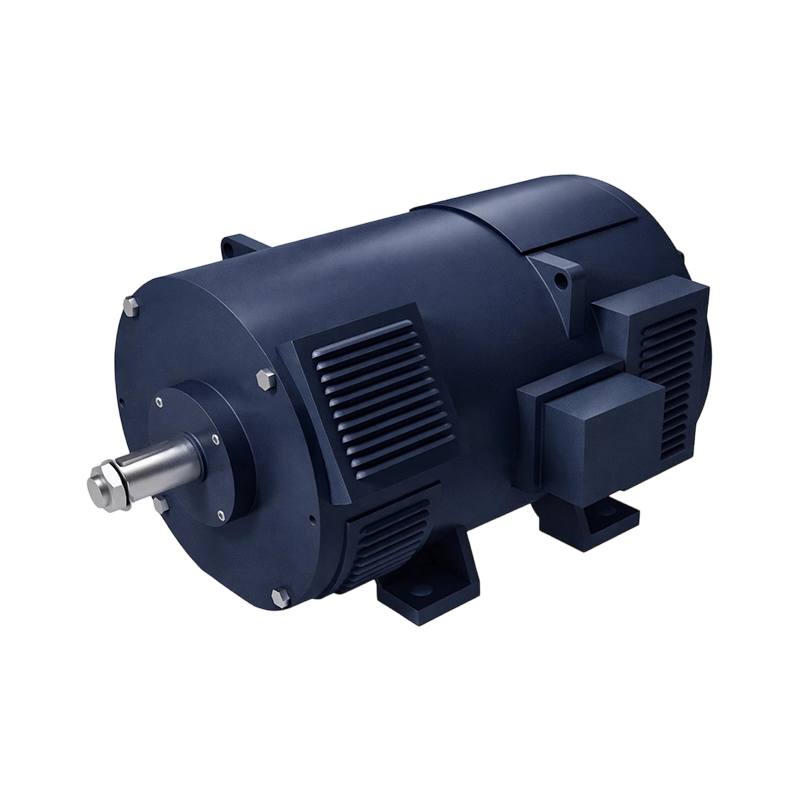
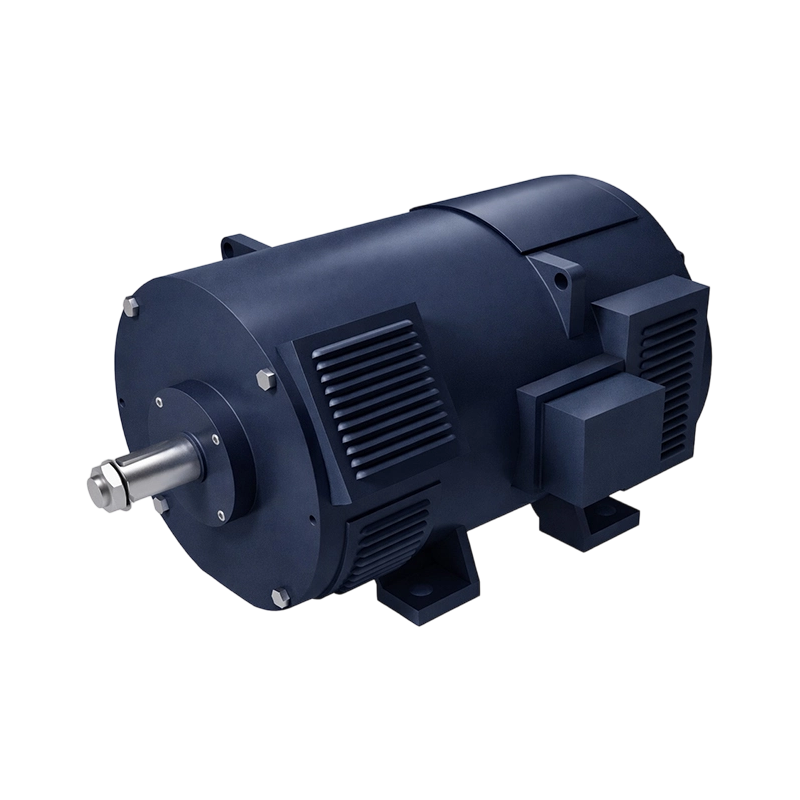 Crane Duty DC Motors SuppliersCrane & Metallurgical DC MotorsView Product →
Where DC Drives Still Hold the Mill Floor
Five applications still default to DC in most plants, and each one behaves worse when the machine is swapped for a general-purpose AC motor selected only on kilowatts.
| Application | What the drive must deliver | Why DC is still specified |
| Ladle and charging crane hoist | Holding torque at zero speed, controlled lowering | Armature voltage control gives smooth torque down to standstill without encoder feedback |
| Hot strip coiler and decoiler | Constant tension across a wide speed range | Low torque ripple and clean field weakening through the base speed transition |
| Sinter and blast furnace skip hoist | High overload at crawling speed | Thermal reserve is built into the frame rather than added through drive software |
| Continuous casting withdrawal | Tight speed matching between strands | Direct torque response to a single analogue reference with minimal control latency |
| Aging installed DC drives | Drop-in mechanical replacement | Shaft height, flange and footprint match the original machine |
Where a plant standardised years ago on wound rotor AC machines with resistor control, the high-voltage slip ring AC motors range covers that parallel path, but the braking method, the control philosophy and the maintenance skills required are not the same.
Specifying DC Motors for Crane and Metallurgical Equipment
Five numbers decide most orders: cyclic duration factor, short-time overload, speed range, cooling method and enclosure rating. Get one wrong and the machine either overheats, loses torque in field weakening, or fails inspection on site.
- Cyclic duration factor and starts per hour. State the CDF percentage and the number of starts per hour, because both drive the thermal design and the brush gear duty.
- Short-time overload. Give the peak torque together with its duration. Two hundred percent for ten seconds and 250 percent for sixty seconds are different machines.
- Speed range and field weakening. Hoist drives commonly need a range of 1:10 to 1:20 above base speed with constant power to the top of the range.
- Cooling method. IC01, IC06, IC17, IC511 and IC616 describe very different air paths; forced ventilation separates motor heat from dusty plant air.
- Enclosure and environment. IP23 suits ventilated indoor cranes, while IP54 and above suit coking plants, casting bays and outdoor gantries where conductive dust and water are present.
Field note
A single frame size of difference can mean a modified foundation, a new coupling and a shut-down extension. Send the original nameplate, the duty class and the load-time curve with the enquiry, not just the kilowatt rating.
 Crane & Metallurgical DC MotorsCrane Metallurgical DC Motors are designed for heavy-duty applications requiring frequent starting, braking, and high overload capacity. These motors are widely used i...View Product →
GOST or IEC: The Same Duty Cycle on Different Foundations
GOST and IEC machines with identical power and speed are not interchangeable at floor level, because shaft ends, flange dimensions, terminal box positions and voltage tolerance follow different standards.
Plants in Russia, Kazakhstan and Uzbekistan almost always run GOST-standard equipment, while projects in Central Europe and the Balkans are built around IEC frames. Keeping both lines available removes the risk of a two-year-old crane sitting idle while a single motor is sourced from the other side of the continent. ICEM Electric (Shanghai Mentee Electromechanical Trading Co., Ltd.) supplies both GOST and IEC heavy-duty motors to Russia, Central Asia and Eastern Europe, with crane and metallurgical DC motors held alongside excavator DC motors and generators built to GOST standard.
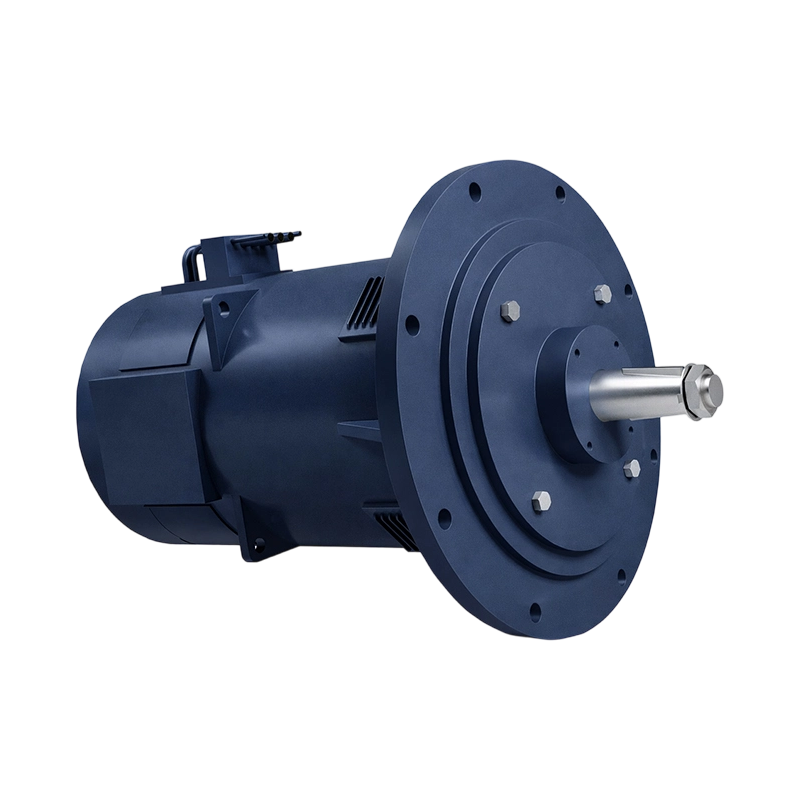
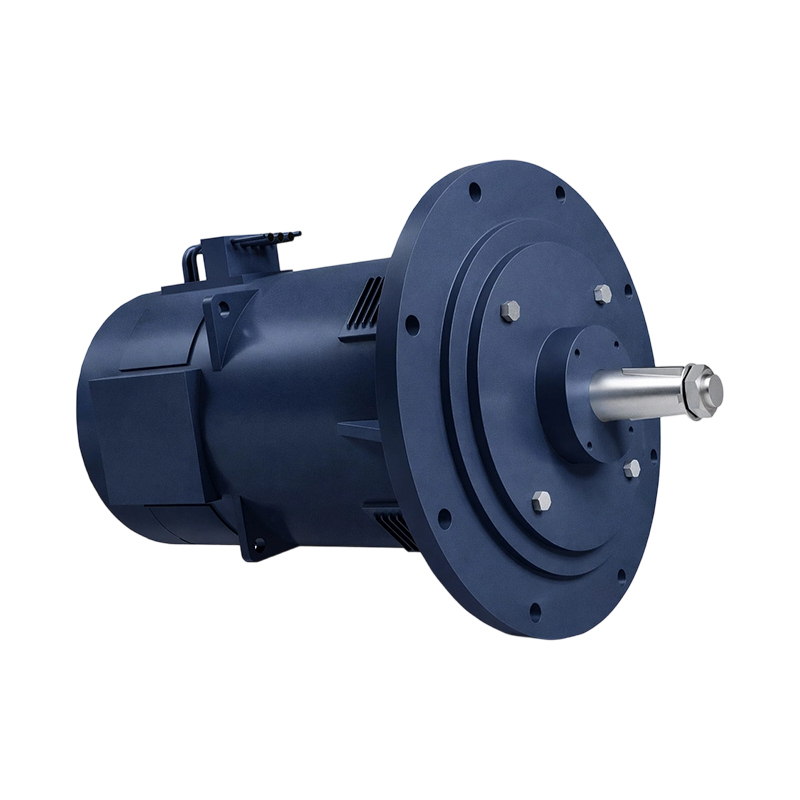 GOST-Compliant Excavator DC Motors ExporterExcavator DC Motors (GOST Standard)View Product →
Retrofit or Repair: The Numbers Behind the Decision
For an installed DC crane, keeping and repairing the DC machine is usually the cheaper path; the calculation turns on downtime and control engineering, not on the price of a motor.
Keep the DC machine
- Like-for-like mechanical swap in one to three days
- No drive panel, cabling or encoder re-engineering
- Existing armatures, brush sets and drawings stay valid
- Commutator and brush work stays on the planned schedule
Replace with AC and a drive
- Eight to twenty weeks including control design
- New drive panel, cabling and feedback installation
- Gearbox, brake and ventilation review
- Retraining for the maintenance team
2,000 to 6,000 h
Brush life in mill service
2 to 5 years
Commutator skim interval
1 to 3 days
Like-for-like DC swap
8 to 20 weeks
Full AC retrofit
Ranges reflect heavy-duty mill service and should be checked against your own maintenance history.
Selection rules for severe-duty machines, including thermal margin and starting duty, are covered in more detail in this guide to severe duty motors.
DC machines are no longer the automatic choice for a brand-new crane project, and nobody should pretend otherwise. What keeps them in service is narrower and more practical: a duty cycle that punishes anything without thermal reserve, a mechanical interface that already exists, and a maintenance team that can diagnose a commutator in an afternoon.
2 checks Before ordering a replacement, confirm two things: the duty class with the cyclic duration factor, and the standard the crane was built to. Everything else follows from those two answers.
FAQ: Crane and Metallurgical DC Motor Questions
How long does a crane and metallurgical DC motor last?
With planned commutator maintenance and correct brush grades, heavy-duty mill motors commonly run 15 to 25 years in crane service. Bearings, brush gear and the commutator film are the wear items; the armature winding itself usually outlives two or three brush campaigns.
Can an AC motor and drive replace a DC motor without changing the gearbox?
Sometimes, but the mechanical interface decides it. Shaft height, shaft end dimensions and flange pattern must match, and the AC motor must be selected for the same torque at zero speed rather than the same kilowatts. Where the frame does not match, the foundation and coupling change with it.
Which cooling and protection ratings should I specify for mill service?
Forced ventilation such as IC06 or IC17 keeps hot motor air out of the machine in dusty bays, while IC511 and IC616 suit air-to-air and air-to-water heat exchanger arrangements. Pair the cooling method with IP54 or higher in coking plants and casting bays, and IP23 only for clean, ventilated indoor crane halls.
Are GOST-standard and IEC-standard DC motors both available?
Yes, and they should be specified by plant, not by preference. A crane built to GOST practice expects GOST shaft ends, flanges and terminal positions, while Central European installations are built to IEC. Mixing the two standards is the most common cause of a motor that fits on paper and not on the gantry.
PREV:No previous article
NEXT:Metallurgical Motor Specifications: What Matters Most in Mill Duty Selection
NEXT:Metallurgical Motor Specifications: What Matters Most in Mill Duty Selection
Interested in cooperation or have questions?
Let'S Work Together Welcome Aboard!
-

-
 +86-15021943462
-
 Room 2326, 23rd Floor 2000 Zhongshan North Road Putuo District Shanghai, China
Join Our Mailing List
Product Categories
Quick Links
Quick Links
