
 English
 中文简体
 русский


 Read More

Product Category
NEW Category
Contact us
Contact Us
We specialise in the research, development and manufacture of electrical wires and cables.
 +86-15021943462
Related News
- Why High-Voltage Synchronous Motors Are the Backbone of Grinding and Crushing Operations
- Why DC Motors Remain Critical for Crane and Metallurgical Equipment Applications
- Why General Purpose Synchronous Motors Are Essential for Continuous Industrial Operations?
- Why GOST-Standard Motors Are Essential for Industrial Projects in Russia and Central Asia
Why Choosing the Right Motor Supplier Reduces Project Downtime on Heavy Lines
A 1,250 kW squirrel-cage motor trips at a copper concentrator near Karaganda on a Tuesday morning. The grinding line moves 340 tonnes per hour, the spare bay is empty, and the nameplate carries a GOST frame designation that nobody on site can cross-reference against an IEC catalogue. Eleven days pass before the winding data is confirmed. Choosing the right motor supplier is what closes that eleven-day window, and the decision is made months earlier in a purchase order, not in a maintenance meeting.
Downtime on a continuous mining, metallurgical or chemical line rarely begins with a burned winding. It begins with a specification only one party understands, a spare that exists in a catalogue nobody can match, or a certificate that arrives three weeks after the crate is unpacked. Procurement and reliability are the same discipline seen from two ends of the same pipe.
Supplier selection therefore deserves the same engineering attention as the motor itself. What follows is the practical version: what a supplier actually controls, where the delay accumulates, and which technical details decide whether a replacement arrives in weeks or in quarters.
Content
- 1 What a Motor Supplier Actually Controls
- 2 Why Choosing the Right Motor Supplier Reduces Project Downtime: Five Points Where Delay Enters
- 3 Where Motor-Related Project Delay Actually Comes From
- 4 GOST or IEC: The Standard Decision That Sets Your Spare-Part Clock
- 5 Ratings, Enclosure and Cooling: Three Numbers That Decide Whether a Motor Fits the Duty
- 6 Hazardous Areas, Dust and Heat: Where a Weak Supplier Costs the Most
- 7 What to Ask Before You Place the Order
- 8 Frequently Asked Questions
What a Motor Supplier Actually Controls
A motor supplier controls four outcomes that decide how long a line stays down: standard compliance, the speed at which a compliant replacement can be sourced, the completeness of technical documentation, and who answers when a fault appears after commissioning.
Definition
The supplier of record is the party contractually accountable for a motor's specification, documentation, delivery schedule and post-delivery technical support. On export projects into GOST markets, that accountability usually extends to nameplate language, certification paperwork and frame cross-referencing, not only to the hardware in the crate.
Unit price is the smallest number in the transaction. A 1 MW mill drive that stands still for three weeks takes throughput, restart energy, contract penalties and labour with it, and that arithmetic rarely stays inside the maintenance budget. A well-specified motor pays for its price difference inside a single day of lost production.
Why Choosing the Right Motor Supplier Reduces Project Downtime: Five Points Where Delay Enters
Downtime is usually designed in long before the motor is delivered. Five decisions account for most of the delay that projects later blame on the machine itself.
- Specification alignment at the enquiry stage. If duty cycle, ambient temperature, altitude, starting torque and starting frequency are missing, a supplier will quote the cheapest machine that fits the frame size. Re-rating it later costs weeks no discount can recover.
- Standards and certification. A GOST-built machine and an IEC-built machine of similar output are not drop-in equivalents. Getting this wrong means new drawings, new approval paperwork and a new production slot.
- Lead-time transparency. Catalogue lead times describe stock that often does not exist for high-voltage frames. A supplier who quotes the production slot, the winding date and the test date is worth more than one quoting the shortest number.
- Mounting and coupling fit. Shaft extension, keyway, centre height, foot hole pattern and coupling balance decide whether a motor lands on the existing foundation or triggers civil work on the plant floor.
- Spares and technical response. Bearings, brushgear and excitation components decide how fast a second failure is cleared. On crane and metallurgical DC motors, brush and commutator parts are the difference between a two-day repair and a two-month import.
Where Motor-Related Project Delay Actually Comes From
Sourcing a compliant replacement is the single largest source of added delay, ahead of certification rework and nameplate clarification. That ordering matters, because the fastest way to protect a schedule is not to hold more stock but to choose a supplier who can specify and document correctly the first time.
Average added delay by cause on heavy industrial drives
Sourcing a compliant replacement
45 d
Certification and standards rework
21 d
Nameplate and rating clarification
12 d
Mounting and coupling adaptation
9 d
Spares and documentation gaps
6 d
Planning benchmarks drawn from typical heavy-process motor projects; values show added calendar days when supplier support is weak.
Practical consequence
A supplier who archives winding data, drawings and test reports turns a 45-day sourcing problem into a phone call, because a second identical machine can be quoted without reverse engineering the first one.
GOST or IEC: The Standard Decision That Sets Your Spare-Part Clock
The standard a motor is built to decides how long a replacement takes to source, not just how the nameplate reads. Plants in Russia, Kazakhstan and Uzbekistan running GOST-built machines face a narrower supplier base than plants on IEC frames, and that narrowness converts a routine failure into a project.
GOST-built machines
- Frame and mounting dimensions follow GOST series
- Documentation and nameplates in Russian
- Strong fit for refurbishing legacy Soviet-era lines
- Replacement depends on suppliers who hold GOST catalogues
IEC-built machines
- Dimensions follow IEC 60072 frame tables
- Documentation in English with IEC references
- Wider supplier base and faster substitution
- Requires adaptation when replacing a GOST frame
Where both worlds meet, the deciding factor is usually the foundation rather than the electrical data. Retrofitting an IEC machine into a GOST footprint means new base plates, realigned couplings and often a redesigned ventilation path, all of which are site work measured in weeks.
| Aspect | GOST-built | IEC-built |
| Dimensional basis | GOST frame series | IEC 60072 frame tables |
| Documentation | Russian with GOST references | English with IEC references |
| Main markets | Russia, Central Asia, Eastern Europe | EU, Middle East, Asia, Africa |
| Swap risk | Higher without archived drawings | Lower, broader supply base |
| Cooling notation | IC01, IC06, IC511, IC516, IC611, IC616 | IC codes per IEC 60034-6 |
| Best protection | Supplier who archives test data | Supplier who confirms frame compatibility |
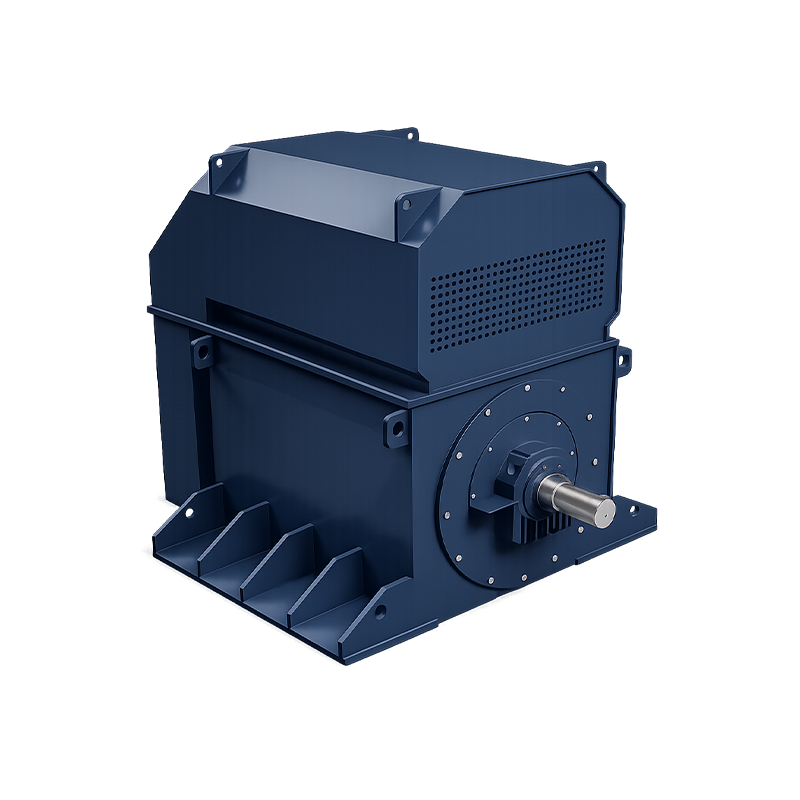
For dusty continuous-duty circuits in these markets, a GOST standard IP54 IC511 high-voltage squirrel-cage machine is the usual reference point, and asking a supplier to confirm that combination in writing before the order is placed removes most of the standards risk.
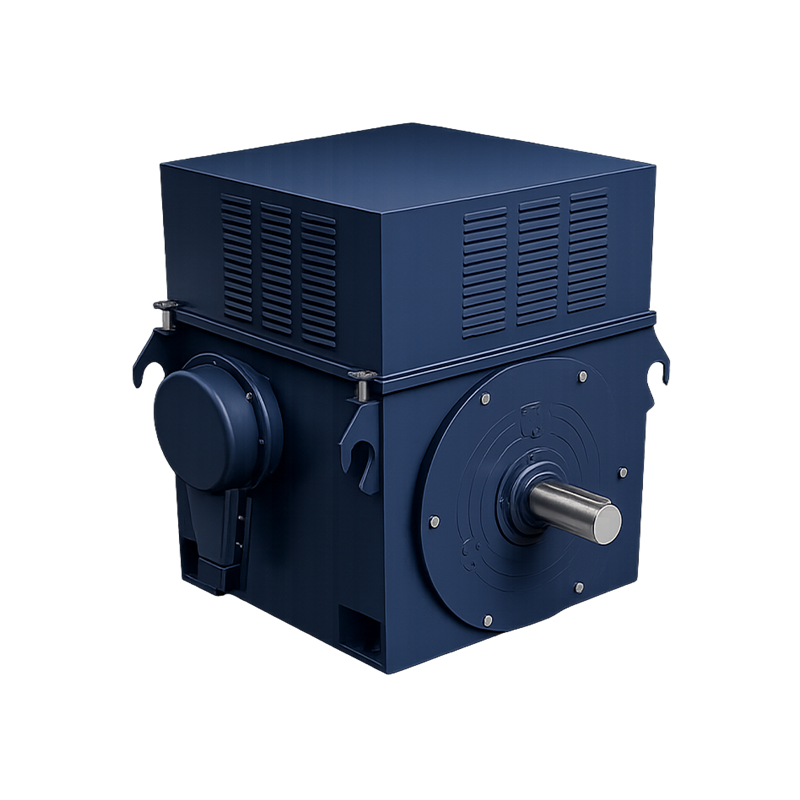
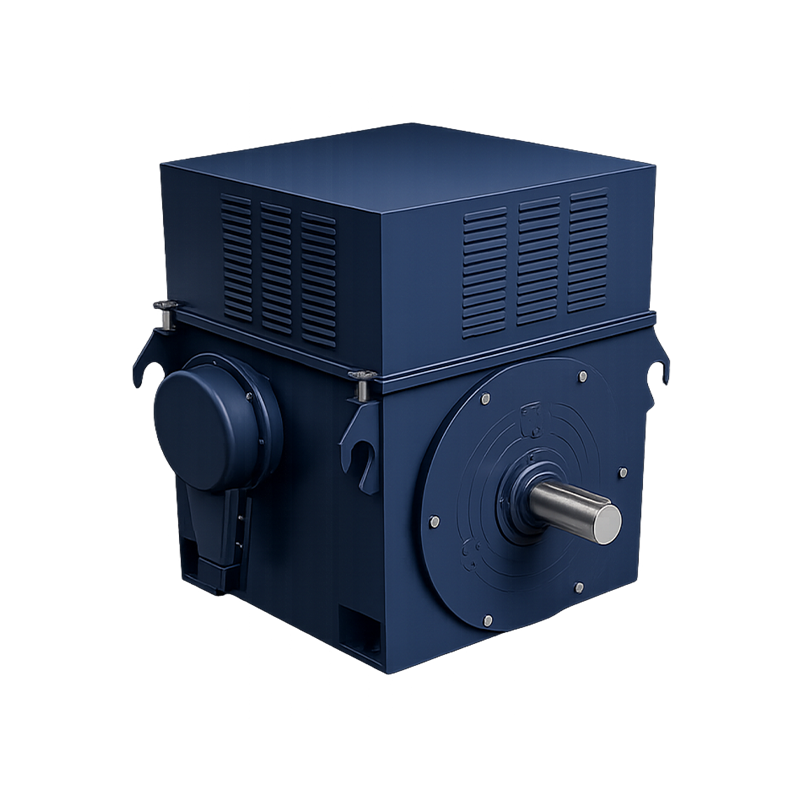
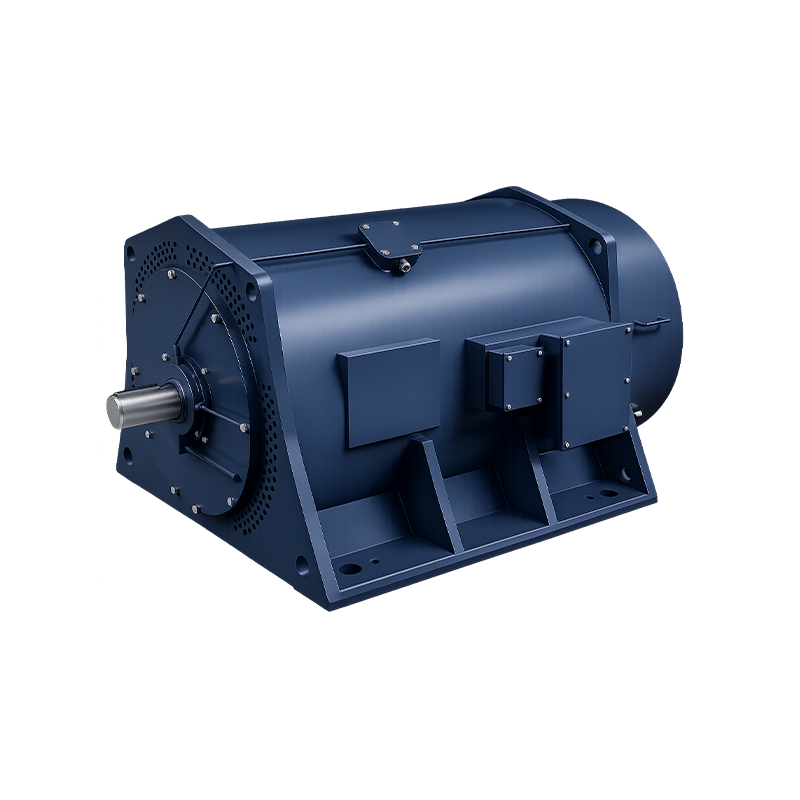 GOST IP54 IC511 High-Voltage Squirrel-Cage Motor for Continuous DutyA GOST-standard IP54 IC511 high-voltage squirrel-cage motor suited to dusty continuous-duty industrial circuits; supplier offers selection consulting, custom parameters, inspection, documentation, and export support.View Product →
Ratings, Enclosure and Cooling: Three Numbers That Decide Whether a Motor Fits the Duty
Enclosure, cooling method and duty class decide whether a motor survives its environment or becomes a recurring maintenance item. Buying by kilowatt rating alone is the most common and most expensive shortcut in industrial motor procurement.
IP23Open protected machines for clean indoor halls
IP54Dust and splash protection for mills and crushers
IC511Air-to-air cooling for continuous heavy duty
IC616Air-to-water cooling where the hall cannot take heat
These variables interact. A machine rated for continuous duty in a 40 degrees Celsius ambient hall behaves differently inside a closed, dust-loaded crusher building, and the cooling notation on the nameplate is the fastest way to check whether the original selection was honest. Duty class matters just as much as output, which is why electric motor selection for large industrial machines starts with the load profile rather than the catalogue page.
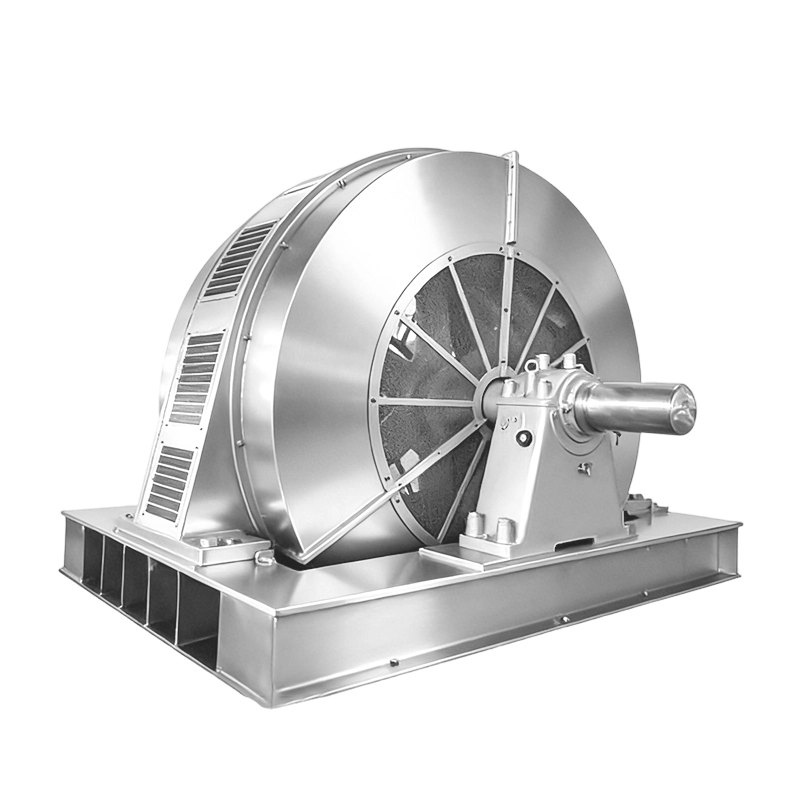
Grinding and crushing circuits are the clearest example: high starting torque, continuous operation and a foundation that has to tolerate vibration. Heavy-duty synchronous machines built around ball mill loads are specified for exactly that combination.
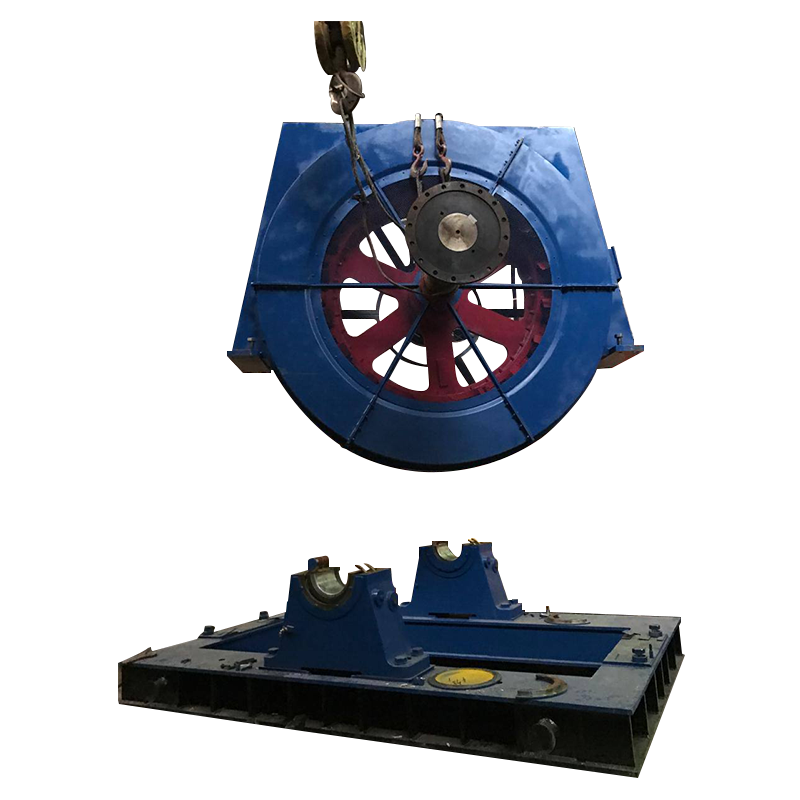 SDM/SDMZ Heavy-Duty High-Voltage Synchronous Motors for Ball MillsPurpose-engineered for ball mill loads in mining, cement, and heavy industry, with 400–3,150 kW, 6/10 kV, customizable ambient and altitude ratings, and S1 continuous duty for high-torque, low-speed machinery.View Product →
Hazardous Areas, Dust and Heat: Where a Weak Supplier Costs the Most
Explosion-proof and harsh-environment motors punish specification errors harder than any other category, because a wrong enclosure is not an inconvenience, it is a shutdown with a safety file attached. Chemical, energy and coal-handling plants cannot substitute a standard machine for an explosion-proof one, and they cannot re-certify one on site.
- Gas and vapour zones require a certified explosion-proof enclosure, not a weatherproof one.
- Conductive dust changes both the ingress requirement and the cooling design.
- Retrofits must match cable entry, terminal box position and mounting footprint.
- Certification documents belong in the contract, not in a follow-up email.
For GOST markets, high-voltage explosion-proof induction motors built to IP54 with IC511 or IC516 cooling are the standard reference for this class of duty, and the supplier's ability to produce the certificate with the machine is what keeps a restart on schedule.
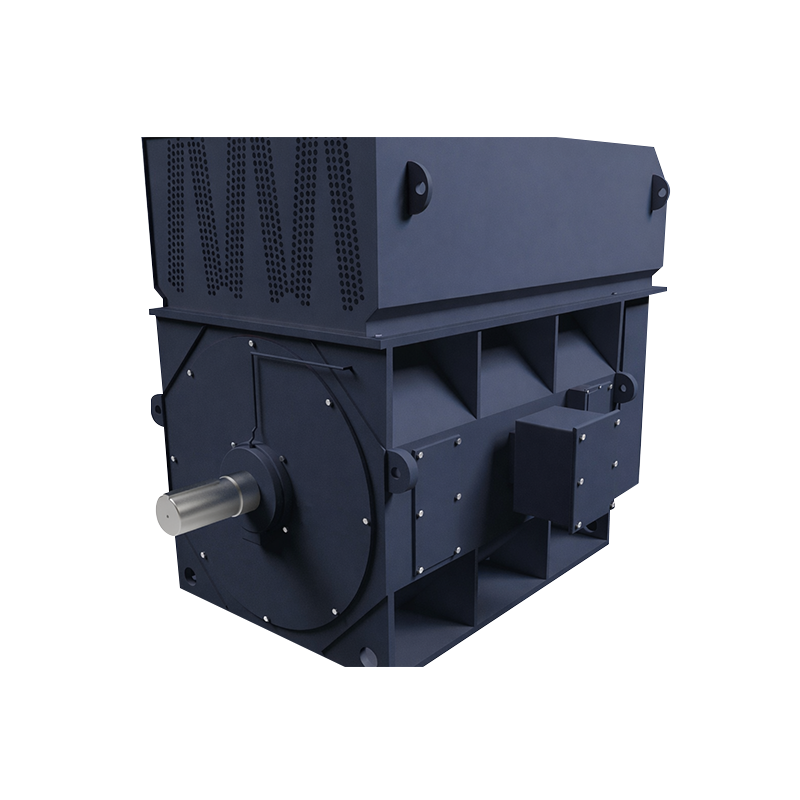
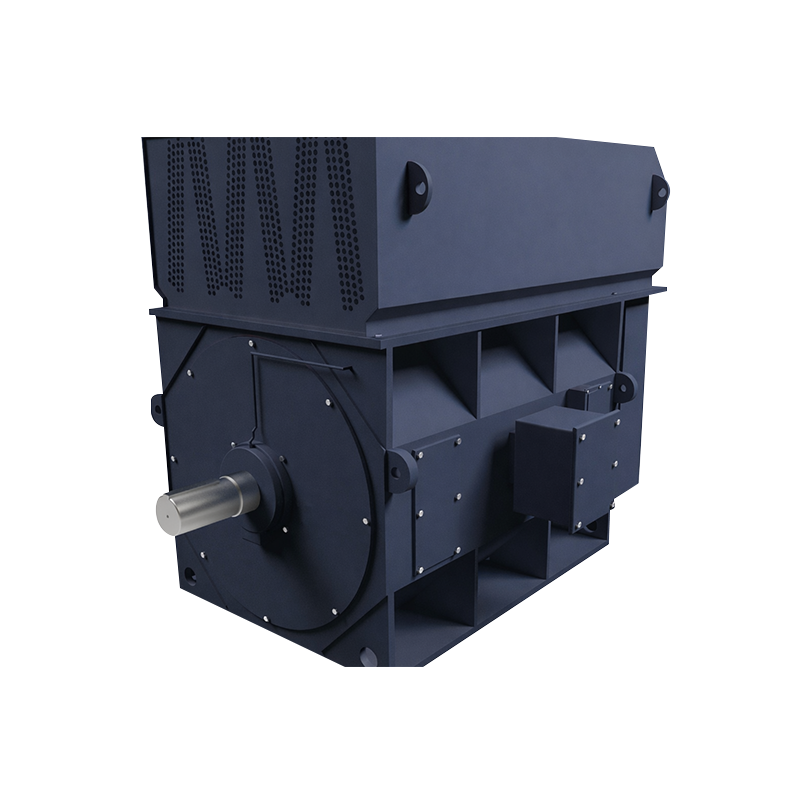
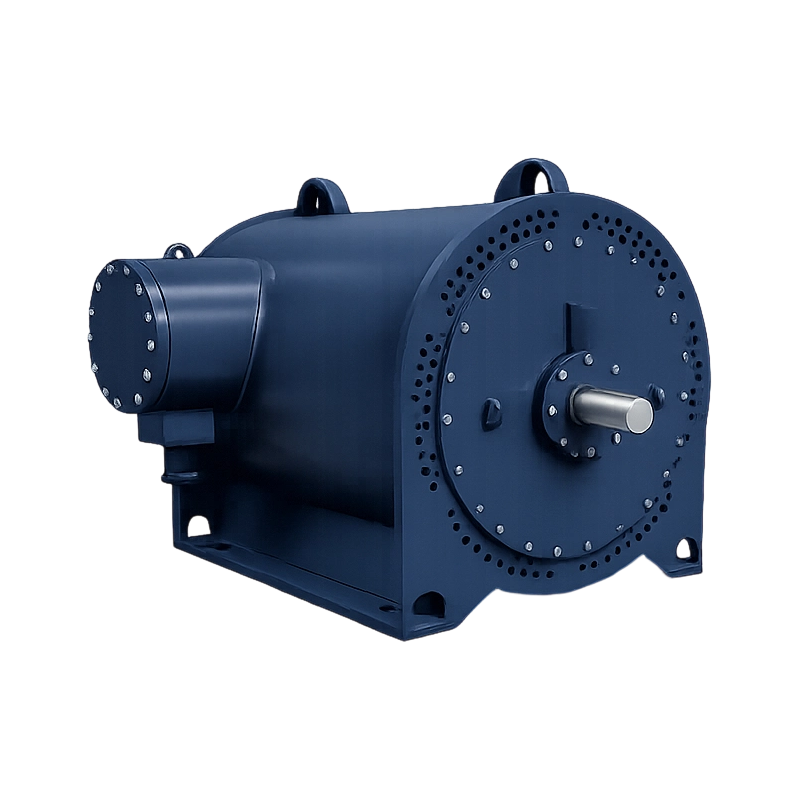 GOST IP54 IC511/IC516 High-Voltage Explosion-Proof Squirrel-Cage MotorFor hazardous oil, gas, chemical, mining, and power environments, this GOST-standard explosion-proof induction motor combines high-voltage squirrel-cage operation with IP54 enclosure and IC511/IC516 cooling.View Product →
What to Ask Before You Place the Order
Six questions separate a supplier who reduces downtime from one who simply ships a crate. Ask them before the purchase order is signed, and put every answer in writing.
- Which standard and frame series will this machine be built to, and can you show the drawing?
- What is the confirmed production, winding and test date rather than the catalogue lead time?
- Will winding data, test reports and drawings be archived for at least ten years?
- Which enclosure and cooling codes apply, and how were they chosen for our environment?
- Who provides commissioning support, and in which language?
- What is your response time for a repeat failure on the same tag number?
A supplier with a manufacturer network and an in-house technical team can answer all six. A trader working from a price list will answer two.
Frequently Asked Questions
How long does a replacement high-voltage motor take to source?
For a machine no longer in production, 8 to 16 weeks is a realistic range for a high-voltage frame, and longer if drawings must be recreated. When the original supplier still holds winding data and test records, the same unit can be quoted within days and delivered at the short end of that range.
Does a cheaper motor really increase downtime?
Yes, when the saving comes from skipped specification work. A motor selected without duty class, ambient and cooling checks may run for years in mild conditions and fail within months in a dusty crusher hall. The purchase saving is normally a small fraction of one day of lost throughput on a continuous line.
Are GOST and IEC motors interchangeable?
Electrically they can often be matched, mechanically they usually cannot. Frame dimensions, shaft extension and foot hole patterns differ, so a cross-standard replacement normally requires new base plates or a machined adapter, plus fresh documentation for inspectors.
What single document prevents the longest delays?
The archived test report with winding data. It lets any qualified manufacturer reproduce the machine without reverse engineering, which removes the sourcing step that dominates most unplanned replacement schedules.
PREV:Most Common Motor Failures in Continuous Industrial Operations Explained
NEXT:Why Explosion-Proof Motors Matter for Chemical and Mining Applications
NEXT:Why Explosion-Proof Motors Matter for Chemical and Mining Applications
Interested in cooperation or have questions?
Let'S Work Together Welcome Aboard!
-

-
 +86-15021943462
-
 Room 2326, 23rd Floor 2000 Zhongshan North Road Putuo District Shanghai, China
Join Our Mailing List
Product Categories
Quick Links
Quick Links
