
 English
 中文简体
中文简体 русский

 Read More

Product Category
NEW Category
Contact us
Contact Us
We specialise in the research, development and manufacture of electrical wires and cables.
 +86-15021943462
Related News
- AC Motor vs DC Motor: Key Differences, How They Work & How to Choose
- Explosion-Proof Electric Motors: Ex Ratings, Hazardous Location Selection & Standards
- What Makes Standard Mining Excavator Motors Essential for Heavy Mining Operations?
- IC01 vs IC06 vs IC511 vs IC611: How Cooling Methods Impact Motor Life and Duty
GOST vs IEC Standard Motors: Key Design, Testing, and Certification Differences
A Russian steel mill recently requested a 6 kV IP54 GOST squirrel-cage motor for a dust-laden conveyor drive, while a European EPC contractor specified the same output in an IEC IP23 IC01 frame for a clean-room fan application. These two requests look similar on paper, yet GOST vs IEC standard motors are not interchangeable. GOST motors follow the Russian state standardization framework, while IEC motors follow international consensus standards published by the International Electrotechnical Commission. The differences affect your project schedule, spare part availability, and whether the motor passes inspection in the destination market.
Content
GOST vs IEC Standard Motors: Core Design Differences
The most important design difference between GOST and IEC motors is the frame and voltage system. GOST standard motors are designed around Russian grid conditions, typically 6 kV or 10 kV, with frame dimensions defined in GOST 2839 and GOST 2850. IEC standard motors, defined by IEC 60072, use metric frame numbers that align with international dimension standards. Voltage tolerance is another differentiator: IEC 60034-1 allows a 5 percent deviation for normal operation, while GOST 183 defines a similar tolerance but with stricter assumptions about heating under unbalanced supply.
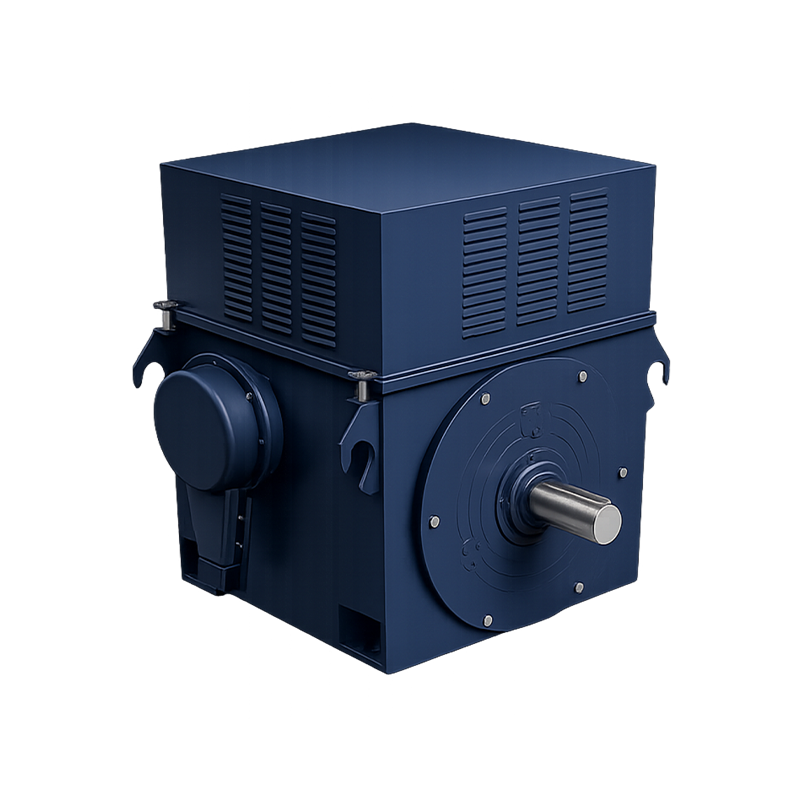
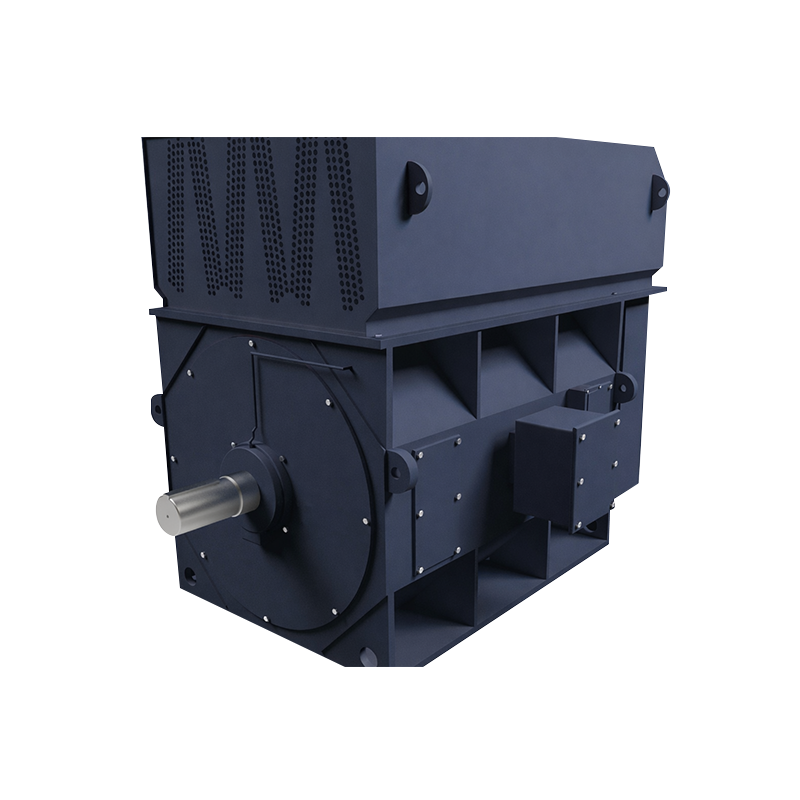
Cooling and enclosure codes follow different naming systems. GOST motors use IC01, IC06, IC511, IC611, or IC616 to describe cooling arrangements, with IP23 or IP54 protection ratings. IEC motors use the same IP ratings but commonly specify IC01, IC06, or IC411 and IC416 in documentation. The physical construction differs: an IP54 IC511 GOST motor uses a top-mounted fan cooling configuration that is rare in IEC-standard catalogs. If your process engineer expects a specific cooling code, the physical footprint will be different between the two standards.
In addition, IEC standard motors allow a wider frequency range: 50 Hz and 60 Hz are both normal for IEC-rated frames, while GOST motors are usually specified for 50 Hz only. If a machine will be shipped to a 60 Hz grid, the winding design must be different. This affects not only the motor itself but also the VFD inverter settings in the control cabinet.
| Parameter | GOST Standard Motor | IEC Standard Motor |
| Voltage range | 6 kV and 10 kV common | up to 6.6 kV standard |
| Frame dimensions | GOST 2839 / 2850 | IEC 60072 metric |
| Cooling codes | IC01, IC06, IC511, IC611, IC616 | IC01, IC06, IC411, IC416 |
| Protection rating | IP23 or IP54 | IP23, IP54, IP55 |
| Insulation class | GOST 28868 Class F/H | IEC 60085 Class F/H |
| Frequency | 50 Hz standard | 50 Hz and 60 Hz available |
Procurement consequence: A motor purchased for a Russian project will not physically fit into an IEC-standard installation without an adapter base or custom shaft modification. Check frame dimensions before ordering, not after customs clearance.
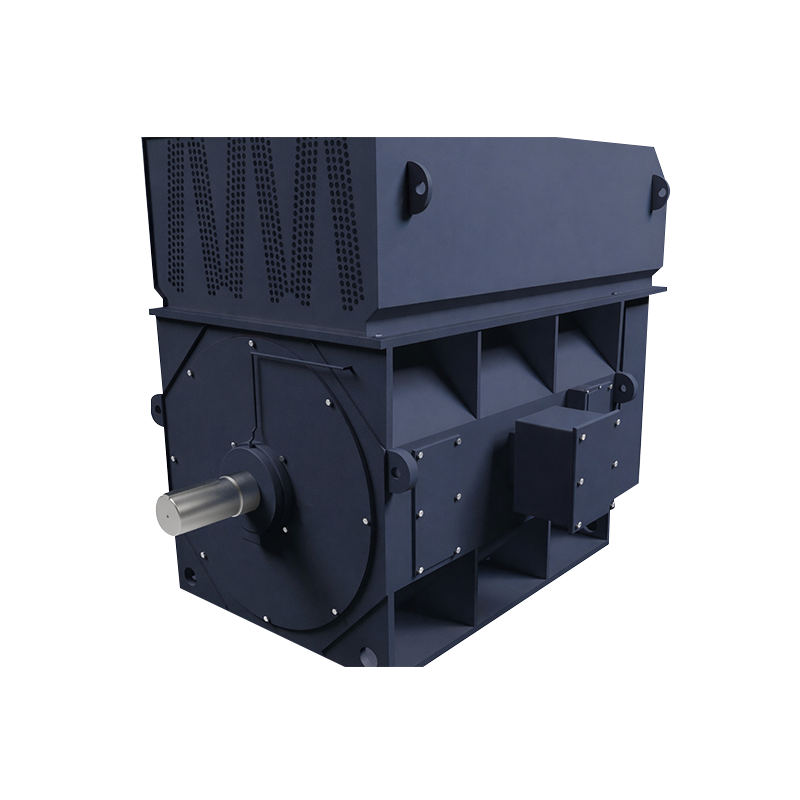
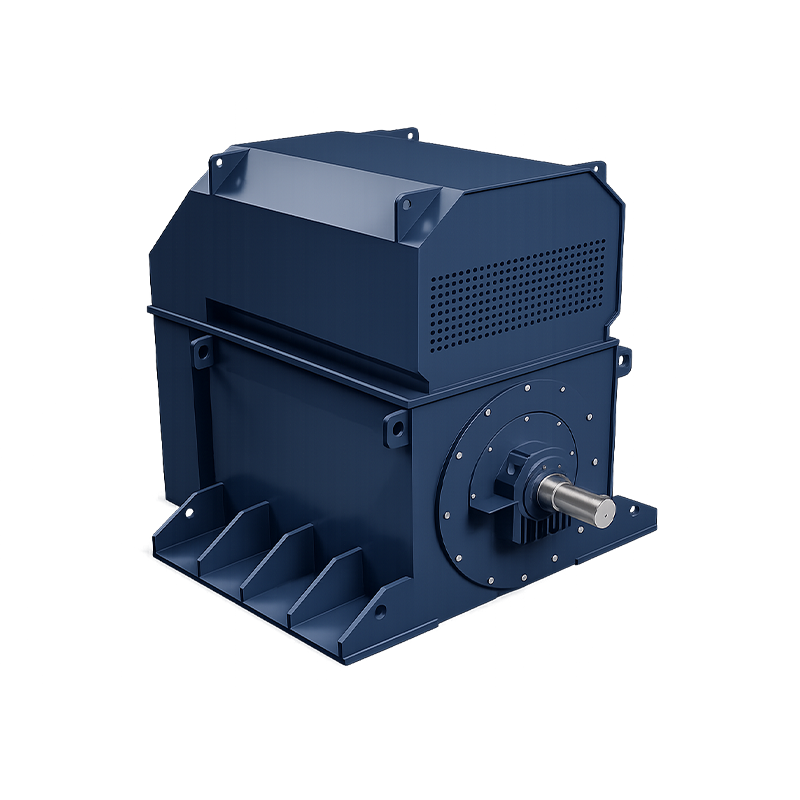
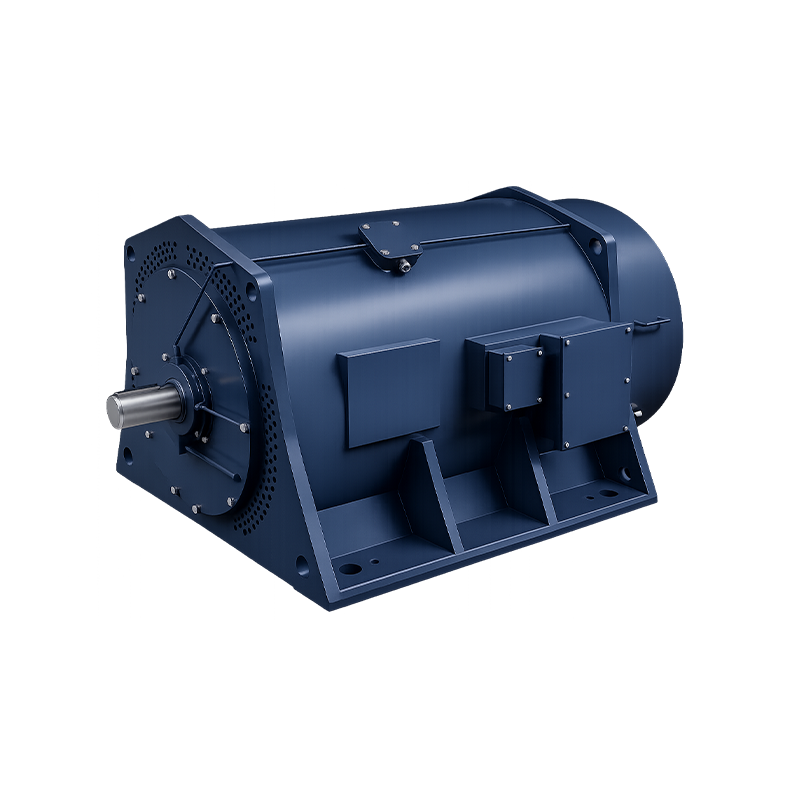 GOST Standard IP54 IC511 High Voltage Squirrel Cage Electric MotorQ: Do you provide motor selection and technical consulting services? We provide professional motor selection and technical consulting based on operating conditions, ap...View Product →
GOST vs IEC Standard Motors: Testing Protocol Differences
GOST and IEC testing protocols require the same type tests and routine tests, but the acceptance criteria are not identical. A motor built to GOST 11828 and a motor built to IEC 60034-1 will show different efficiency and temperature-rise results on the test bench, even with the same nominal data sheet. This is one of the most common sources of confusion for buyers comparing Russian and European motor offers.
The IEC approach, based on IEC 60034-2-1, uses the summation-of-losses method to calculate efficiency. GOST 183 allows historical direct measurement methods that often produce slightly higher apparent efficiency values. This is not a manufacturing defect; it reflects a different test philosophy. Temperature rise tests in GOST run at rated voltage and frequency for two hours, while IEC allows the same duration but uses a different reference altitude correction for air-cooled machines.
Routine tests differ as well. GOST routine testing includes a short-circuit test at reduced voltage and a dielectric strength test at 1.5 times rated voltage, whereas IEC routine tests require the same dielectric test plus a check of winding resistance and an unloaded motor run. The implication: a motor tested to GOST does not automatically have a complete IEC test record, and vice versa.
- Efficiency measurement: IEC 60034-2-1 summation of losses vs GOST direct input-output method
- Temperature-rise reference: both use 40 C ambient, but GOST applies altitude correction above 1000 m differently
- Vibration: GOST 183 limits vibration velocity per machine size, while IEC 60034-14 defines grades A and B with specific limits
Expect up to 5 percent variation in tested efficiency between GOST and IEC methods on the same motor design. Always request the test protocol that matches your destination market.
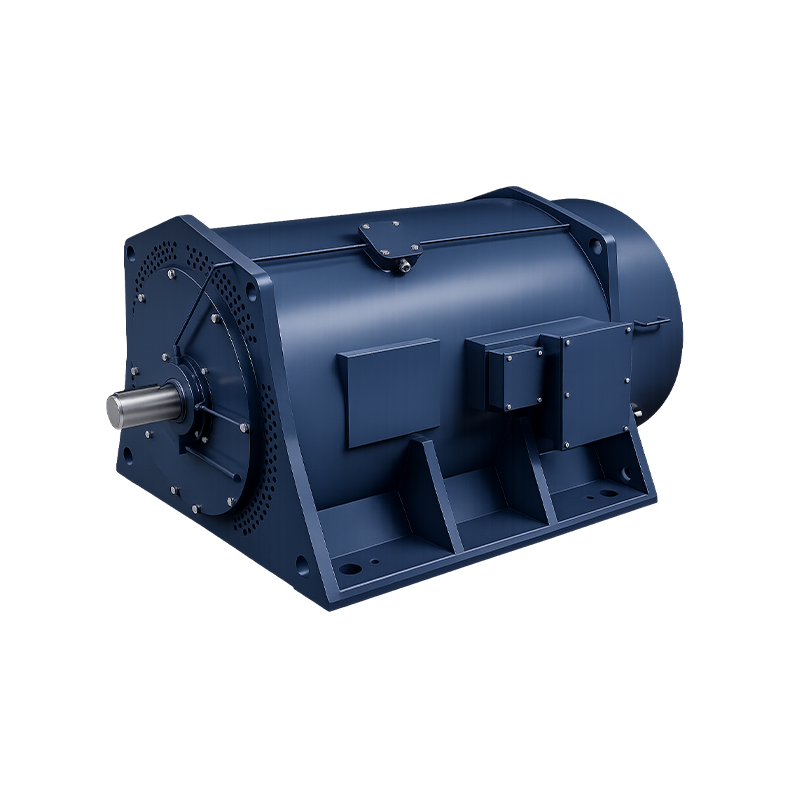
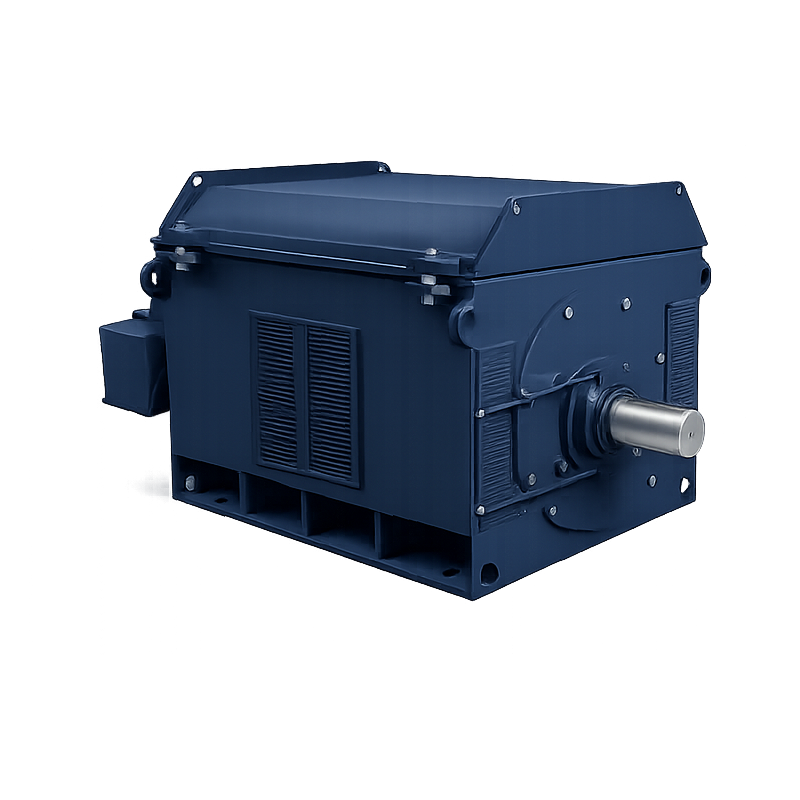 (GOST Standard) High-Voltage Wound Rotor Induction Motor (GOST, IP23, IC01)Q: Do you provide motor selection and technical consulting services? We provide professional motor selection and technical consulting based on operating conditions, ap...View Product →
Certification Paths for Russian and European Markets
An industrial motor is not allowed into the Russian market unless it carries compliant EAC certification under TR CU 010/2011. An IEC motor cannot be installed in a European project without CE marking under the Low Voltage Directive 2014/35/EU. The two certification systems are not mutually recognized, so you cannot test once and certify twice.
EAC certification requires work by a notified body in a member state of the Eurasian Economic Union, and the certificate is typically issued for designs verified against GOST standards. The process involves an audit and type test report, with a defined validity period. CE marking is a self-declaration route in most cases: the manufacturer issues a Declaration of Conformity based on IEC/EN standards and maintains a technical file. The practical difference is vendor responsibility. A CE-declared motor transfers more risk to the buyer, while an EAC-certified motor has already passed third-party review.
Documentation is another point of divergence. For EAC, you need a Type Certificate, an annex listing the motor series covered, and a test report from an accredited laboratory. For CE, you need a Declaration of Conformity, a technical file with drawings and test reports, and an instruction manual in the language of the destination country.
| Requirement | EAC for Russian Market | CE for European Market |
| Legal basis | TR CU 010/2011 | LVD 2014/35/EU and MD 2006/42/EC |
| Process | Accredited body certification | Self-declaration |
| Test standards applied | GOST series | IEC/EN series |
| Typical lead time | 6 to 10 weeks | 2 to 4 weeks if docs are ready |
| Validity | 1 to 5 years | Indefinite until design change |
Certification check: EAC and CE marks are not interchangeable. Even a motor that passes all IEC type tests still needs a separate EAC certificate for Russia.
Practical Selection Strategy for GOST vs IEC Standard Motors
The right way to handle GOST vs IEC differences in procurement is to clarify the destination market before technical specifications are frozen. One design cannot reliably satisfy both EAC and CE requirements without duplicated testing and certification costs. When cross-border supply is uncertain, a dual-standard reserve is often the smartest investment. Suppliers such as ICEM Electric that can produce both GOST and IEC motors under one roof let you keep the design open until the destination market is confirmed.
Relative impact of design divergence on cross-border project planning
- Fix the operating conditions first: voltage, frequency, load profile, and ambient temperature. These values determine whether you need a GOST or IEC design.
- Request the destination-specific test protocol. For Russia, ask for GOST 11828 type test reports. For Europe, request IEC 60034-2-1 efficiency data.
- Start certification early. EAC certification can add six to ten weeks to delivery, while CE self-declaration is faster if documentation is complete.
For a deeper look at how motor selection changes when projects scale up, refer to this overview of large-scale industrial electric motor selection insights.
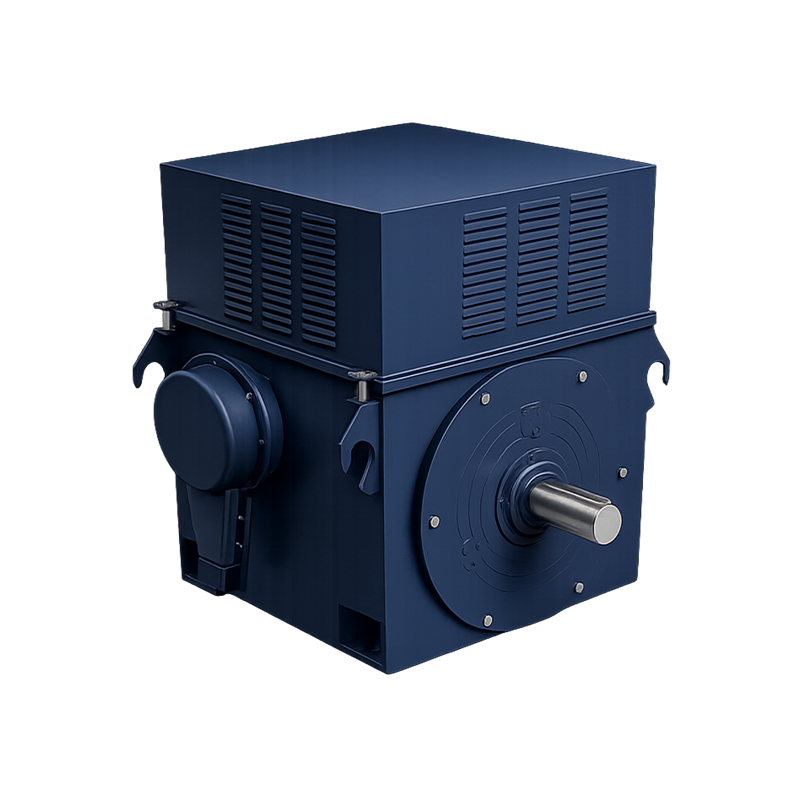
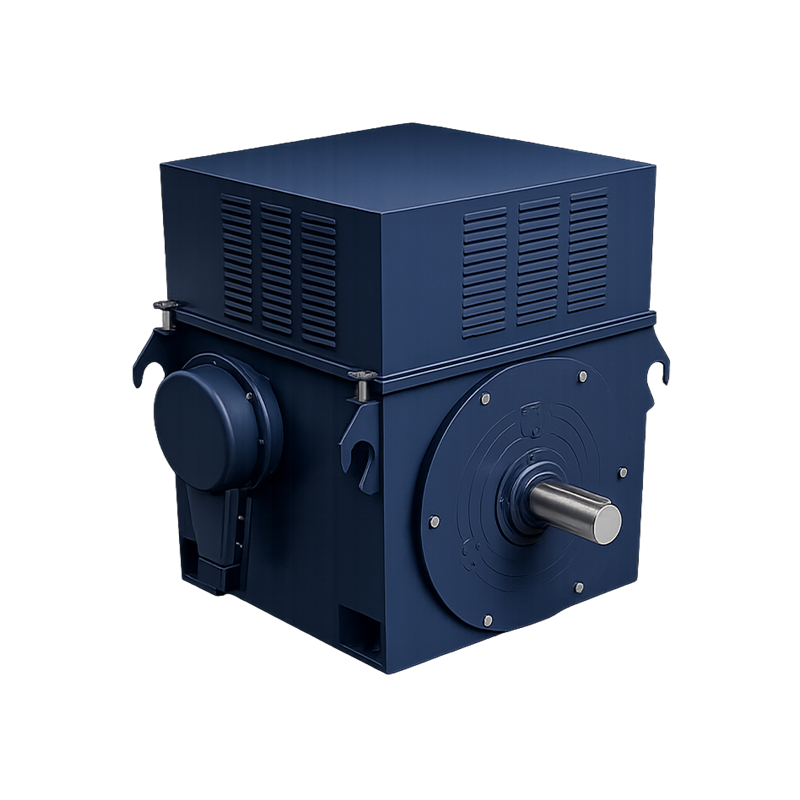 IEC Standard IP23 IC01/IC06 High Voltage Asynchronous Motor With Squirrel CageQ: Do you provide motor selection and technical consulting services? We provide professional motor selection and technical consulting based on operating conditions, ap...View Product →
Frequently Asked Questions
Can an IEC motor be used in Russia without changing the design?
No. An IEC motor can be imported only if it carries EAC certification. In practice, the motor must be tested and certified against GOST standards, or supplied in a GOST-standard configuration from the start. Modifying windings or cooling after import is not a practical solution.
Is GOST certification the same as EAC certification?
No. GOST certification is a broader historical framework. Today, motors imported into the Russian Federation require EAC certification under TR CU 010/2011. However, the design is still verified against GOST standards, so the two terms remain closely linked in practice.
Which standard gives better motor efficiency?
Neither standard defines a universal efficiency level. Efficiency depends on the motor design and how losses are measured. IEC 60034-2-1 usually reports lower apparent efficiency than a direct-method GOST test on the same machine, but the actual losses are the same. Compare measured values using the same test standard.
How much longer does EAC certification take versus CE marking?
EAC certification typically requires a notified body audit and type testing, often taking six to ten weeks. CE marking for a low-voltage motor is usually a self-declaration with a technical file, so it can be completed in a few weeks if the manufacturer has the documentation ready.
PREV:IP23 vs IP54 vs IP55 Enclosures: How to Choose the Right Protection Level
NEXT:Difference Between Induction and Synchronous Motor: Principles and Torque Guide
NEXT:Difference Between Induction and Synchronous Motor: Principles and Torque Guide
Interested in cooperation or have questions?
Let'S Work Together Welcome Aboard!
-

-
 +86-15021943462
 -
 Room 2326, 23rd Floor 2000 Zhongshan North Road Putuo District Shanghai, China
Join Our Mailing List
Product Categories
Quick Links
Quick Links
